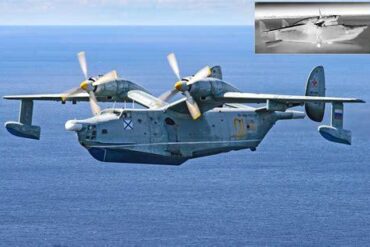
The Black Sea is a vital maritime hub where geopolitics, trade, and history converge. Serving as a gateway between Europe and Asia, this inland body of water is bordered by six nations — Turkey, Russia, Ukraine, Romania, Bulgaria, and Georgia — each with strategic interests in its use. While the sea itself spans over 436,000 square kilometers, what truly defines its accessibility is not its size but the narrow waterways that connect it to the rest of the world.
Before any vessel can cruise the Black Sea, it must navigate a maritime labyrinth that begins thousands of kilometers away. The journey starts by crossing the Atlantic Ocean, flowing through the Strait of Gibraltar into the Mediterranean Sea, and from there heading eastward toward the shores of Turkey. However, the actual test of a ship’s endurance and navigational precision begins only when it arrives at the Turkish Straits.
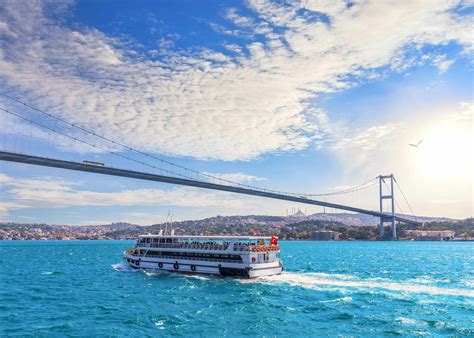
The Dardanelles: First Barrier to the Black Sea
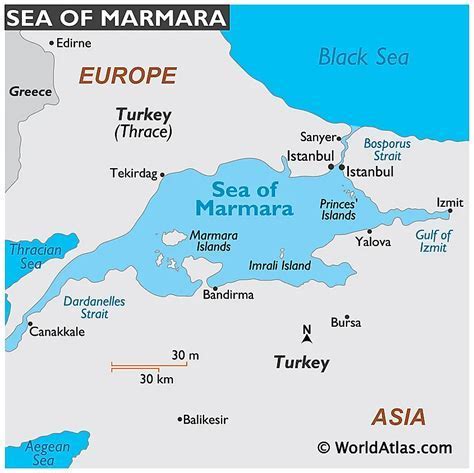
The first strait that challenges ships en route to the Black Sea is the Dardanelles, a 61-kilometer-long, narrow, and historically rich passage. Situated between the Aegean Sea and the Sea of Marmara, the Dardanelles is crucial yet treacherous. The width of the strait varies significantly, with some segments being just 1.2 kilometers wide. Due to its strategic significance and dense marine traffic, it is heavily regulated and constantly monitored by Turkish maritime authorities.
Vessels entering this passage often form queues and await clearance, as the strait’s natural topography combined with unpredictable currents makes navigation difficult. For large tankers and container ships, tight turns and narrow sections demand exceptional skill and coordination between crew, tugboats, and Turkish pilot services.
The Sea of Marmara: Transitional Maritime Space
Once past the Dardanelles, ships enter the Sea of Marmara, an inland sea entirely enclosed by Turkey. While this stretch is less hazardous than the Dardanelles or Bosporus, it remains a critical transit zone, serving as a maritime buffer between two of the world’s most iconic straits. Given its enclosed nature, any delay or blockage in the adjacent straits can lead to a backlog of ships floating within Marmara’s relatively calm waters.
The Bosporus: The Final and Most Daunting Passage
If the Dardanelles are the gateway, the Bosporus Strait is the needle’s eye. This 30-kilometer-long waterway, splitting Istanbul into European and Asian halves, narrows to just 700 meters at its tightest point. Thousands of vessels pass through the Bosporus annually, making it one of the busiest and most congested natural straits on the planet.
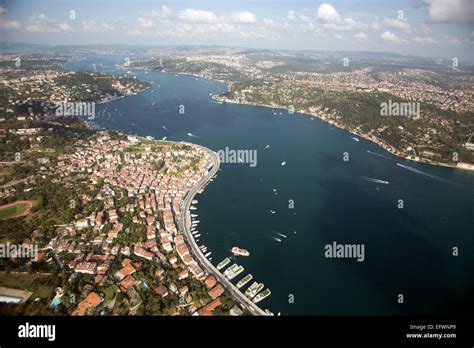
Maritime accidents are not uncommon here. Sharp turns, strong currents, and high urban density on both banks present a complex environment. Ships are often required to slow down, take on Turkish maritime pilots, and in many cases, wait for directional traffic control to manage flow and avoid collisions.
The Montreux Convention: Maritime Governance and Geopolitics
The legal framework that governs passage through the Turkish Straits is the Montreux Convention Regarding the Regime of the Straits, signed in 1936. This international treaty gives Turkey full control over both the Dardanelles and the Bosporus and outlines detailed rules for both commercial and military vessel traffic.
Under the convention:
- Merchant vessels from all nations are granted free passage during peacetime.
- Naval vessels from non-Black Sea countries face restrictions, including prior notification, tonnage limits, and limits on duration of stay.
- Turkey can close the straits to all foreign warships during wartime or if it perceives an imminent threat.
These stipulations help maintain a delicate military balance in the region, particularly given recent tensions between Russia and NATO allies. For countries like the United States or the UK, these rules significantly limit naval deployments into the Black Sea, providing a strategic buffer for littoral states.
Political Tensions and Strategic Surveillance
The Black Sea region has been a geopolitical flashpoint for centuries. Today, the spotlight is once again on the area due to ongoing tensions between Russia and Ukraine. Major ports like Odessa (Ukraine), Novorossiysk (Russia), and Varna (Bulgaria) serve as vital logistics hubs for commercial trade, energy transport, and military operations.
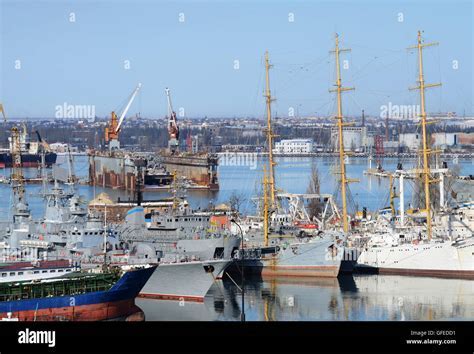
Every ship entering or leaving the Black Sea is closely monitored not just by Turkey, but also by NATO, Russia, and Ukraine. This means that maritime movements have immediate strategic implications. The presence or absence of certain vessels — like destroyers, aircraft carriers, or LNG tankers — can signal shifts in policy, preparedness, or power projection.
The Kerch Strait: Link to the Sea of Azov
Further complicating access in the northeast of the Black Sea is the Kerch Strait, which links it to the Sea of Azov, a much smaller and shallower sea bordered by Russia and Ukraine. The Kerch Strait is just 4.5 kilometers wide at its narrowest, and ships face not only physical limitations but also intense political scrutiny.
In 2018, this narrow passage became the center of an international incident when Russian forces seized Ukrainian naval vessels, leading to widespread condemnation. Since then, Russia has tightened its grip over the strait, especially after the annexation of Crimea and the construction of the Kerch Bridge, which spans the entire waterway.
Economic Imperatives and Continued Traffic
Despite all these navigational and political hurdles, the Black Sea remains one of the most important maritime zones globally. It is essential for the export of grain, oil, natural gas, and manufactured goods. For landlocked countries like Ukraine and parts of Russia, access to global markets depends on unimpeded movement through the straits.
The region handles:
- A substantial portion of Europe’s wheat and grain exports
- Critical oil shipments from the Caspian region via the BTC pipeline ending in Turkish ports
- Growing container traffic linking Asia to Europe through multimodal corridors
Even with naval tensions and navigational challenges, over 40,000 ships transit the Turkish Straits annually. This remarkable volume underscores the economic gravity of the region.
Maritime Technology and Pilotage Assistance
To reduce risk and streamline transit, most vessels employ advanced navigational systems, including real-time satellite mapping, sonar, and proximity sensors. But even technology cannot substitute for local knowledge, which is why Turkey mandates that most ships, especially large ones, take on a certified Turkish pilot when entering either the Dardanelles or Bosporus.
Pilotage helps ensure:
- Safe passage around narrow bends and strong undercurrents
- Coordination with traffic control authorities
- Timely maneuvering around other large ships or sensitive coastal infrastructure
For oil tankers or vessels carrying hazardous cargo, these protocols are even stricter, often requiring tugboat escorts, daytime transit windows, and even weather-dependent scheduling.
Future Outlook: Expansion, Regulation, and Canal Istanbul
Looking ahead, Turkey has proposed a controversial megaproject — the Istanbul Canal, a 45-kilometer artificial waterway designed to bypass the Bosporus entirely. Proponents claim it will reduce congestion and improve maritime safety, while critics argue it could undermine the Montreux Convention and shift geopolitical balances.
If realized, Canal Istanbul could:
- Divert a portion of commercial shipping from the Bosporus
- Give Turkey unilateral control over an uncharted passage not covered by Montreux rules
- Raise environmental and legal concerns for Black Sea littoral states
While the canal is still under planning and subject to intense domestic and international debate, its potential impact on Black Sea shipping cannot be ignored.
Conclusion: The Maritime Chessboard of the Black Sea
Getting in and out of the Black Sea is not a simple task. It requires navigation through some of the world’s most complex maritime routes, adherence to international treaties, and constant awareness of geopolitical developments. Whether it’s a bulk carrier exporting Ukrainian grain, a Russian frigate on patrol, or a Turkish ferry, every ship must pass through a sequence of straits that have, for centuries, been at the crossroads of commerce, conflict, and diplomacy.
The Black Sea’s importance is unlikely to wane. On the contrary, as global trade routes evolve and regional tensions fluctuate, its strategic maritime arteries — the Dardanelles, the Bosporus, and the Kerch Strait — will remain essential, volatile, and closely watched.