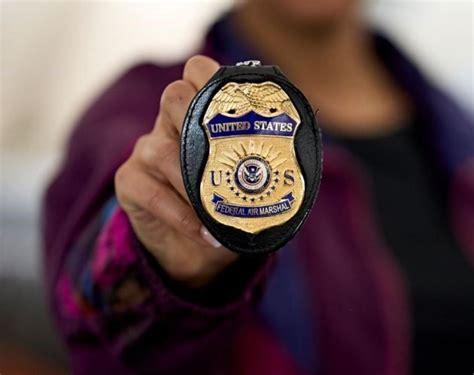
The Federal Air Marshal Service (FAMS) stands as one of the most enigmatic and operationally critical arms of U.S. federal law enforcement. Operating under the Transportation Security Administration (TSA) within the Department of Homeland Security (DHS), the Service executes its mission not through highly visible patrols, but through carefully calibrated silence—armed, trained, and indistinguishable from the traveling public. These marshals are not only firearms experts but highly skilled in behavioral detection, counterterrorism tactics, and aviation-specific combat scenarios.
Its purpose is singular and potent: to neutralize threats aboard commercial aircraft and to provide a last line of defense against hostile takeovers in the sky. Yet the Service’s influence extends far beyond the cabin of a plane, shaping intermodal security policies and quietly enforcing deterrence where the average traveler sees only civility and calm.
Origins Rooted in Cold War Fears and Hijacking Epidemics
The genesis of FAMS dates back to 1962, born out of President John F. Kennedy’s concern about global aviation threats during the Cold War. Initially launched as the FAA’s Peace Officers Program with only 18 volunteers, the initiative represented the embryonic stage of what would become one of the most specialized units in federal law enforcement. By 1969, the urgency of midair hijackings prompted the creation of the Sky Marshal Division within the U.S. Marshals Service.
In the decades that followed, the program evolved piecemeal, absorbing elements from U.S. Customs’ Division of Air Security and gaining prominence after the notorious TWA Flight 847 hijacking in 1985. Congressional backing during the 1980s expanded FAMS internationally, reflecting growing anxiety about U.S. vulnerability in foreign airspace.
9/11 and the Age of Aggressive Expansion
Everything changed on September 11, 2001. With the hijackings of four aircraft and the deaths of nearly 3,000 people, the Federal Air Marshal Service was no longer a strategic option—it was a national imperative. At the time, only 33 marshals were actively deployed. Within weeks, President George W. Bush ordered an aggressive expansion. By 2013, the agency reportedly had over 4,000 air marshals, now operating on thousands of domestic and international flights.
However, organizational instability soon followed. Initially transferred to the Immigration and Customs Enforcement (ICE) in 2003, FAMS was reassigned in 2005 to the TSA, where it remains today. Between 2014 and 2016, however, the budgetary axe fell again, shuttering 6 of 26 field offices amid concerns over costs and efficacy.

Modern-Day Mandate: Beyond Aircraft, Into Transit and Terminals
Though airborne deployment remains its core mission, FAMS today also operates across intermodal transportation systems, particularly through the Visible Intermodal Prevention and Response (VIPR) teams launched in 2004. These teams serve as agile security forces within subways, train stations, ports, and other vulnerable public spaces. Their work is deliberately unpredictable, designed to prevent hostile actors from pattern recognition.
VIPR operations demand careful legal choreography, as FAMs must respect local jurisdictional boundaries while preserving operational secrecy. The duality of covert deployment in aircraft and overt presence on land has tested the agency’s flexibility, but it has also expanded FAMS’ strategic footprint.
Elite Selection, Grueling Training, and Psychological Fortitude
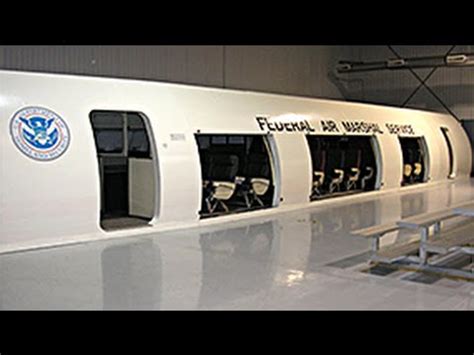
Recruitment into the Service is neither fast nor forgiving. Candidates must first complete a 12-week federal law enforcement academy at a Federal Law Enforcement Training Center (FLETC) site. This is followed by a specialized curriculum in aviation security, firearms proficiency, defensive tactics, and behavioral analysis.
Upon graduation, new marshals are assigned to one of the roughly 20 operational field offices. Reporting directly to the TSA Office of Law Enforcement, the hierarchical structure flows from the Director down to frontline marshals. Assignments often involve 14-hour days and travel schedules that match or exceed those of airline crews.
Tools of the Trade: Concealed Yet Lethal Equipment
While flying undercover, marshals are equipped with Glock 19 Gen5 or Glock 26 pistols, SIG Sauer P229/P239 chambered in .357 SIG, expandable batons, and handcuffs. Every piece of equipment is chosen for concealability, rapid deployment, and effectiveness in tight quarters. All agents are trained in the “shoot to stop” principle, underscoring their deadly purpose.
Flexibility is a logistical necessity. Marshals must be ready to deploy within an hour’s notice, particularly for high-risk flights, VIP movements, or major national events. A significant policy shift in 2006 enhanced operational stealth, allowing for civilian attire, alternative lodging, and fluid travel protocols to preserve anonymity.
Operational Criticism and Cost-Efficacy Debates
Despite the high skill and readiness of FAMs, the Service has drawn pointed scrutiny over the years. Most controversially, the 2005 fatal shooting of Rigoberto Alpizar—a mentally ill man who allegedly claimed to have a bomb at Miami International Airport—raised ethical and procedural alarms. Though the agents were cleared, public confidence wavered.
In 2003, whistleblower Robert MacLean was terminated after leaking information about reduced deployments during heightened threat alerts. Though later vindicated by the Supreme Court, the case revealed deep institutional tensions and sparked discussions on transparency and policy-making.
Equally damaging were reports of alcohol abuse, DUIs, and even felony convictions among active marshals. Critics like the Government Accountability Office (GAO) lambasted the Service for its low arrest-to-cost ratio, highlighting figures that equated to roughly 4.2 arrests annually at a cost of $200 million per arrest. This ignited fierce debate over whether resources might be better deployed toward intelligence gathering or technology upgrades.
The Cultural Shadow of the Air Marshal
FAMS’ stealth has also made it fertile ground for cinematic dramatization. From “Non-Stop” (2014) starring Liam Neeson to supporting roles in “Anger Management” and “Fast & Furious: Hobbs & Shaw”, the air marshal has become a pop-culture archetype—stoic, decisive, and ever-alert.
While the Hollywood version exaggerates tactics and adrenaline, the public portrayal underscores the paradox of the Service: its most visible attribute is its invisibility. Its success is measured not in explosions thwarted or villains shot, but in flights that end as planned, with threats neutralized before they materialize.
Conclusion: A Quiet Force with an Expensive Mandate
The Federal Air Marshal Service is a unique blend of silence and strength. Trained to act when all else fails, FAMs offer an existential security backstop in the aviation domain. But their cost, controversies, and limited operational footprint have sparked difficult questions about efficacy, efficiency, and oversight.
Yet for all its flaws, the Service remains irreplaceable within the architecture of homeland security. Every unnoticed trip completed without incident, every tense moment diffused before escalation, represents a win against asymmetrical threats. In an age where terrorism is increasingly fragmented, the air marshal continues to operate in the cracks—unseen, under pressure, and ever watchful.