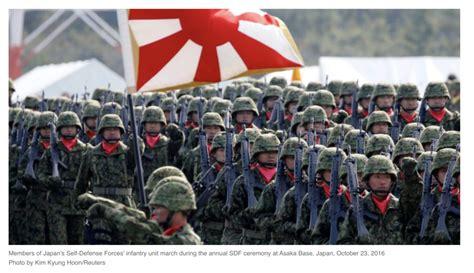
The Japan Air Self-Defense Force (JASDF) stands as a pillar of modern Japanese defense, a high-tech bastion established in the Cold War crucible and now evolving to meet the multidimensional threats of the 21st century. Founded on 1 July 1954, the JASDF was conceived as a direct response to shifting geopolitical realities in post-war East Asia, emerging from the ashes of the disbanded Imperial Japanese air services. As the aerial and now also spatial arm of the Japan Self-Defense Forces (JSDF), the JASDF’s mission has grown to encompass not only airspace defense, but also space operations, cybersecurity, electronic warfare, and strategic airlift in global humanitarian and peacekeeping missions.
The JASDF operates under the resonant motto: “Key to Defense, Ready Anytime!”, a creed reflected in the tireless vigilance of its nearly 50,000 personnel and its fleet of over 700 aircraft. With its headquarters based in Ichigaya, Tokyo, the JASDF has become synonymous with technological prowess, quick response, and an unwavering commitment to the protection of Japanese sovereignty.
Postwar Rebirth and Strategic Evolution
Following the cataclysm of World War II, Japan’s 1947 Constitution enshrined a pacifist ethos under Article 9, which formally prohibits the maintenance of offensive military forces. However, the onset of the Korean War and the broader Cold War contest prompted a strategic recalibration. Japan, under American guidance, enacted the 1954 Self-Defense Forces Act, creating the JSDF, including its air branch. The U.S. transferred an initial fleet of 85 aircraft in 1955, laying the foundation of the JASDF.
Throughout the Cold War, the JASDF primarily focused on intercepting incursions by Soviet aircraft, building up a comprehensive early-warning radar network and rapid-response intercept capabilities. Over time, it became clear that Japan’s air defense posture would need to transform into a more flexible, technologically advanced force.
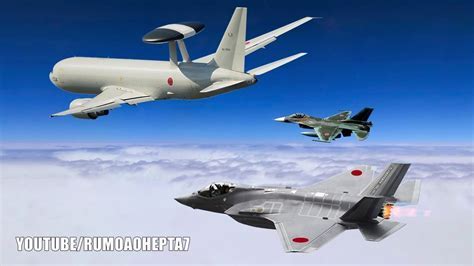
This modernization accelerated in the 21st century. The relocation of Air Defense Command Headquarters to Yokota Air Base in 2012, a shared U.S.-Japan facility, represented a critical deepening of allied integration. In recent years, increasing Chinese air activity near the Senkaku Islands and assertive Russian maneuvers have kept scramble operations high, peaking at 947 intercept missions in FY 2019. The intensity of operations, particularly against Chinese military aircraft, which accounted for 70% of the 785 scrambles in FY 2021, underscores the JASDF’s frontline role in regional deterrence.
Organizational Command and Operational Footprint
The JASDF operates through a well-structured hierarchy divided into five major commands:
- Air Defense Command
- Air Support Command
- Air Training Command
- Air Development and Test Command
- Air Materiel Command
Complementing these commands are five Regional Air Defense Forces, each positioned strategically across the Japanese archipelago:
- Northern (Misawa)
- Central (Iruma)
- Western (Kasuga)
- Southwestern (Naha)
- Air Defense Command Headquarters (Yokota)
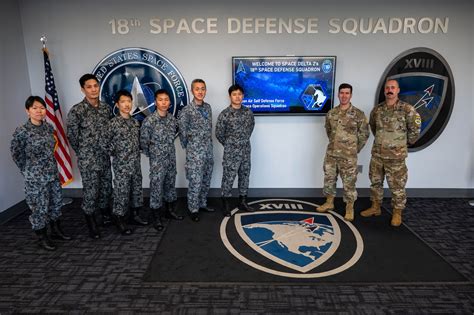
These regional forces are composed of fighter wings, control and warning wings, surface-to-air missile units, and support squadrons, designed to respond to regional threats with minimal delay. Among the most notable units are the Airborne Early Warning & Control Wing, the Electronic Warfare Squadrons, and the Space Operations Squadron, inaugurated in 2020 as Japan took its first institutional step toward militarized space operations.
A Fleet at the Cutting Edge
The JASDF maintains a balanced and highly modernized aircraft inventory, combining advanced interceptors, multirole fighters, surveillance aircraft, electronic warfare platforms, and heavy-lift transports.
Combat and Interceptor Aircraft
- F-15J/DJ Eagle: The backbone of Japan’s air defense. Heavily upgraded for extended service.
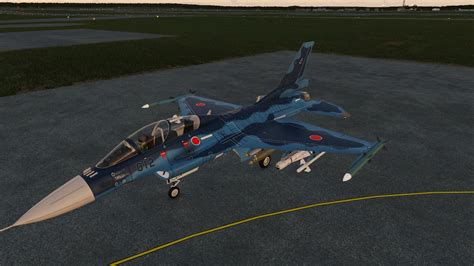
- Mitsubishi F-2: A uniquely Japanese derivative of the F-16, optimized for maritime strike roles.
- F-35A/B Lightning II: Japan plans to acquire 147 units, including 105 F-35A and 42 F-35B variants. The latter will enable short take-off and vertical landing (STOVL) operations, possibly from converted Izumo-class ships.
Surveillance, Reconnaissance, and Electronic Warfare
- E-767 and E-2C/D Hawkeye: Advanced AWACS for battlefield management.
- RC-2: Domestic reconnaissance aircraft based on Kawasaki C-1.
- EC-1 and YS-11EB: For electronic intelligence and jamming.
- RQ-4B Global Hawk: Unmanned aerial surveillance assets for wide-area reconnaissance.
Transport, Aerial Refueling, and Support
- C-1, C-2, C-130H: Strategic and tactical airlift capabilities.
- KC-767, KC-130H, KC-46A: Tanker fleet to support extended operations.
- UH-60J, CH-47J: Rotary assets for rescue and support.
- Gulfstream IV and Boeing 777: VIP and state transport, including the aircraft used as Japanese Air Force One.
Strategic Outlook: From Sky to Space
A crucial development in JASDF’s future orientation is its formal rebranding in 2027 as the Japan Air and Space Self-Defense Force. This signals a doctrinal and operational shift toward space-based surveillance, anti-satellite capability, and space situational awareness (SSA). The Space Operations Squadron, already active, will serve as the nucleus for expanded space-related defense activities, many of which involve close coordination with U.S. Space Force and private Japanese aerospace firms.
This transition reflects the emerging view in Tokyo that national defense must extend beyond the atmosphere, especially as China and Russia expand their own military space programs. The JASDF is also enhancing its cyber defense and electromagnetic spectrum dominance, recognizing the pivotal role of non-kinetic warfare in modern conflict.
Global Engagement and Multilateral Cooperation
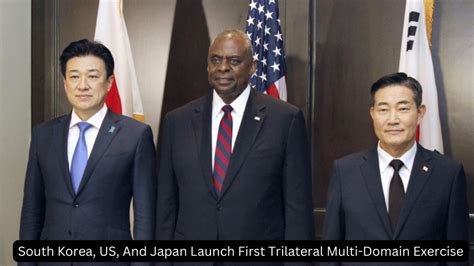
Although Japan remains constitutionally bound to a self-defense posture, the JASDF plays an increasingly active role in global security, participating in UN peacekeeping missions, disaster relief operations, and joint exercises. A historic milestone came in October 2023, when Japan conducted its first trilateral air exercise with the U.S. and South Korea, signaling a growing trilateral security architecture in Northeast Asia.
Further, Japan is a key partner in the Global Combat Air Programme (GCAP), a UK-led multinational initiative to develop a sixth-generation stealth fighter, intended to replace current F-2s by 2035. This fighter is expected to feature AI-driven systems, directed energy weapons, and enhanced stealth—a technological leap that aligns with Japan’s broader defense innovation strategy.
Cultural Identity and National Representation
While the JASDF is a force of engineering and discipline, it also carries a distinct cultural dimension. The service flag, a cobalt blue field with a golden winged eagle, star, sun, moon, and clouds, is rich in symbolism and has become an emblem of aerial guardianship since its adoption in 1955, with an updated version introduced in 2001.
The force also embraces culinary camaraderie. Its signature dish, an Okinawan-style karaage (deep-fried chicken), has earned recognition in inter-service cooking competitions. Since 2018, JASDF personnel have proudly squared off against Maritime Self-Defense Force curry teams, cultivating esprit de corps and a touch of humor amid the seriousness of duty.
The Path Ahead
As Japan confronts the mounting strategic challenges of a multipolar Indo-Pacific, the Japan Air Self-Defense Force remains a linchpin in the nation’s deterrence architecture. With its expanding mandate into space and cyberspace, increasing interoperability with allies, and adoption of cutting-edge platforms, the JASDF is undergoing a quiet transformation from a reactive interceptor force into a full-spectrum, forward-looking air and space power.
This transformation not only bolsters Japan’s defensive readiness but also reinforces its role as a responsible stakeholder in regional and global security. The skies and space above Japan are in capable hands, watched over by a force ever vigilant, ever evolving.