The Royal British Navy confirmed a closely coordinated maritime security operation on 23 January 2026, tracking a Russian corvette and naval tanker as they passed through the English Channel, one of the most congested and strategically vital sea lanes on the planet. The transit drew attention not because it was unusual, but because it highlighted how routinely NATO navies now operate in a posture of continuous vigilance as Russian naval movements near Europe remain under sustained scrutiny.
The operation unfolded over two days and involved surface ships and maritime aviation assets working in concert to maintain uninterrupted situational awareness. British authorities described the mission as a standard security activity, conducted fully in line with international maritime law, yet its timing and visibility underscored the heightened sensitivity surrounding military traffic in European waters.
From the moment the Russian vessels approached the western entrance of the Channel, the Royal Navy assumed responsibility through a structured handover from NATO partners already monitoring the group in the Atlantic approaches. This seamless transition reflected the alliance’s integrated maritime surveillance framework, designed to ensure no gaps in coverage across national boundaries.
Offshore Patrol Vessels Take the Lead
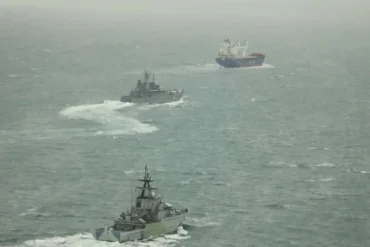
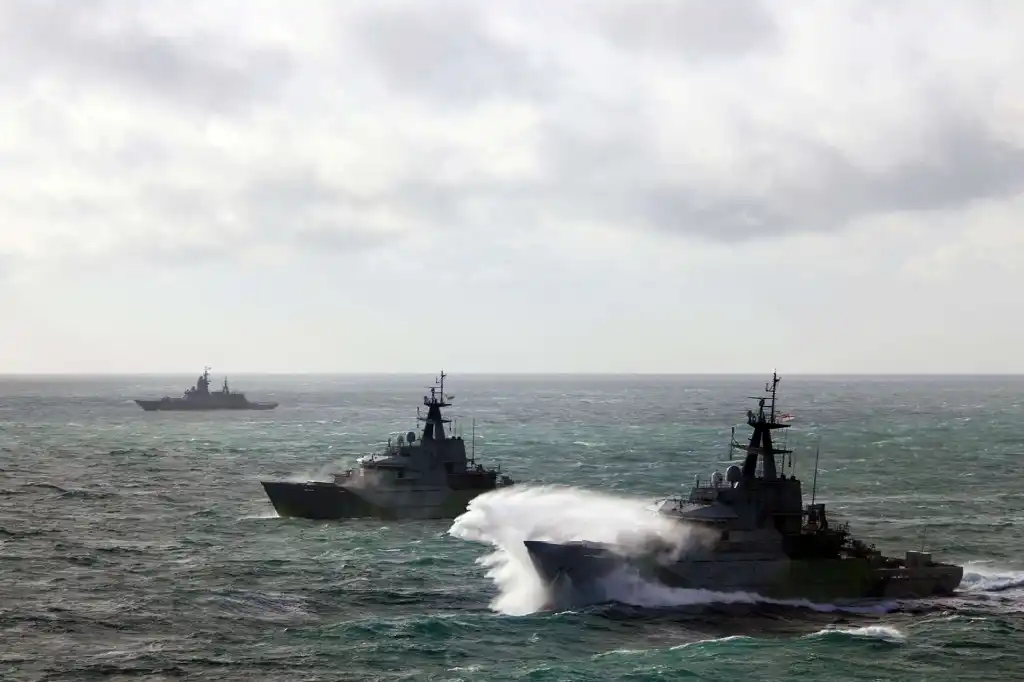
At the center of the operation were HMS Mersey and HMS Severn, both River-class offshore patrol vessels based in Portsmouth. These ships were tasked with shadowing the Russian corvette Boikiy and the tanker MT General Skobelev as they progressed eastward through the Channel after operating in the Mediterranean. Though lightly armed compared to front-line warships, River-class vessels are optimized for persistent presence, surveillance, and maritime security missions, making them well suited to this role.
HMS Mersey initially established contact as the Russian vessels entered the Channel, maintaining a steady trail while collecting surface picture data and reporting movements to the wider NATO command network. As traffic density increased closer to the Dover Strait, HMS Severn rotated into position to ensure continuity, demonstrating the Royal Navy’s ability to sustain long-duration monitoring without interruption.
The crowded nature of the Channel, where commercial shipping, fishing traffic, and naval movements converge, added complexity to the task. Maintaining safe separation while preserving clear observation required disciplined ship handling and constant communication, both hallmarks of routine but demanding maritime security work.
Airborne Surveillance Extends Situational Awareness
Surface tracking was reinforced from the air by a Wildcat helicopter from 815 Naval Air Squadron, embarked to provide extended sensor coverage. Equipped with maritime radar, electro-optical systems, and secure data links, the Wildcat dramatically widened the surveillance envelope around the task group. Its ability to classify contacts beyond the horizon and relay information in real time allowed commanders to maintain a comprehensive recognized maritime picture.
Airborne support also provided flexibility in a dynamic environment, enabling rapid assessment of surrounding traffic and confirming the identity and behavior of the Russian vessels as they navigated one of the world’s busiest waterways. The integration of shipborne aviation with offshore patrol vessels remains a cornerstone of modern Royal Navy maritime security doctrine.
NATO Coordination and Lawful Passage
British officials emphasized that the Russian transit was conducted under the principles of innocent passage, a right enshrined in international maritime law. The Royal Navy’s role was not to impede movement, but to observe, report, and ensure full awareness of foreign naval activity near UK waters. This distinction is critical, underscoring the professional and lawful nature of such operations even amid geopolitical tension.
As the Russian ships exited the Channel and entered the North Sea, HMS Severn maintained shadowing duties until responsibility was formally transferred to another NATO ally. These handovers are routine within allied maritime operations and reflect a mature, well-practiced system of shared security across European waters.
The presence of the corvette Boikiy, a Steregushchiy-class vessel designed for multi-role operations including anti-surface and anti-air warfare, added strategic weight to the transit. Paired with a fleet tanker, the movement highlighted Russia’s continued emphasis on sustaining naval deployments beyond its immediate home waters.
Wider Context of Maritime Security Operations
The Channel operation coincided with other Royal Navy monitoring activities further south. In the Strait of Gibraltar, patrol boat HMS Dagger observed the tanker Grinch, identified by British authorities as part of Russia’s so-called shadow fleet. That vessel was later boarded by French authorities, illustrating how intelligence gathered by one nation can rapidly support enforcement actions by another.
Together, these operations paint a clear picture of how maritime security is now conducted across key chokepoints. Offshore patrol vessels, fast patrol craft, and maritime aircraft form a layered presence that prioritizes awareness, information sharing, and lawful response rather than confrontation.
Strategic Significance of the English Channel
The English Channel remains a focal point of European security not only because of its traffic density, but because it serves as a gateway between the Atlantic, the North Sea, and northern Europe. Any military movement through this corridor is inherently visible and closely watched, particularly when relations between NATO and Russia remain strained.
By deploying appropriate assets rather than high-end combatants, the Royal Navy demonstrated a calibrated approach: firm, professional, and proportionate. Such missions free destroyers and frigates for other global commitments while still delivering persistent security at home.
In an era where maritime competition increasingly plays out through presence and perception rather than direct confrontation, the shadowing of Boikiy and General Skobelev offered a textbook example of modern naval statecraft. Quiet, methodical, and precise, the operation reinforced the United Kingdom’s role as a vigilant steward of one of the world’s most critical sea lanes.