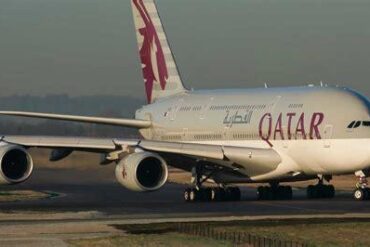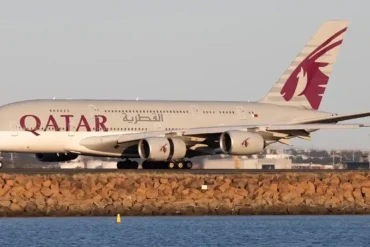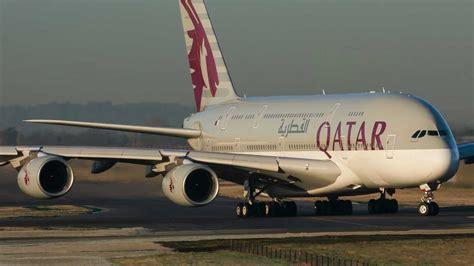
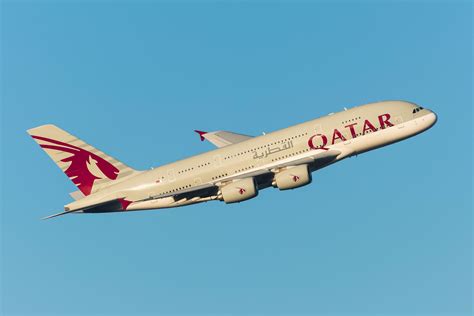
Qatar Airways’ Airbus A380 network is undergoing its biggest contraction in years, with the airline planning dramatically fewer superjumbo operations throughout the second half of 2026. While the carrier continues to operate the world’s largest passenger aircraft on several flagship routes, the scale of the reduction is significant. During some months, particularly November, scheduled A380 departures from Doha Hamad International Airport (DOH) are down by 54% compared to the same period last year.
The reduction is not the result of declining demand for premium travel or a permanent retirement strategy. Instead, it is largely driven by operational disruption caused by the ongoing conflict involving Iran, which forced Qatar Airways to temporarily ground its Airbus A380 fleet for weeks earlier this year. Although most aircraft have now returned to service, the airline is still rebuilding its long-haul network while adapting to changing operational realities.
As winter schedules approach, Qatar Airways is taking a cautious approach, prioritizing flexibility over restoring every former A380 route immediately. That strategy has reshaped one of the world’s most recognizable superjumbo networks.
Why Qatar Airways Has Reduced Airbus A380 Operations
The largest factor behind the reduction is the regional instability created by the war involving Iran, which directly affected airspace availability and operational planning throughout the Middle East. As security concerns intensified, Qatar Airways temporarily removed its Airbus A380 fleet from active service between mid-April and mid-June.
For an airline that operates only a relatively small fleet of the type, grounding several aircraft immediately translated into major schedule adjustments. Unlike airlines operating dozens of A380s, Qatar Airways has little redundancy. Every aircraft represents a substantial percentage of total fleet capacity, meaning even short-term disruptions ripple across the entire network.
According to the latest fleet data, Qatar Airways currently owns eight operational Airbus A380s. Six have now resumed commercial flights, while two aircraft remain parked in Doha, leaving the airline with fewer available superjumbos than originally planned for the upcoming winter season.
Rather than rushing every aircraft back into service, Qatar Airways appears to be restoring operations gradually. This measured approach allows the airline to maintain schedule reliability while retaining flexibility should regional conditions change again.
Several Major Airbus A380 Routes Have Disappeared
Perhaps the most noticeable consequence of the fleet reduction is the shrinking number of destinations served by the Airbus A380.
Three previously scheduled routes have disappeared entirely from the current winter timetable:
- Guangzhou (CAN)
- Singapore (SIN)
- Sydney (SYD)
Each cancellation reflects a different operational reality.
Guangzhou has not regularly seen Qatar Airways’ A380 since 2020, despite previous plans for its return. Singapore and Sydney, meanwhile, both continued receiving the superjumbo until March 2026, making their removal far more noticeable for passengers accustomed to flying the aircraft.
The disappearance of these destinations significantly reduces the airline’s double-decker network and concentrates available aircraft on routes where demand remains strongest or operational efficiency is greatest.
Even Remaining A380 Destinations Are Seeing Reduced Frequencies
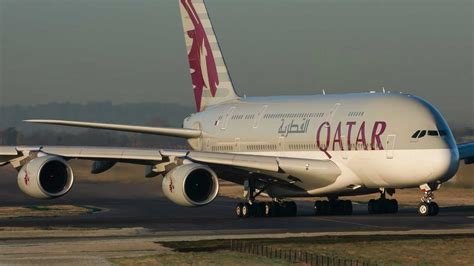
Not every destination has lost Airbus A380 service entirely. Instead, several flagship routes are simply receiving fewer daily departures.
London Heathrow and Paris Charles de Gaulle currently enjoy twice-daily A380 operations, making them among Qatar Airways’ highest-capacity markets. However, beginning on October 25, coinciding with the start of the northern hemisphere winter schedule, both destinations will lose one daily superjumbo frequency.
Bangkok follows a slightly different pattern. While currently operating with two daily Airbus A380 services, the route will temporarily fall to one daily flight between October 25 and November 30, before returning to twice-daily service in December.
These reductions suggest Qatar Airways is carefully matching aircraft capacity to expected seasonal demand while maximizing the utilization of its available fleet.
November Represents the Sharpest Decline
Among all months currently scheduled, November illustrates the scale of the network reduction most clearly.
Last November, Qatar Airways typically operated between six and seven daily Airbus A380 departures from Doha. Those aircraft served Bangkok, London Heathrow, Paris Charles de Gaulle and Sydney, creating one of the largest A380 schedules outside Emirates.
This November tells a very different story.
Current schedules show only three daily Airbus A380 departures, serving:
- Bangkok
- London Heathrow
- Paris Charles de Gaulle
That represents a 54% reduction in outbound Airbus A380 flights, making November the airline’s smallest planned A380 operation in several years.
Although additional aircraft returning to service could change these numbers, current schedules clearly demonstrate how dramatically the fleet has been scaled back.
Two Recently Reactivated Aircraft Could Change the Winter Schedule
Despite the reductions, there are encouraging signs that Qatar Airways is rebuilding its Airbus A380 operation.
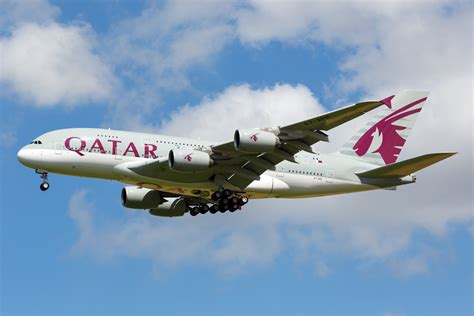
Aircraft A7-APE resumed commercial passenger service on June 28, operating between Doha and Paris Charles de Gaulle. Just days later, A7-APD returned to scheduled operations on July 1, flying the Doha-Bangkok route after several months of inactivity.
Earlier in June, additional aircraft including A7-APF, A7-APG, A7-APH, and A7-API also re-entered service.
These returning aircraft substantially increase fleet availability compared to only a few weeks ago. Nevertheless, two A380s remain parked in Doha, leaving the airline with unused capacity that may eventually support additional winter frequencies.
Industry observers therefore expect the published winter schedule to continue evolving over the coming weeks as more aircraft become available.
Why the Airbus A380 Still Matters to Qatar Airways
Despite repeated speculation surrounding the future of the aircraft, the Airbus A380 continues to play an important role within Qatar Airways’ long-haul strategy.
Each aircraft accommodates 517 passengers, including:
- 8 First Class suites
- 48 Business Class seats
- 461 Economy Class seats
Although premium cabins account for only around 11% of total seating, the aircraft remains particularly effective on slot-constrained airports such as London Heathrow and Paris Charles de Gaulle, where adding additional flights is often impossible.
Deploying one larger aircraft instead of multiple smaller ones allows Qatar Airways to maximize passenger capacity while preserving valuable airport slots.
The aircraft also remains a flagship product, offering First Class and spacious Business Class cabins that continue attracting premium travelers on selected long-haul routes.
The Airline Is Prioritizing Operational Stability Over Fleet Expansion
The current reductions should not necessarily be interpreted as a permanent retreat from the Airbus A380.
Instead, Qatar Airways appears focused on restoring stability after months of operational disruption. Rebuilding schedules cautiously reduces the risk of additional cancellations while giving planners time to evaluate geopolitical developments, aircraft availability, and winter travel demand.
With multiple aircraft having only recently returned to commercial service, the airline is deliberately avoiding overcommitting capacity before every superjumbo is fully operational.
This conservative strategy also provides flexibility should regional airspace restrictions or operational challenges change again during the coming months.
More Airbus A380 Flights Could Return Later This Year
Although current schedules show a much smaller Airbus A380 network, the situation remains highly fluid.
The return of additional aircraft, combined with improving operational stability, could allow Qatar Airways to restore frequencies on existing routes or even reintroduce destinations removed from the current timetable. Airlines frequently adjust winter schedules several times before they become final, particularly when fleet availability changes.
For now, however, Qatar Airways’ Airbus A380 operation is significantly leaner than it was a year ago. With November departures reduced by more than half, the carrier has temporarily shifted from operating one of the world’s largest superjumbo networks to concentrating its flagship aircraft on only its highest-priority long-haul markets. Whether this contraction proves temporary or signals a longer-term strategic adjustment will become clearer as additional aircraft return and winter schedules continue to evolve.