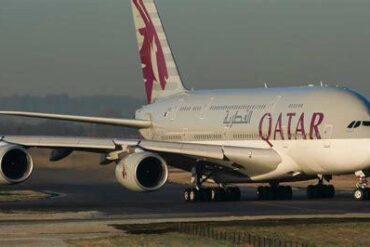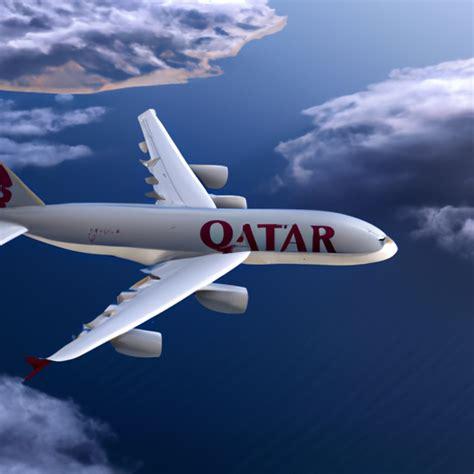
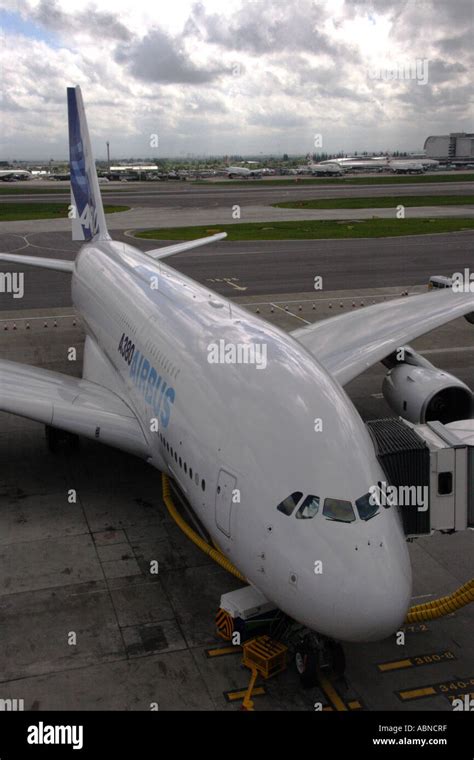
In the early 2000s, Airbus launched the A380 with the ambition to revolutionize intercontinental air travel by introducing the world’s largest passenger aircraft. This double-deck superjumbo was designed to address the challenges of slot-constrained airports and meet rising demand on high-density routes. Qatar Airways, an emerging global powerhouse in aviation, quickly recognized the A380’s potential to elevate its long-haul network capacity and ordered the type as part of a broader expansion strategy across Europe and Asia. Yet, despite the initial enthusiasm, the A380’s operational economics became a significant challenge over time, leading many airlines, including Qatar Airways, to ground the fleet in the wake of shifting industry dynamics and fluctuating fuel costs.
The A380’s massive size and four-engine design inherently translated to higher fuel consumption compared to newer, more efficient twinjets like the Airbus A350 and Boeing 787. These newer models delivered comparable range and superior operating economics, aligning better with evolving market trends favoring flexibility and frequency over sheer capacity. By the late 2010s, the A380 was largely perceived as a financial burden, and the global disruptions caused by the COVID-19 pandemic only accelerated its decline. Qatar Airways, like many of its peers, initially declared the superjumbo obsolete and grounded its entire A380 fleet by early 2021.
However, this initial decision did not hold. Within months, Qatar Airways surprised the industry by reactivating several A380s, marking a striking comeback for the aircraft on some of its key international routes. This unexpected reversal was driven by a confluence of operational necessity and strategic recalibration amid unprecedented circumstances.
How Qatar Airways Became an A380 Operator: Vision Meets Ambition
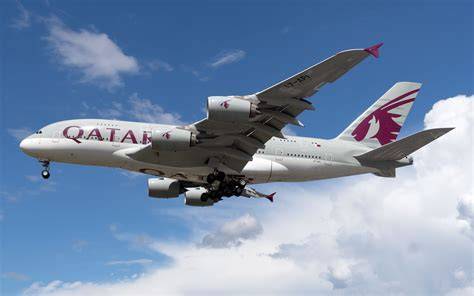
Qatar Airways’ journey with the A380 began with a clear strategic intent to dominate the long-haul market through high-capacity aircraft capable of serving crowded global hubs efficiently. The airline initially placed its order in 2001, making it the ninth airline worldwide to commit to the superjumbo. This order aligned perfectly with the airline’s rapid expansion and vision to position Doha as a major connecting hub between East and West.
Over subsequent years, Qatar Airways expanded its A380 orderbook, culminating in a fleet of ten aircraft delivered between 2014 and 2018. The airline’s A380s were first deployed on the prestigious Doha–London Heathrow route, where the aircraft’s large capacity and luxurious cabins quickly became a flagship symbol of Qatar Airways’ premium service offering. The double-decker layout allowed the airline to offer a unique three-class configuration with spacious first class suites, an expansive business class, and a sizable economy section, further cementing its competitive edge on the world stage.
Despite these advantages, evolving global events shaped a challenging operational environment for the A380. The airline’s then-CEO, Akbar Al Baker, openly admitted that the decision to invest in the A380 was retrospectively “the biggest mistake” in the airline’s history. The changing aviation landscape, marked by rising fuel prices, geopolitical shocks, and later the pandemic, rendered the superjumbo increasingly difficult to justify economically.
The Return of the A380: A Strategic Response to Fleet Disruptions
By 2020, Qatar Airways had grounded its entire A380 fleet, citing economic non-viability. However, a critical event in 2021 forced a reassessment. The airline was compelled to ground 19 of its Airbus A350s due to paint surface degradation issues mandated by the Qatari Civil Aviation Authority. This unexpected fleet reduction created a severe capacity shortfall on long-haul routes, and smaller widebodies simply could not fill the void.
Faced with this operational crisis and a recovering passenger demand landscape, Qatar Airways reluctantly reactivated five A380s starting December 2021. This move, though initially considered temporary, became a vital lifeline for maintaining the airline’s global connectivity and service levels, particularly on heavily slot-constrained routes such as London Heathrow, Paris Charles de Gaulle, Bangkok Suvarnabhumi, Sydney, and Perth.
The airline scheduled over 4,000 A380 flights in 2025 alone, with London Heathrow leading the pack at 730 flights in each direction. Notably, the frequency of A380 services to Bangkok has doubled, reflecting demand shifts and route prioritization. This redeployment underscores the A380’s unmatched ability to deliver high capacity where airport slot restrictions limit frequency increases.
Unique Configuration: Qatar Airways’ A380 Cabin Layout and Passenger Experience
Qatar Airways’ A380s feature a distinctive three-class cabin arrangement designed to maximize passenger comfort and operational efficiency. The aircraft seats a total of 517 passengers, split into 8 first class suites, 48 business class seats, and 461 economy seats.
The upper deck is dedicated primarily to premium cabins with the first and business class sections offering lie-flat seats and private suites in spacious 1-2-1 and 1-2-1 configurations respectively. First class suites boast 78-inch flatbeds, 23-inch wide seats, and high-definition entertainment systems paired with small ottomans for extra comfort. The business class features Collins Aerospace Super Diamond seats, recognized for their ergonomics and privacy.
The economy class occupies the entire lower deck, with Recaro CL3710 seats arranged in a 3-4-3 layout providing 31 inches of pitch and 18 inches of width, ensuring a competitive standard of comfort for long-haul flights. Additional economy seating is located at the rear of the upper deck in a 2-4-2 layout, which is somewhat unique among A380 operators and offers passengers a quieter cabin experience away from the bustle of premium cabins.
At the rear of the business class section, the aircraft offers a dedicated lounge space — a hallmark of Qatar Airways’ premium experience — providing a social area for business and first class passengers to relax and mingle, elevating the onboard experience beyond just a seat.
The Impact of Leadership and Industry Evolution on A380 Operations
The comeback of the A380 coincides with a significant leadership change at Qatar Airways. Following the departure of Akbar Al Baker in 2023, the new CEO, Badr Al Meer, adopted a more pragmatic view of the aircraft’s role in the airline’s future. While Al Baker criticized the superjumbo for inefficiency, Al Meer acknowledged the ongoing importance of the A380 for specific markets and constrained airports where increasing flight frequency is simply not possible.
He pointed out that airports such as London Heathrow, Sydney, and Bangkok present unique challenges that the A380 is ideally suited to address. In these markets, the aircraft’s large seating capacity allows Qatar Airways to maximize passenger throughput without the regulatory and operational complexities of adding more flights. This strategic advantage ensures that the A380 remains relevant despite the general industry trend favoring smaller, more fuel-efficient twinjets.
The Future Outlook: Why the A380’s Retirement Remains Uncertain
Qatar Airways had previously planned to retire the A380 once its backlog of next-generation aircraft was fulfilled, specifically the Airbus A350-1000 and Boeing 777-9. However, persistent delays in aircraft deliveries have pushed back these plans. Supply chain disruptions and technical certification hurdles have slowed the influx of new widebodies into the fleet.
The Boeing 777-9, a key replacement for the A380, is still awaiting certification, with deliveries unlikely before 2026 or later. Meanwhile, the airline’s A350 program encountered setbacks due to disputes over paint surface degradation, resulting in halted deliveries and cancelled orders. Although a confidential settlement was reached in 2023, new aircraft arrivals remain limited.
With only six new Boeing 787 Dreamliners added to the fleet so far in 2025, Qatar Airways faces a shortage of replacement capacity. Meanwhile, the A380s in its fleet are relatively young, averaging just over 10 years old, which makes continued operation more feasible from a maintenance and financial perspective.
Given these constraints, the A380’s role within Qatar Airways’ long-haul strategy is likely to persist for the foreseeable future. The superjumbo continues to underpin the airline’s ability to serve high-demand routes with efficiency unmatched by any other aircraft currently available.
Conclusion: The Airbus A380’s Unforeseen Resurgence at Qatar Airways
The story of the Airbus A380 at Qatar Airways is one of ambition, challenge, and adaptability. Initially heralded as the cornerstone of the airline’s long-haul expansion, the aircraft’s fate seemed sealed by shifting economics and global disruptions. Yet, in an unexpected twist driven by operational necessity and strategic leadership, the superjumbo has re-emerged as a vital component of Qatar Airways’ fleet.
The A380’s ability to address slot-constrained airports and deliver massive capacity on critical routes has proven indispensable amid delays to new aircraft deliveries and fluctuating demand patterns. While the long-term plan may still envision a gradual phase-out, current market realities suggest the A380 will remain a defining feature of Qatar Airways’ network for years to come. This resurgence underscores the complex balance airlines must strike between innovation, flexibility, and pragmatism in an ever-evolving aviation landscape.