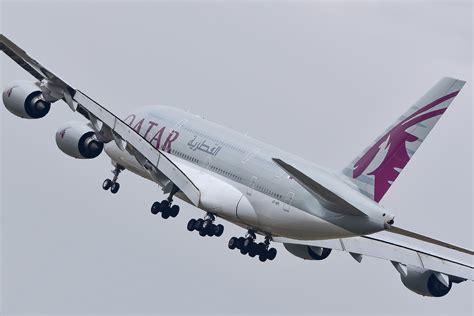
The Airbus A380 has long been a symbol of luxury and sheer scale in the aviation world. The world’s largest passenger aircraft, capable of carrying over 500 passengers in its standard configuration, remains a standout in the skies. Qatar Airways, a leader in global luxury air travel, has embraced the A380 for its premium offerings, while carefully curating its use in its extensive network. In 2026, how many Airbus A380s will Qatar Airways operate, and how does the aircraft fit into the airline’s broader strategy? This article delves into these questions while exploring the capabilities and significance of the A380 within Qatar Airways’ fleet.
The Airbus A380: A Symbol of Prestige and Comfort
Launched in 2007, the Airbus A380 revolutionized air travel with its double-deck configuration, offering unprecedented space and comfort for passengers. It was designed for long-haul flights between major international hubs, allowing airlines to carry more passengers and create world-class in-flight experiences. The A380’s extensive cabin space enabled airlines like Qatar Airways to implement innovative features such as spacious first-class suites, onboard lounges, and business-class pods.
Despite its appeal, the A380’s four-engine design and massive size come with significant operational costs. In an era where fuel efficiency and lower maintenance costs are becoming increasingly important, operating an A380 requires careful planning. However, for airlines focused on premium passengers and high-demand routes, such as Qatar Airways, the aircraft offers the perfect combination of capacity and luxury, providing a unique offering for long-haul travel.
Qatar Airways’ Approach to the A380: A Precision Tool for Premium Routes
Qatar Airways operates a refined network that prioritizes quality over quantity. The airline focuses on frequency and premium service, offering multiple daily flights to key international destinations. Its hub-and-spoke model through Doha Hamad International Airport (DOH) enables the airline to provide efficient connections between regions like Europe, Asia, and the Americas. The aircraft types used in Qatar Airways’ fleet are tailored to the specific needs of each route, ensuring that capacity aligns with demand.
In this strategy, the Airbus A380 is deployed selectively. Unlike other carriers that use the superjumbo on a wide array of routes, Qatar Airways uses the A380 primarily on high-demand, slot-constrained routes between global hubs. This means that the A380 is used more as a precision tool rather than a core element of the airline’s operations. Qatar Airways capitalizes on the A380’s ability to carry large volumes of passengers while offering superior luxury, making it a flagship aircraft for specific premium routes.
The Evolution of Qatar Airways’ Airbus A380 Fleet
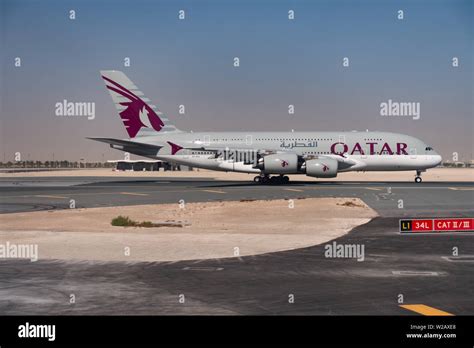
Qatar Airways’ decision to incorporate the Airbus A380 into its fleet was a calculated one. The airline took delivery of 10 A380-800 aircraft between 2014 and 2018. The first of these arrived on September 17, 2014, with the aircraft entering service on October 10, 2014, flying from Doha to London Heathrow Airport (LHR). Since then, the A380 has played a key role in Qatar Airways’ premium services, especially on long-haul routes to major hubs.
Despite the significant costs associated with operating the A380, Qatar Airways has made strategic use of the aircraft, deploying it on select routes where demand for premium cabins is consistently high. The airline’s limited number of A380s—just 10 in total—reflects a deliberate strategy to keep the aircraft’s deployment focused and cost-effective. As of 2026, Qatar Airways is expected to maintain a fleet of 8 active A380s, with the final two aircraft primarily serving as reserves or for special circumstances.
The Key Routes for Qatar Airways’ Airbus A380
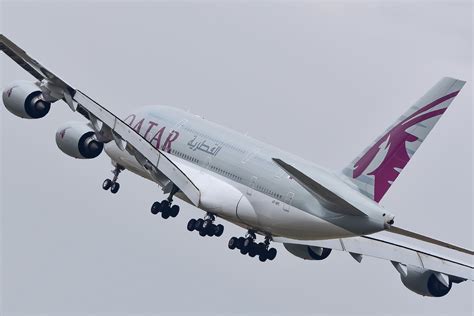
The Airbus A380 is used by Qatar Airways on select high-demand routes where the airline can maximize the revenue potential of its premium cabins. These routes are generally long-haul, high-traffic corridors between major global cities. Notable destinations for the A380 include London Heathrow, Paris Charles de Gaulle, and New York John F. Kennedy airports, where demand for both business and first-class seats is particularly high.
In addition to these regular routes, Qatar Airways also uses its A380s during peak demand periods. For example, during busy travel seasons or in response to major global events, the A380 provides extra capacity to cater to surging passenger numbers. This flexibility enables Qatar Airways to optimize the use of its fleet, ensuring that aircraft are deployed where they can generate the highest yield.
A Detailed Look at the A380’s Cabins on Qatar Airways
Qatar Airways’ Airbus A380 features a unique and luxurious three-class configuration that stands out in the industry. The first-class cabin, located at the front of the aircraft, offers private suites with wide recliners, deep beds, and direct access to the onboard lounge. This rare offering allows Qatar Airways to maintain its position as a leader in luxury air travel, especially on long-haul routes where comfort is paramount.
Business Class on the A380 features a 1-2-1 configuration with fully flat beds. Although this setup predates Qatar’s award-winning Qsuite, the seats still offer direct aisle access and ample space, ensuring a premium travel experience for business travelers. The aircraft’s upper deck is home to a spacious bar and lounge area, available to both first-class and business-class passengers. This social space is a key feature that sets the A380 apart from other aircraft in Qatar Airways’ fleet, providing a unique element of the passenger experience.
Economy Class on the A380, which spans both decks, offers passengers more generous seat width and a quieter ride than most other long-haul jets. While the hard product in economy is not as modern as Qatar’s newer offerings, it still provides a comfortable and premium experience, especially for those traveling in bulk. The cabin layout ensures that passengers feel relaxed even on the longest flights, thanks to the aircraft’s wide body and smooth flight characteristics.
The Future of the A380 in Qatar Airways’ Fleet
Looking ahead, Qatar Airways has made it clear that the Airbus A380 will remain part of its fleet for the foreseeable future. While the aircraft is not a primary component of the airline’s operations, it plays a vital role in maintaining the brand’s premium status and ensuring that key routes are well-served. Despite the high operating costs associated with the A380, the aircraft’s ability to carry a large number of premium passengers and generate high yields makes it a valuable asset.
In 2026, Qatar Airways is expected to maintain a small but highly efficient fleet of A380s, concentrating its deployment on the most profitable routes. This strategy will allow the airline to continue offering unmatched luxury and comfort on select international routes while keeping operational costs in check. As passenger preferences evolve and the aviation industry continues to adapt, Qatar Airways will likely explore new ways to use its A380s to reinforce its position as a leader in premium travel.
Conclusion: The A380 as a Niche Flagship for Qatar Airways
In summary, Qatar Airways’ decision to operate the Airbus A380 reflects a calculated approach to premium air travel. The airline has strategically chosen to deploy the A380 on a limited number of routes, maximizing its potential as a luxury flagship aircraft while minimizing operational costs. The aircraft’s spacious cabins, luxurious amenities, and iconic double-deck configuration make it a favorite among passengers on select high-demand routes. While its future in the broader airline industry may be uncertain, the A380 will continue to play an essential role in Qatar Airways’ network strategy for years to come.
Qatar Airways’ small but impressive A380 fleet is a testament to the airline’s commitment to offering the best in long-haul air travel. The superjumbo may not be the backbone of the airline’s operations, but it is undeniably a key part of its brand identity, symbolizing luxury, comfort, and global reach.