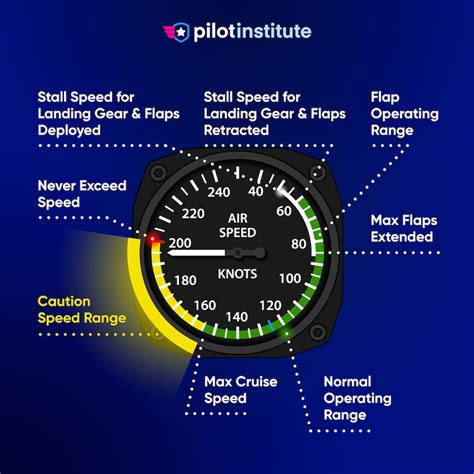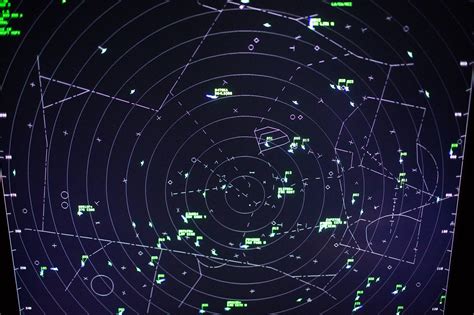
In the complex, high-stakes world of air traffic management, even the smallest deviation in an aircraft’s true airspeed can ripple through the airspace system with outsized consequences. According to AIM 5-3-3 (a)(1)(e), pilots are required to report speed corrections exceeding 10 knots or 5% of the filed true airspeed, without prompting from Air Traffic Control (ATC). Despite this clear mandate, compliance in practice is surprisingly rare. The aviation community, particularly in the United States, remains divided on the operational significance of these corrections. But for those navigating the enroute airspace—where trajectory prediction and separation assurance depend heavily on precision—this data is anything but trivial.
The Regulatory Mandate: Understanding AIM 5-3-3 (a)(1)(e)
The Aeronautical Information Manual (AIM) provides pilots with official guidance on many aspects of flight operations. Section 5-3-3 outlines mandatory position reporting, and subsection (a)(1)(e) specifically calls for pilots to report a change in true airspeed (TAS) of more than 10 knots or 5% from what was filed in the flight plan. This directive applies broadly, including in radar environments and without a specific request from ATC.
At first glance, a 5% deviation may seem insignificant. But in high-altitude, enroute airspace where aircraft may fly hundreds of miles with minimal vectors, even this minor change can undermine the predictive models used by ATC systems such as ERAM (En Route Automation Modernization).
Why Speed Accuracy Matters in the Enroute Environment
Enroute controllers rely on advanced automation systems like ERAM to ensure aircraft maintain safe separation. These systems calculate projected positions using filed flight plans, which include cruise TAS. When there is a significant deviation from the filed TAS that is not reported, ERAM may generate inaccurate conflict alerts—or fail to detect actual conflicts. This misrepresentation can affect aircraft separation across long stretches of controlled airspace.
Multiple current and former enroute controllers emphasize the importance of these reports. As one noted, “If [the TAS] is off by only a couple knots, it’s usually no big deal. More than that, and it can cause problems.”
Another controller added, “Our software plots trajectories based on flight plan data… even when you’re in radar. The probing is based on flight plan and not radar data, so having accurate TAS is significant.”
Radar vs Non-Radar Environments: Does Context Change the Rule?
In tower or TRACON environments, where surveillance radar is dominant and aircraft are under close observation during departures and arrivals, controllers often dismiss the need for TAS correction reports. One tower controller remarked, “I know your ground speed and couldn’t care less about your true airspeed.” The sentiment is widely echoed at terminal levels, where radar returns and vectors often override filed data.
However, this localized radar precision doesn’t extend to enroute sectors or oceanic airspace. Offshore controllers report that unreported speed changes have led to serious incidents, including loss of separation.
One anecdote recounted a near-collision when a 747 increased speed from Mach 0.81 to Mach 0.86 over the Pacific without informing ATC. The deviation was significant enough to trigger a separation breach. “Be advised,” a controller warned, “there will be NOTAMs when it is critical.”
Operational Impact: The Role of ERAM and Trajectory Prediction
ERAM does not simply monitor radar tracks. It uses predictive modeling based on filed flight plans to forecast aircraft positions and detect potential conflicts up to hundreds of miles in advance. When pilots fail to report substantial TAS changes, ERAM continues its computations based on now-erroneous data.
This is particularly risky in scenarios involving overtakes or compressed sequences. For instance, some regional airlines have adopted economy cruise profiles that differ significantly from filed values. A pilot may file for Mach 0.78 but fly at Mach 0.70—a delta that can affect sequencing.
A controller explained how these discrepancies impact sequencing: “When there’s an unexpected massive overtake between like types… it’s been nice having some pilots tell me in climb out.” In these cases, early speed reports improve traffic flow and reduce the likelihood of cascading delays.
Why Pilots Rarely Report Speed Corrections
Despite the clear regulatory language, compliance remains the exception. Pilots—particularly those with thousands of hours in the system—often do not see operational repercussions from failing to report these changes. “In 18 years of flying in the US, I’ve never heard anyone on frequency doing that,” a seasoned pilot admitted.
Some reasons cited include:
- The assumption that ATC will adjust ETA and routing dynamically.
- Misunderstanding about when or where the rule applies.
- Perception that minor speed changes are inconsequential.
- Belief that radar contact overrides flight plan inaccuracies.
This disconnect underscores a need for renewed emphasis on the importance of accurate data in predictive air traffic management, particularly as ATC systems grow increasingly dependent on automation.
Compliance is Easy: A Simple Yet Crucial Communication
Controllers stress that reporting a TAS change is not burdensome. A simple phrase such as “Center, November One-Two-Three-Bravo, true airspeed correction four-one-five knots” is all that’s required. ATC systems can be updated in seconds with commands like AM SPD 415, allowing ERAM to immediately recalculate conflict predictions.
As one controller stated, “Takes five seconds.”
Non-Radar and Oceanic Airspace: A Case for Critical Reporting
In oceanic or non-radar controlled airspace, where position reports and procedural separation remain essential, TAS changes are not just helpful—they are mission-critical. Time-based separation in these environments depends entirely on expected speeds, and deviation from those speeds introduces direct risk to safety.
Oceanic ATC systems rely on position reports that are projected forward using TAS, and any change—even a marginal one—can upset the spacing grid used to maintain safe longitudinal separation. Failure to notify ATC of a speed increase, as in the 747 case mentioned earlier, resulted in a pilot deviation and formal investigation.
Training and Culture: Bridging the Gap Between Policy and Practice
A widespread lack of awareness or concern about the 10 knots/5% reporting rule suggests a disconnect between regulatory intent and operational culture. Despite being clearly defined in the AIM, it is neither emphasized in recurrent training nor reinforced through standard operating procedures in many flight departments.
Improved communication between ATC facilities and airline training departments could help correct this. Furthermore, integrating TAS compliance checks into flight management systems or Electronic Flight Bags (EFBs) could automate prompts for pilots when deviations exceed thresholds.
Conclusion: A Small Report with Big Implications
While it may seem minor in the grand scheme of cockpit duties, reporting a true airspeed correction of more than 10 knots or 5% plays a significant role in the safe and efficient management of airspace. In an era of increasing automation and reliance on predictive modeling, even small deviations can yield disproportionate effects.
For pilots, understanding when and why this rule matters is key. For controllers—especially those working enroute and oceanic sectors—the message is clear: accurate speed reporting ensures accurate conflict prediction.
As aircraft continue to operate in increasingly dense airspace with tighter separation standards, the importance of even minor corrections cannot be overstated. It is a small transmission that carries weight far beyond its simplicity.