The global airline industry enters 2026 with a rare combination of resilient demand, constrained supply, and improving financial discipline. After a solid performance in 2025, airlines worldwide are preparing for another year of expansion, though one shaped less by ambition and more by the physical limits of aircraft availability. We observe that capacity growth in 2026 will not be defined by runaway fleet expansion, but by strategic utilization of scarce assets, regional demand asymmetries, and structural shifts in both passenger and cargo markets.
The most credible industry forecasts indicate that global airline capacity will grow steadily but unevenly in 2026. The International Air Transport Association projects passenger traffic growth of 4.9% year-on-year, measured in Revenue Passenger Kilometers. This figure represents a modest deceleration compared to 2025, not because demand is weakening, but because the industry simply lacks enough aircraft to grow faster. More than a decade of under-deliveries has left airlines operating in an environment where every available seat is precious.
We must emphasize that this growth is occurring against a backdrop of historically high load factors. With global seat occupancy expected to hover around 83.8%, airlines are filling planes at levels that would once have been considered exceptional. This structural tightness in capacity is a central theme for 2026, influencing pricing power, route planning, and profitability across nearly every market.
Passenger Demand Expansion Anchors 2026 Capacity Growth
Passenger aviation remains the primary driver of airline capacity growth in 2026. Origin-destination passenger volumes are projected to rise from 4.269 billion to 4.458 billion, while the total number of scheduled flights is expected to increase from 38.9 million to 40.3 million. These figures underscore that airlines are expanding operations cautiously, prioritizing yield optimization over raw scale.
Total industry revenue is forecast to reach $1.053 trillion, with passenger transport accounting for approximately $751 billion. This revenue composition highlights the continued centrality of passenger traffic, even as ancillary services and cargo play increasingly strategic roles. We note that airlines are leveraging premium cabins, dynamic pricing, and loyalty ecosystems to extract greater value from each incremental passenger rather than relying solely on volume growth.
Regional demand patterns reveal a clear geographic divergence. Asia-Pacific is expected to lead global growth with a 7.3% increase in passenger traffic, reflecting the continued reopening of international markets, rising middle-class incomes, and expanding low-cost carrier networks. Africa and Latin America follow with growth rates of 6.0% and 6.6% respectively, signaling strong demographic tailwinds and underpenetrated aviation markets.
North America and Europe Face Structural Maturity
In contrast, North America is forecast to grow by just 1.5%, underscoring its status as a mature aviation market. Capacity expansion in the United States and Canada is constrained not only by aircraft shortages but also by airport congestion, air traffic control limitations, and an aging workforce. Europe, with projected growth of 3.8%, sits between maturity and renewal, benefiting from sustained leisure demand while grappling with regulatory complexity and infrastructure bottlenecks.

We observe that these regional differences will shape fleet deployment strategies throughout 2026. Widebody aircraft will continue to gravitate toward Asia-Pacific and Middle Eastern routes, while narrowbody fleets dominate growth in short- and medium-haul markets. This dynamic reinforces the importance of aircraft mix flexibility as a competitive advantage.
Pilot Demographics Quietly Cap Capacity
Beyond aircraft availability, human capital represents a less visible but equally powerful constraint on airline capacity growth. The global pilot workforce is aging, with the United States offering a particularly stark example. The median age of active air transport pilots has climbed into the 50–54 age range, and the proportion of pilots approaching mandatory retirement has more than doubled since the late 1990s.
We recognize that training pipelines are struggling to replace retiring pilots at sufficient scale. High training costs, lengthy certification timelines, and competition from other technical professions are slowing workforce renewal. As a result, some airlines in 2026 will have aircraft available but lack the crews required to operate them at full utilization.
Air Cargo Remains a Strategic Growth Lever
While passenger aviation dominates headlines, air cargo continues to play a critical stabilizing role in airline capacity planning. In 2026, global air cargo volumes are expected to grow by 2.6%, supported by structural shifts in global trade and logistics. Recent trade volatility demonstrated how air cargo can rapidly adapt supply chains when speed becomes more valuable than cost.
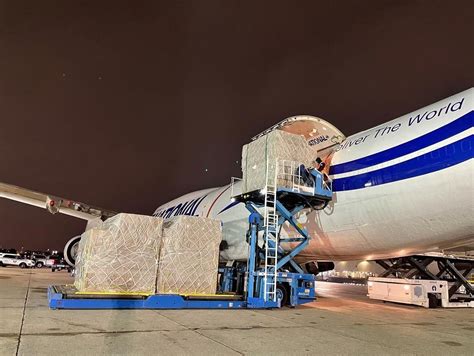
We see continued momentum from e-commerce, high-value manufacturing, and AI-driven investment, all of which favor time-sensitive transportation. Even as sea freight remains cheaper for bulk goods, uncertainty increasingly tilts the balance toward air transport for critical shipments. Airlines are responding by protecting belly cargo capacity and extending the service lives of aging freighter fleets.
However, the cargo sector is not immune to aircraft shortages. Passenger aircraft retention has slowed the traditional conversion of older widebodies into freighters, resulting in an aging freighter fleet operating beyond planned thresholds. This dynamic will limit cargo capacity growth in 2026 despite robust demand fundamentals.
Profitability Improves Despite Modest Margins
One of the most striking features of the 2026 outlook is the contrast between rising profits and persistently thin margins. Global airline net profit is projected to reach $41 billion, a record in absolute terms. Yet the industry-wide net margin is expected to remain around 3.9%, reinforcing aviation’s reputation as a low-margin business.
We emphasize that profitability gains are being driven less by cost reductions and more by capacity discipline and pricing strength. High load factors allow airlines to spread fixed costs across more passengers, while constrained supply limits destructive fare competition. Still, profitability varies dramatically by region. Middle Eastern carriers are expected to generate net profit margins exceeding 9%, while African airlines may earn as little as $1 per passenger.
This disparity reflects differences in cost structures, network positioning, and government support. It also highlights why global capacity growth in 2026 cannot be understood as a uniform phenomenon; it is deeply shaped by regional economics.
Aircraft and Engine Shortages Define the Ceiling
At the heart of the 2026 capacity equation lies a simple reality: airlines cannot fly aircraft they do not have. Boeing and Airbus have underdelivered for years, resulting in more than 5,300 missing aircraft deliveries compared with pre-pandemic trends. Although delivery rates are improving, the backlog created since 2019 will take years to unwind.

We note that the primary bottleneck is no longer airframes but engines. Pratt & Whitney, Rolls-Royce, and CFM International are all struggling with production delays and unprecedented maintenance demands. Aircraft are increasingly being assembled without engines and stored until powerplants become available, a mismatch that directly suppresses fleet growth.
Widebody aircraft shortages are particularly acute, with an estimated deficit of 700 units, compared to fewer than 200 single-aisle aircraft. Given that narrowbodies account for roughly 71% of the global fleet, this imbalance disproportionately affects long-haul capacity and international growth.
Independent Forecasts Confirm Moderate Expansion
Independent analytics firms broadly align with IATA’s outlook. Cirium forecasts 3.6% seat capacity growth, noting that thousands of aircraft deliveries were canceled or deferred during the pandemic. While production is ramping up, 2026 will still reflect the long shadow of those decisions.
We interpret this convergence of forecasts as evidence that airline capacity growth in 2026 will be measured, resilient, and profitability-focused, rather than aggressive. Airlines are increasingly optimizing schedules, retiring inefficient aircraft later than planned, and squeezing additional utilization from existing fleets.
Long-Term Growth Remains Intact Beyond 2026
Although short-term forecasts are vulnerable to geopolitical shocks, the long-term trajectory of aviation remains upward. Over the next two decades, global demand is expected to support the delivery of approximately 46,500 new aircraft, with Asia accounting for nearly 45% of that growth. China and India will remain the epicenters of fleet expansion, reshaping global capacity flows.
We conclude that airline capacity growth in 2026 will be defined not by how much demand exists, but by how effectively airlines navigate scarcity. The industry’s ability to grow nearly 5% under such constraints reflects both enduring consumer appetite for air travel and a newfound discipline forged through crisis. This balance between ambition and limitation will define aviation’s next chapter.