When aspiring airline pilots imagine their future careers, most focus on one question: which airline pays the most? The debate has fueled countless discussions across aviation forums, flight schools, and pilot lounges. Names such as United Airlines, Delta Air Lines, and American Airlines are often compared as though choosing the right employer is the single most important financial decision a pilot can make.
In reality, experienced aviators understand a more nuanced truth. Once a pilot reaches a major airline, the aircraft they fly frequently has a greater influence on their income, lifestyle, and long-term career trajectory than the airline logo displayed on the tail.
Modern airline compensation systems are built around aircraft categories, seniority levels, and cockpit positions. As a result, two pilots working for the same airline can earn dramatically different salaries depending on the fleet they operate. A captain commanding an intercontinental Boeing 777 may earn tens of thousands—or even hundreds of thousands—more annually than a colleague flying domestic routes in a narrowbody jet.
Understanding how fleet assignments work is therefore essential for anyone seeking to understand airline pilot compensation in today’s aviation industry.
Fleet Assignment Creates the Largest Salary Differences in Commercial Aviation
The public often assumes pilot salaries are determined primarily by the airline itself. While carriers certainly establish compensation through collective bargaining agreements and labor contracts, the structure of those agreements reveals a different reality.
Most major airlines utilize fleet-specific pay scales. These systems assign different hourly rates to pilots based on the aircraft type they fly, their rank in the cockpit, and their years of service.
Aircraft size remains one of the most significant variables. Larger airplanes typically perform longer missions, transport more passengers, and operate across more complex international networks. Because of these additional responsibilities, airlines compensate crews operating widebody fleets at higher rates.
A pilot assigned to a Boeing 777, Boeing 787, Airbus A350, or Airbus A330 often occupies a significantly higher pay category than a pilot flying a Boeing 737 or Airbus A320 family aircraft. Even when both pilots possess similar experience levels, their earnings potential can differ substantially.
This structure has existed for decades, but recent labor agreements have amplified the gap. Following the pandemic, pilot shortages forced airlines to negotiate record-breaking contracts. While pay increased throughout the industry, the largest gains frequently occurred within premium fleet categories.
As a result, aircraft assignment has become one of the most valuable financial assets in a pilot’s career.
After securing employment at a major airline, many pilots discover that bidding into the right aircraft can produce a larger increase in earnings than changing employers entirely.
Why Widebody Aircraft Command Premium Pilot Pay
Widebody aircraft occupy a unique position within airline operations. These airplanes perform the longest routes, connect global hubs, and generate substantial revenue for carriers.
Flights between North America and Asia, Europe and the United States, or the Middle East and Australia require crews capable of managing complex international operations. Long-range missions involve multiple regulatory environments, extended duty periods, international procedures, and sophisticated operational planning.
Consequently, airlines place widebody fleets in higher compensation brackets.
A captain operating an Airbus A350 across the Pacific Ocean or commanding a Boeing 777 over the Atlantic typically earns significantly more per hour than a captain flying domestic narrowbody routes.
The premium reflects not only aircraft size but also mission complexity.
Long-haul operations often require augmented crews, international qualification requirements, specialized training, and greater operational responsibility. Airlines therefore view these assignments as premium positions deserving premium compensation.
For pilots, gaining access to widebody fleets often represents a defining career milestone. Beyond the prestige associated with flying some of the world’s most advanced airliners, the financial rewards can be extraordinary.
The Enormous Gap Between a Junior First Officer and a Senior Widebody Captain
Perhaps the clearest demonstration of fleet-based compensation emerges when comparing opposite ends of the airline seniority spectrum.
A newly hired first officer generally begins their airline career in a narrowbody fleet. These pilots spend years building experience while gradually climbing the seniority ladder.
Meanwhile, senior captains occupy the most desirable positions within airline operations.
The difference in compensation can be staggering.
At major U.S. carriers, junior first officers frequently earn hourly rates close to the low-$100 range. By contrast, senior captains operating aircraft such as the Boeing 777 or Airbus A350 may earn more than three times that amount per flight hour.
When annual flying schedules are considered, the resulting salary gap can exceed $150,000 before accounting for retirement contributions, profit-sharing programs, premium trips, overtime opportunities, and contractual bonuses.
What makes this comparison particularly interesting is that these pilots may work for the same company.
The distinction is not the airline. It is the aircraft assignment, combined with rank and seniority.
This explains why pilots often pursue upgrades and fleet transfers with remarkable determination. The transition from narrowbody first officer to widebody captain represents one of the largest financial leaps available in commercial aviation.

American Airlines Demonstrates the Power of Fleet-Based Pay Bands
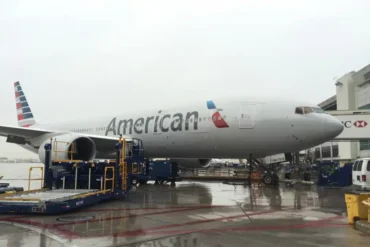
American Airlines offers one of the clearest examples of how aircraft assignment influences compensation.
Like many legacy carriers, the airline categorizes fleets according to aircraft size, operational complexity, and mission profile. These categories determine hourly pay rates regardless of the airline’s overall market performance.
Captains flying Boeing 777 and Boeing 787 aircraft occupy premium pay bands. Meanwhile, captains flying Boeing 737s or Airbus A320-family aircraft receive lower rates despite holding the same rank.
The difference can exceed $70 per block hour.
At first glance, that figure may appear modest. However, when multiplied across an entire year of flying, the impact becomes substantial.
Annual earnings can vary by tens of thousands of dollars based solely on fleet assignment.
For many pilots, the financial incentive is impossible to ignore.
A successful bid into a premium fleet can increase lifetime earnings dramatically, especially when the assignment is secured early enough to enjoy years of higher compensation.
Because airline careers often span three decades or more, seemingly small hourly differences compound into significant financial outcomes over time.
Seniority Remains the Key That Unlocks Premium Aircraft
Although fleet assignment is extraordinarily important, aircraft bidding cannot be separated from seniority.
Seniority governs nearly every aspect of airline life.
Aircraft assignments, crew bases, vacation selections, monthly schedules, reserve obligations, and captain upgrades are typically awarded according to seniority rankings.
This system creates a highly structured career progression.
New hires usually begin in less desirable positions because they lack seniority. Over time, retirements and fleet movement create opportunities for advancement.
Pilots then bid into larger aircraft, preferred schedules, and eventually captain positions.
The relationship between seniority and fleet assignment explains why many pilots are reluctant to change airlines after establishing themselves at a carrier.
A move to another airline may offer slightly higher hourly rates initially. However, the pilot must restart at the bottom of a new seniority list.
That reset can delay access to premium fleets and captain upgrades for years.
Consequently, a pilot who remains with one airline and eventually secures a widebody captain position often achieves greater lifetime earnings than a pilot who repeatedly changes employers seeking short-term gains.
In aviation, seniority functions like compound interest. The longer it accumulates, the more valuable it becomes.
The Airbus A321XLR Is Reshaping Traditional Pay Structures
For decades, aviation operated under a simple assumption.
Widebody aircraft handled long-haul international routes, while narrowbody aircraft primarily served domestic networks.
That distinction is beginning to disappear.
The arrival of the Airbus A321XLR has introduced capabilities previously associated almost exclusively with widebody aircraft. Its remarkable range allows airlines to operate transatlantic and other long-distance routes using a single-aisle platform.
This development is creating new questions regarding pilot compensation.
Historically, narrowbody pilots earned less because they operated shorter routes and less complex missions. However, the A321XLR performs many of the same long-range functions traditionally assigned to larger aircraft.
As airlines deploy the aircraft across international networks, pilot unions and management teams are increasingly examining whether traditional narrowbody compensation models remain appropriate.
Some airlines have already introduced enhanced pay categories for advanced narrowbody aircraft such as the Airbus A321neo, Airbus A321XLR, and Boeing 737 MAX 10.
These adjustments recognize that modern aircraft capabilities are blurring historical distinctions between fleet classes.
The evolution could eventually reshape how airlines evaluate pilot compensation across their fleets.
Strategic Fleet Bidding Has Become a Career-Defining Skill
Outside the aviation industry, career success is often measured by employer prestige.
Inside airline cockpits, the equation is considerably more complex.
Experienced pilots understand that maximizing earnings requires strategic decision-making throughout an entire career. Choosing the right base, upgrading at the right moment, and bidding into the most advantageous fleet can significantly influence lifetime compensation.
Aircraft assignment is therefore not merely an operational detail.
It is a career strategy.
A pilot who carefully positions themselves for future widebody opportunities may ultimately earn substantially more than someone who focuses exclusively on airline brand recognition.
The most successful airline careers often result from understanding how fleet assignments, seniority systems, and labor contracts interact over decades.
Rather than asking which airline pays the most, many veteran pilots ask a different question.
Which aircraft will provide the greatest long-term opportunity?
That distinction changes everything.
Why Fleet Selection May Become Even More Important in the Future
The aviation industry continues evolving at an extraordinary pace.
Airlines are modernizing fleets, expanding international networks, and negotiating increasingly sophisticated labor agreements. Meanwhile, pilot shortages continue strengthening labor’s bargaining position across much of the world.
These trends suggest that fleet assignment could become an even more influential factor in pilot compensation.
Widebody operations will likely continue commanding premium pay because of their complexity and revenue-generating potential. At the same time, next-generation aircraft such as the Airbus A321XLR are creating entirely new categories of flying that challenge traditional compensation models.
Future contracts may introduce additional pay distinctions based on route structure, aircraft capability, or mission complexity rather than relying solely on traditional narrowbody-versus-widebody classifications.
For pilots, the implications are clear.
Securing employment at a major airline remains an important achievement, but it is only the beginning of the journey. The aircraft they eventually bid onto may have an even greater impact on their financial future.
In many cases, the cockpit door that matters most is not the one belonging to a specific airline. It is the one leading to the right aircraft.
For a pilot building a 30-year career, fleet selection can determine hundreds of thousands of dollars in additional earnings, better schedules, more desirable routes, and enhanced career satisfaction. The airline name may attract attention, but the aircraft assignment often determines the real rewards.