Japan’s aviation market is entering a rare moment of reinvention, and Peach Aviation sits squarely at the center of it. As international demand rebounds and traveler behavior tilts toward value-driven flying, ANA Holdings is reshaping its future by letting its low-cost subsidiary do something bold: grow fast, fly farther, and absorb risk that the mainline brand no longer needs to carry. The result is a carefully engineered expansion that blends disciplined cost control with long-range ambition.
Peach is not being positioned as a side project or defensive hedge. It is becoming a strategic growth engine, designed to unlock international capacity without eroding ANA’s premium identity. With a planned 30% increase in available seat miles, a sharpened focus on inbound leisure demand, and the introduction of the Airbus A321XLR, Peach is evolving from a domestic-focused budget airline into a cross-border connector for Asia and beyond.
This shift is unfolding against a wider backdrop of transformation at ANA Holdings. Over the next five years, the group plans to invest roughly $13 billion in fleet modernization and digital infrastructure, all with a clear goal in mind: record operating income by the end of the decade. Peach’s expansion is one of the most visible expressions of that ambition, because it targets growth where margins can still be engineered rather than merely defended.
Peach Aviation’s Role Inside ANA’s Multi-Brand Architecture
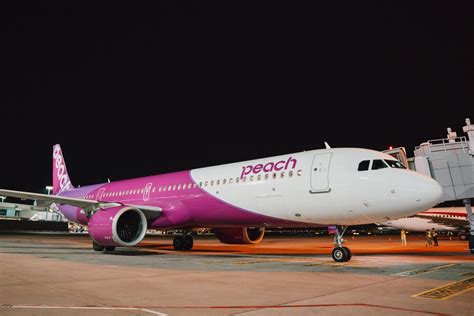
Founded in 2011 and launched in 2012, Peach Aviation built its reputation on simplicity. Operating under the code MM, the airline established its core base at Kansai International Airport, later expanding to Tokyo Narita and other domestic points. In late 2024, ANA Holdings moved to take full ownership of Peach, consolidating control over fleet decisions, network planning, and long-term brand direction.
That ownership shift matters. It allows ANA to deploy Peach with precision, using it to stimulate demand rather than merely respond to it. Peach operates an all-Airbus narrowbody fleet, centered on the A320 family, including A320neo and A321 variants. This commonality keeps training, maintenance, and operations lean, reinforcing the airline’s low-cost DNA while providing flexibility to scale.
Peach’s value to ANA lies in segmentation. The mainline carrier preserves its full-service positioning and yield structure, while Peach attracts travelers who prioritize price, flexibility, and point-to-point convenience. Instead of cannibalization, the two brands form a complementary system that expands the group’s total addressable market.
A 30% Capacity Expansion Built on International Demand
Peach’s growth plan is unapologetically capacity-driven. The airline aims to lift its business by around 30%, with international routes accounting for most of that increase. ANA’s 2026–2028 strategy explicitly targets inbound leisure travel, reflecting Japan’s continued appeal as a destination and the government’s support for tourism-led economic growth.
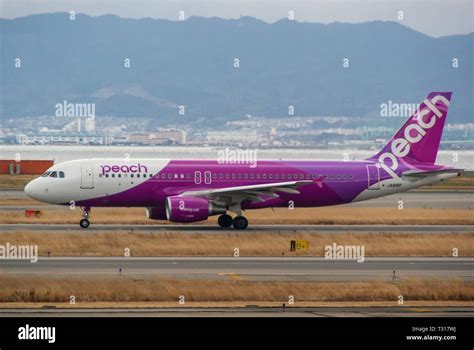
Kansai plays a crucial role here. Compared with Tokyo’s congested megahubs, Kansai offers lower operating costs and fewer slot constraints, making it ideal for rapid low-cost expansion. Peach can also grow by increasing aircraft utilization, tightening turnaround times, and upgauging routes where demand supports larger aircraft. Each lever compounds the others, producing growth without proportional cost inflation.
The emphasis on international flying also reshapes Peach’s network profile. Rather than concentrating solely on short domestic hops, the airline is pivoting toward regional cross-border markets where price sensitivity is high and competition rewards efficiency.
The A321XLR as a Strategic Force Multiplier
The most transformative element of Peach’s plan arrives in fiscal year 2028, when the airline expects to introduce the Airbus A321XLR. Alongside additional A321neo aircraft, the XLR gives Peach a longer-range, fuel-efficient narrowbody capable of flying routes that previously sat in an awkward gap.
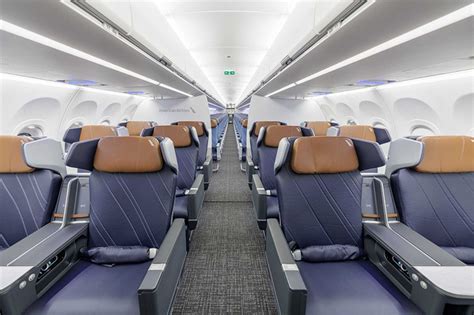
These are sectors too long for conventional short-haul aircraft yet too thin to justify widebodies. With the XLR, Peach can probe new mid-range markets across Asia-Pacific, testing demand with lower trip costs and reduced financial risk. For ANA Holdings, this becomes a live laboratory. Routes that mature can later be reassigned to the mainline, while others remain a profitable niche under Peach’s banner.
Why Peach Strengthens ANA’s Competitive Position
An in-house low-cost carrier gives ANA several advantages at once. It stimulates demand among travelers who might otherwise choose rail, stay home, or fly a foreign competitor. It captures inbound tourism at cost-efficient airports. It provides a sandbox for experimentation with new routes, schedules, and pricing models.
Most importantly, it creates strategic optionality. Shared ownership, procurement, and fleet planning generate synergies without forcing a single brand to serve every mission. Peach absorbs volatility and explores growth, while ANA’s mainline operation protects yield and reputation. Together, they form a system designed not just to survive the next decade, but to shape it.