Commercial aviation is built on margins. To passengers, modern airliners often appear to operate with effortless precision, but behind every departure lies a carefully calculated balance of speed, distance, performance, and decision-making. Sometimes that margin is measured in hundreds of feet. Sometimes it is measured in seconds. In the case of Frontier Airlines Flight 4345, it was measured in just 11 knots.
The May 2026 incident at Denver International Airport became one of the most closely examined aviation events of the year, not because of mechanical failure or severe weather, but because of an extraordinarily rare runway intrusion that unfolded at exactly the wrong moment. An Airbus A321neo accelerating for takeoff struck a trespasser who had breached airport security and entered an active runway. What followed was a sequence of split-second decisions that ultimately prevented a tragic situation from escalating into a catastrophic accident.
The aircraft reached approximately 127 knots before the captain initiated a high-speed rejected takeoff. Analysts later estimated the aircraft’s V1 decision speed at roughly 138 knots. The difference between those two numbers—just 11 knots—became the focal point of aviation discussions worldwide.
The significance of that narrow margin cannot be overstated. Those 11 knots preserved the crew’s ability to stop the aircraft safely on the runway, respond to indications of fire and smoke, and evacuate every passenger and crew member aboard. In an industry where safety is often defined by preparation and timing, Frontier Flight 4345 demonstrated exactly why pilot training, aircraft performance calculations, and emergency procedures remain so critical.
A Routine Departure That Became an Emergency Within Seconds
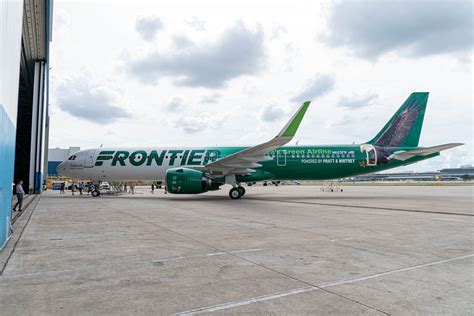
Frontier Airlines Flight 4345 was operating a scheduled service from Denver International Airport to Los Angeles. The aircraft involved was an Airbus A321neo registered as N646FR, carrying 224 passengers and seven crew members.
The departure began like thousands of airline departures that occur every day. The aircraft taxied to Runway 17L and received clearance for takeoff. As the crew advanced the throttles and the aircraft accelerated down the runway, neither the passengers nor the flight crew had any reason to expect what was about to occur.
Investigators later determined that an unauthorized individual had breached Denver International Airport’s perimeter fence shortly before the incident. Reports indicated that the trespasser reached the active runway environment only minutes after entering restricted airport property, creating an extremely narrow window for security personnel to respond.

As the Airbus accelerated through takeoff speed ranges, it struck the individual on the runway. At that moment, the flight crew was confronted with one of the most unusual emergencies imaginable. A collision during takeoff raises immediate concerns about potential damage to landing gear, engines, hydraulic systems, or aircraft structures. Even a relatively small object can create significant hazards when impact occurs at high speed.
Unlike bird strikes, which airline crews train to expect occasionally, a collision involving a human being on an active runway is extraordinarily rare. The crew had only seconds to assess the situation, determine the level of threat, and decide whether continuing the takeoff or rejecting it represented the safest course of action.
Understanding Why V1 Is One of Aviation’s Most Important Speeds
To understand why aviation experts focused so intensely on the 11-knot difference between the aircraft’s maximum speed and its estimated V1 speed, it is necessary to understand what V1 actually represents.
V1 is commonly referred to as the takeoff decision speed. It is one of the most important performance numbers calculated before every commercial flight. Prior to reaching V1, pilots can reject the takeoff and bring the aircraft to a stop within the available runway distance if a serious problem develops.
Once V1 has been reached or exceeded, the situation changes dramatically. In most circumstances, pilots are expected to continue the takeoff even if an emergency occurs. This principle exists because the remaining runway may no longer be sufficient to stop safely.
Contrary to popular assumptions, V1 is not a fixed value. It changes from flight to flight depending on numerous variables. Aircraft weight, runway length, temperature, airport elevation, wind conditions, runway contamination, and performance requirements all influence the final calculation.
For Flight 4345, aviation analysts estimated V1 at approximately 138 knots. The aircraft reached roughly 127 knots before the captain initiated the rejected takeoff procedure.
Eleven knots may sound insignificant to people unfamiliar with aviation. In reality, the difference is substantial. At these speeds, an Airbus A321neo covers a remarkable amount of ground every second. A delay of even a few moments can consume critical runway distance and dramatically reduce stopping margins.
This is why takeoff performance calculations are among the most carefully monitored aspects of airline operations. The transition from being able to stop safely to being committed to flight happens quickly, and crews must be prepared to act immediately when unexpected events occur.
The Split-Second Decision That Defined the Outcome
One of the most impressive aspects of the Flight 4345 incident was the speed and effectiveness of the crew’s decision-making process.
High-speed rejected takeoffs rank among the most demanding maneuvers commercial airline pilots can perform. While pilots routinely practice them in sophisticated flight simulators, actual real-world occurrences remain relatively uncommon.
The difficulty stems from human psychology as much as aircraft performance. Once takeoff power is set and acceleration begins, pilots become increasingly committed to continuing the departure. As speeds climb toward V1, that commitment becomes even stronger.
When an unexpected event occurs near decision speed, pilots must rapidly evaluate whether the threat justifies aborting the takeoff. There is no opportunity for prolonged analysis. The decision must be made almost instantly.
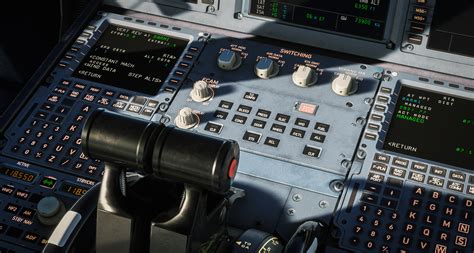
In the case of Flight 4345, the captain faced multiple uncertainties simultaneously. There was the impact itself. There was uncertainty regarding what had been struck. There was the possibility of structural or engine damage. There were emerging indications suggesting a potential fire-related issue.
Despite those challenges, the crew initiated a rejected takeoff while sufficient runway remained available.
Executing a high-speed rejected takeoff requires immediate and coordinated actions. Maximum braking is applied. Reverse thrust systems are deployed when available. Aircraft deceleration is closely monitored. Communications with air traffic control begin almost immediately. At the same time, pilots remain prepared for secondary emergencies that may develop during the stop.
Every action must occur in a precise sequence, often while crews process incomplete information about the nature of the emergency.
From Runway Strike to Fire Emergency
Stopping the aircraft was only the first phase of the crisis.
Following the rejected takeoff, the crew reportedly informed air traffic controllers about both the runway strike and indications of an engine fire. Additional reports indicated that smoke began entering the cabin after the aircraft came to a stop.
Smoke is among the most concerning scenarios faced by airline crews because its source is not always immediately obvious. Smoke can originate from engine issues, electrical malfunctions, pneumatic systems, overheating components, or external factors.
Determining the source while maintaining passenger safety requires rapid assessment and disciplined execution of emergency procedures.
For Flight 4345, the situation evolved beyond a simple rejected takeoff. What began as a runway collision now included potential fire indications and cabin smoke concerns.
The crew’s response reflected the layered nature of airline emergency management. Once it became apparent that the threat extended beyond merely stopping the aircraft, attention shifted toward passenger evacuation.
That decision proved critical.
Passengers were evacuated directly onto the runway while emergency responders moved toward the aircraft. Despite the stressful circumstances, all 231 occupants survived.
Twelve individuals reportedly sustained minor injuries during the evacuation process, and five were transported to local hospitals for evaluation. Considering the unusual sequence of events and the potential hazards involved, the outcome represented a significant success for emergency procedures and crew performance.
Why Continuing the Takeoff Could Have Created a More Complex Emergency
One of the most frequently discussed aspects of the incident involves a simple question: what if the aircraft had been traveling slightly faster?
Had the collision occurred after reaching V1, the crew likely would have faced a much more difficult decision.
Once committed to flight, an aircraft experiencing a runway collision may become airborne with unknown damage. While modern airliners are engineered with significant redundancy and resilience, uncertainty becomes a major factor.
A damaged engine could continue operating initially before exhibiting symptoms later. Structural impacts might not be immediately visible from the cockpit. Smoke indications could intensify after takeoff.
In that scenario, the crew would have been forced to manage the emergency while climbing away from Denver, communicating with air traffic control, analyzing system indications, coordinating with cabin crew, and preparing for an emergency return.
Smoke emergencies in flight are particularly demanding because every minute matters. Crews must identify potential sources while simultaneously flying the aircraft and planning a safe landing.
Remaining on the ground eliminated many of those complexities.
Emergency services had immediate access to the aircraft. Passengers could be evacuated without requiring an emergency landing first. Investigators and maintenance personnel could quickly assess damage. Most importantly, the crew retained a broader range of options.
This does not mean that continuing the takeoff would inevitably have resulted in disaster. Commercial aircraft and airline crews are designed and trained to handle serious airborne emergencies.
However, the ability to stop before V1 undeniably provided a safer and more manageable set of circumstances. Those 11 knots preserved that option.
Denver International Airport and the Security Questions Raised
While much of the attention focused on the flight crew’s actions, the incident also raised significant questions about airport security.
Denver International Airport is one of the largest airports in North America by land area, covering more than 50 square miles. Managing security across such a vast footprint presents substantial challenges.
Airports rely on multiple layers of protection, including perimeter fencing, surveillance systems, motion detection technologies, security patrols, access controls, and coordination centers. Yet even with these measures, absolute prevention of unauthorized access remains difficult.
The timeline associated with Flight 4345 highlighted the challenge clearly. Reports indicated that the trespasser breached the perimeter only minutes before reaching the active runway environment.
That short timeline significantly limited opportunities for interception.
Modern airports increasingly employ advanced technologies capable of detecting movement near restricted areas and alerting security personnel in real time. Following incidents such as this one, aviation security experts often evaluate whether additional sensors, surveillance coverage, response procedures, or perimeter enhancements could reduce future risks.
The Denver incident serves as a reminder that aviation safety relies on multiple independent layers of defense. When one layer fails, others must function effectively to prevent an accident.
In this case, the final protective layer was the professionalism and judgment displayed by the flight crew.
The Remarkable Role of Training and Human Performance
Commercial aviation remains one of the safest forms of transportation largely because crews train continuously for emergencies they may never encounter.
Pilots spend countless hours practicing engine failures, rejected takeoffs, smoke events, system malfunctions, and evacuation scenarios. Many of these situations occur rarely in actual airline operations.
The purpose of that training is not simply procedural compliance. It is the development of rapid decision-making skills under pressure.
Flight 4345 demonstrated the value of that preparation. The crew encountered an event that few pilots will ever experience during their careers. Yet their response reflected the principles drilled repeatedly during simulator sessions and recurrent training programs.
Rather than becoming overwhelmed by uncertainty, the crew moved methodically from recognition to action. They rejected the takeoff, communicated the emergency, assessed evolving risks, and initiated evacuation procedures when conditions warranted.
Those actions transformed a potentially catastrophic event into a survivable incident.
The 11 Knots That Made All the Difference
Aviation history is filled with examples where seemingly small margins determined outcomes. Frontier Airlines Flight 4345 now joins that list.
The aircraft reached approximately 127 knots before the captain initiated the rejected takeoff. Estimated calculations placed V1 near 138 knots. Between those two numbers existed a narrow margin of only 11 knots.
From a passenger’s perspective, 11 knots may appear trivial. From an aviation perspective, it represented the difference between retaining the ability to stop and becoming committed to flight.
That margin preserved options. It allowed the aircraft to remain on the ground. It enabled emergency responders to access the scene immediately. It provided time for assessment and evacuation. Most importantly, it helped ensure that all 231 occupants survived an event that could have unfolded very differently.
As investigators continue examining both the security breach and the technical aspects of the incident, one conclusion already stands out. The defining factor was not simply that an emergency occurred. It was that the emergency occurred at the precise moment when decisive action remained possible.
In the end, Frontier Airlines Flight 4345 became a powerful demonstration of how aviation safety often depends on fractions of time, narrow performance margins, and the ability of trained professionals to make the right decision under extraordinary pressure. The 11 knots separating the aircraft from V1 were more than a number. They were the margin that turned a potential catastrophe into a remarkable survival story.