JetBlue Airways has entered the high-stakes chessboard of U.S. airline route restructuring, joining American Airlines and Delta Air Lines in a sweeping revision of both domestic and transatlantic services. The carrier’s decision to suspend its New York (JFK) to Amsterdam (AMS) flights for the Winter 2025/2026 season is sending reverberations across the aviation industry—signaling not just a seasonal adjustment, but a deeper strategic recalibration.
JetBlue’s shift is especially significant given its emerging role as a disruptor in transatlantic travel. Once hailed for challenging legacy carriers on key European routes, JetBlue is now treading cautiously amid intensifying pressures from environmental regulations, political policies, and the relentless logistics of airport slot wars.

JetBlue Halts JFK–Amsterdam Route Amid Mounting Pressure
The abrupt decision to halt JetBlue’s JFK–AMS route underscores growing instability in transatlantic operations. This route, launched as part of JetBlue’s expansion into Europe, had grown symbolic of the airline’s international ambitions. But a volatile cocktail of regulatory constraints, slot uncertainty at Schiphol Airport, and softer winter demand has forced JetBlue to recalibrate.
Amsterdam Schiphol—one of Europe’s top hubs—is currently facing strict environmental controls, including a cap on aircraft movements designed to curb noise and emissions. JetBlue’s limited historical presence at AMS puts it at a disadvantage compared to entrenched competitors like KLM and Delta, both of which have long-standing slot entitlements.
In 2023, a near eviction of JetBlue from AMS led to diplomatic interventions by U.S. authorities, illustrating how deeply political this battle has become. Now, rather than risking its foothold completely, JetBlue is executing a tactical retreat from JFK while keeping a toehold in the Netherlands via Boston.
Boston–Amsterdam: A Tactical Winter Gamble
To maintain its presence in Amsterdam and avoid violating EU slot-use regulations—which can result in forfeiture if slots go unused—JetBlue will operate a winter-only Boston (BOS) to Amsterdam route. This maneuver is rare and bold: U.S.–Europe flights are almost always summer seasonal due to higher demand from leisure travelers.
JetBlue’s Boston–AMS route signals a dual intent: preserve its slot entitlements and test the waters of an alternate Northeast corridor. Whether Boston can deliver the passenger volumes required to sustain this gamble is unclear. Unlike New York, Boston lacks the same breadth of origin-destination demand in winter months.
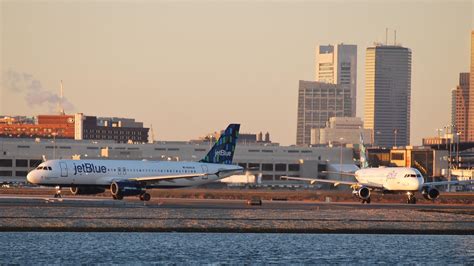
A Wider Pattern: American and Delta Cut Deep
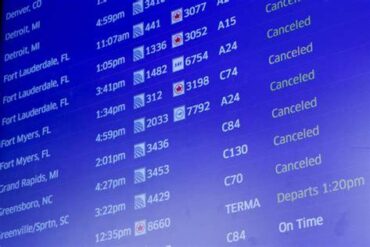
JetBlue’s announcement comes as part of a larger pattern of strategic retreats. American Airlines recently confirmed it will suspend six transatlantic routes this winter, including flights between:
- New York and Paris, Milan, Madrid
- Dallas and Frankfurt
- Philadelphia and Zurich
- Charlotte and Munich
These cuts represent a deliberate pivot away from marginal routes during low-yield months. American is focusing its winter efforts on markets with higher premium cabin performance and more stable demand.
Delta Air Lines, meanwhile, is pausing service between New York and Tel Aviv through at least August 2025, citing security concerns amid ongoing regional tensions. The move reflects how geopolitics can override economics in shaping flight paths.
Together, these developments highlight a broader retrenchment strategy among U.S. carriers—one that places profitability and strategic positioning above route permanence.
Passengers Left with Fewer Choices, Rising Fares
The passenger experience is already feeling the effects. JetBlue’s exit from JFK–AMS will reduce seat availability on one of the most competitive transatlantic corridors. Between July and October 2025, this route was expected to carry approximately 1,400 passengers per day, served by five daily flights. With JetBlue gone, capacity tightens, opening the door for higher fares and fewer booking options.
Though KLM and Delta continue to serve the route, JetBlue’s narrowbody A321LR aircraft and competitive pricing made it a favorite for value-driven travelers. Its absence could tilt pricing power back toward legacy players.
In Boston, JetBlue will run the only winter nonstop service to Amsterdam, but at far lower frequencies. Industry data suggests an average of 3.6 flights per day in July and 3.1 in October, with JetBlue responsible for only a fraction of that. In essence, travelers from Boston gain an option, but New Yorkers lose a key route.
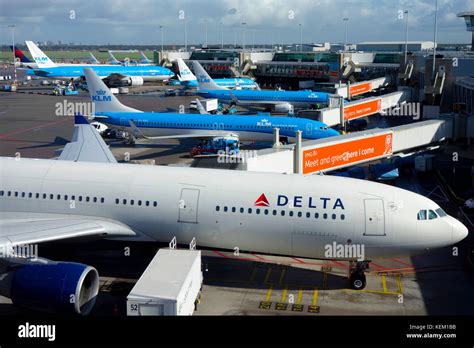
Slot Wars: Why This Matters So Much
Airport slots—particularly at congested hubs like AMS—are a finite and valuable resource. Under EU rules, airlines must use at least 80% of their allocated slots or risk losing them in the next scheduling season. These rules, suspended during the pandemic, are now back in force.
JetBlue’s pivot to BOS–AMS ensures it technically meets usage requirements and avoids relinquishing its precious access to Schiphol. The gamble lies in whether the BOS route generates enough traffic to be sustainable—or whether it merely serves as a placeholder.
The broader concern? AMS’s planned aircraft movement cuts—from around 500,000 to 440,000 annually—will trigger a major reshuffling of access among global carriers. Environmental politics in the Netherlands are redefining who gets to fly.
Transatlantic Routes Enter a New Era of Volatility
The JetBlue-AMsterdam saga illustrates the turbulent new era facing transatlantic airlines. For much of the past decade, U.S.–Europe flights were considered stable growth avenues. Post-pandemic revenge travel reignited demand, and budget entrants like JetBlue and Iceland’s PLAY surged onto the scene.
But by late 2025, the outlook has grown murkier:
- JetBlue scales back JFK–AMS for winter.
- American suspends six major European routes.
- Delta halts Tel Aviv service due to conflict.
- PLAY Airlines will completely exit the U.S. market by October 2025.
These moves reflect a harsh seasonal reality: winter demand rarely covers long-haul costs, especially when fuel prices, staffing challenges, and regulatory burdens are high.
A Strategic Chess Match Among Giants
JetBlue’s move to preserve its Schiphol presence shows how smaller carriers must outmaneuver giants. Larger airlines like Delta and KLM benefit from long-standing joint ventures, vast slot portfolios, and scale advantages. JetBlue’s international strategy is built on selective disruption—offering better onboard service and lower fares on key leisure routes.
Yet the economics of transatlantic flying do not favor the underdog, particularly in shoulder and winter seasons. Without state backing, a large domestic base, or extensive partnerships, smaller airlines face an uphill battle against capacity constraints and unpredictable political winds.
JetBlue hopes to return to JFK–AMS by March 2026, but reentry will depend on retaining rights, passenger interest, and a favorable regulatory climate. There’s no certainty.
Conclusion: The Skies Have Never Been So Uncertain
JetBlue’s suspension of the JFK–Amsterdam route is more than a seasonal retreat—it’s a stark reflection of the volatile dynamics now shaping international air travel. Airlines are being pushed to act strategically, surgically, and with extreme agility. Even routes that once seemed permanent are now subject to the shifting sands of airport politics, environmental activism, and global security.
For passengers, the road ahead includes higher fares, fewer choices, and more frequent reroutes. For airlines, survival depends on nimble planning, political negotiation, and financial discipline. JetBlue’s current maneuvers may be a stopgap—but they could also mark the beginning of a longer-term redefinition of its global strategy.
As the winter of 2025 approaches, one thing is abundantly clear: the transatlantic gameboard has been reset, and only the most adaptable carriers will hold their ground.