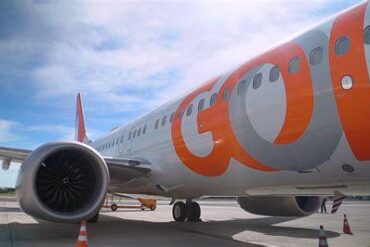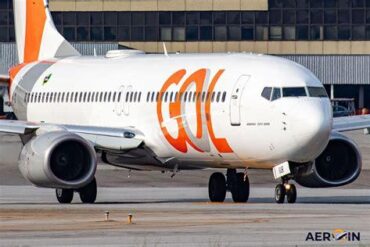
Brazil’s GOL Linhas Aéreas, long recognized as one of South America’s largest low-cost carriers, is preparing to enter a completely new chapter in its history. For the first time since its founding in 2001, the airline will operate long-haul intercontinental flights, connecting Rio de Janeiro–Galeão International Airport (GIG) with New York John F. Kennedy International Airport (JFK). The landmark route is scheduled to begin on July 8, 2026, operating three times per week and marking a decisive shift in the airline’s network strategy.
For over two decades, GOL has built its business model around high-frequency domestic and regional routes using Boeing 737 aircraft. This strategy helped the airline become a dominant player across Brazil and much of Latin America. However, the new Rio–New York service signals a transformation. By entering the transcontinental aviation market, GOL is positioning itself to compete in one of the most lucrative and strategically important air travel corridors in the Western Hemisphere.
The route links two globally recognized cities that function as both tourism magnets and financial centers. Rio de Janeiro attracts millions of international visitors each year with its iconic coastline, cultural heritage, and major global events. New York, meanwhile, remains one of the world’s most powerful economic hubs and a key destination for both business and leisure travelers from South America.
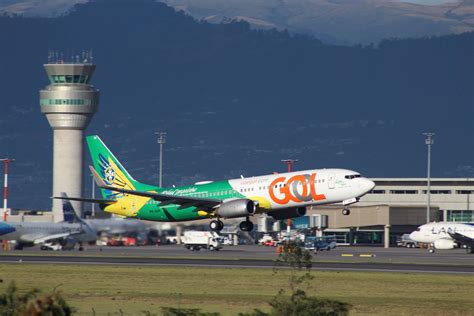
Rio–New York Flights Aim To Capture Business And Leisure Demand
The new service will operate three weekly nonstop flights, providing a direct link between southeastern Brazil and the northeastern United States. The flight schedule has been designed to maximize convenience for transcontinental travelers. Departures from Rio de Janeiro will occur in the late evening, allowing passengers to arrive in New York the following morning. The return service will depart overnight from New York JFK, landing in Brazil the next morning.
This timing aligns with established patterns used on many trans-Atlantic and trans-American overnight flights, allowing passengers to sleep during the journey and arrive ready for a full day of activity. Such scheduling is particularly attractive for corporate travelers, who often prioritize efficient time use during international trips.
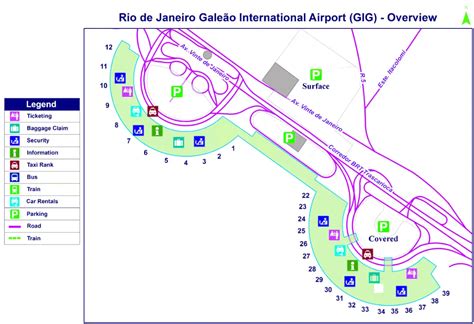
Rio’s Galeão International Airport plays a central role in this strategy. The airport already functions as one of GOL’s primary operational bases, with an extensive network of domestic routes feeding into the hub. Travelers from cities across Brazil—including São Paulo, Brasília, Salvador, and Porto Alegre—can connect seamlessly onto the New York flight, transforming Rio into a powerful international gateway for the airline’s network.
Wamos Air Airbus A330-200 Will Launch The Initial Service
While the route represents a bold step forward, GOL will initially rely on a leased Airbus A330-200 operated by Spanish ACMI provider Wamos Air. ACMI stands for Aircraft, Crew, Maintenance, and Insurance, a leasing model that allows airlines to rapidly deploy aircraft capacity without fully integrating the aircraft into their own fleets.
This arrangement provides a practical bridge as GOL prepares for the arrival of its own widebody aircraft later in 2026. By leasing the A330-200, the airline can launch ticket sales, establish operational experience on long-haul routes, and test market demand before fully committing its own aircraft to the route.
The Airbus A330-200 is well suited for the approximately 7,700-kilometer journey between Rio and New York, offering widebody comfort, long-range capability, and seating capacity typically approaching 250 to 300 passengers depending on cabin configuration.
Arrival Of Airbus A330-900neo Will Transform GOL’s Fleet Strategy
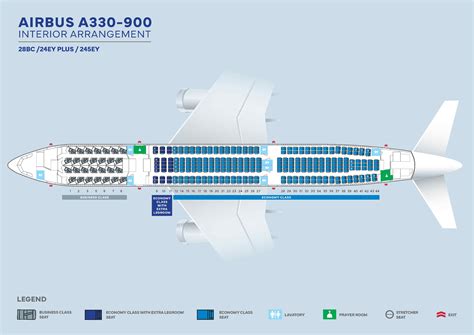
The temporary use of leased aircraft is only the first phase of GOL’s long-haul expansion. Later in 2026, the airline is expected to begin receiving its own Airbus A330-900neo aircraft, a modernized version of the widely used A330 family.
The A330-900neo incorporates several major technological upgrades compared with earlier A330 variants. These include new Rolls-Royce Trent 7000 engines, aerodynamic improvements, advanced winglets, and enhanced cabin efficiency. Together, these changes significantly improve fuel efficiency and reduce operating costs, making long-distance routes more economically viable.
The aircraft’s range—exceeding 13,000 kilometers—gives GOL the flexibility to operate routes far beyond the Americas if it chooses to expand further in the future. Industry observers believe the aircraft will likely feature approximately 300 seats, potentially arranged in a mix of economy and premium cabins designed to compete with other long-haul carriers serving the region.
Strengthening Rio De Janeiro As A Global Aviation Gateway
Launching the new service from Rio de Janeiro instead of São Paulo is a strategic choice that reflects GOL’s broader ambitions. While São Paulo’s Guarulhos Airport has traditionally dominated Brazil’s international traffic, Rio’s Galeão Airport offers significant growth potential.
By channeling domestic traffic into Rio and connecting it to international flights, GOL can strengthen the airport’s role as an alternative long-haul gateway for Brazil. This strategy could also help balance passenger flows between the country’s two largest metropolitan regions.
The addition of a nonstop Rio–New York service may also stimulate broader travel demand. Direct connections between the cities have historically appeared and disappeared depending on airline strategy and economic conditions, leaving travelers with fluctuating options. GOL’s entry into the market introduces additional capacity and competition, which often leads to improved connectivity and pricing options for passengers.
A Turning Point For Brazil’s Low-Cost Aviation Pioneer
For much of its existence, GOL has represented the low-cost revolution in Brazilian aviation, focusing on efficient operations and high aircraft utilization with its Boeing 737 fleet. Entering the long-haul market marks one of the most ambitious strategic moves in the airline’s history.
If successful, the Rio–New York route could become a template for additional intercontinental expansion. With the arrival of the Airbus A330-900neo fleet, GOL will possess the aircraft capability required to explore new routes linking Brazil with North America, Europe, or even parts of Africa.
The launch of this service therefore represents more than just a new flight route. It signals the moment when a regional powerhouse begins evolving into a global competitor in long-haul aviation, reshaping both its fleet strategy and its role in international air travel.