
Global aviation rarely stands still, but recent geopolitical tensions have forced even the most dominant airlines to rethink their operational foundations. Emirates and Qatar Airways, long celebrated for their seamless intercontinental connectivity, are now facing a reality where stability can no longer be taken for granted. Against this backdrop, Sri Lanka has stepped forward with an unconventional yet intriguing proposal: transforming its underutilized Mattala Rajapaksa International Airport into a temporary hub for Gulf carriers.
A Bold Proposal Centered on an Underused Asset
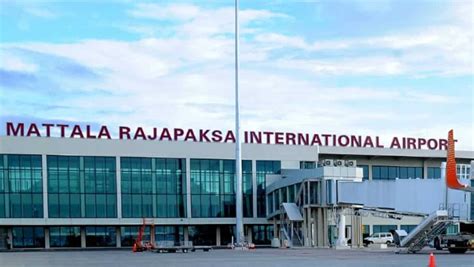
Sri Lanka’s government has reportedly initiated early discussions with both airlines, offering Mattala Rajapaksa International Airport (HRI) as a potential alternative hub. Unlike the busy Bandaranaike International Airport in Colombo, Mattala sits in relative isolation—both geographically and operationally. Opened in 2013 with significant investment, the airport quickly gained a reputation as a “ghost airport”, plagued by low traffic and limited airline interest.
Yet what once symbolized overambition may now represent strategic opportunity. The airport’s infrastructure is modern, its runways capable of handling wide-body aircraft, and its airspace uncongested. For airlines seeking operational continuity amid uncertainty, those characteristics suddenly look far more appealing than they did a decade ago.
Why Geography Suddenly Matters More Than Ever
The appeal of Mattala is not just about unused capacity—it is about location, location, location. Positioned along key east-west aviation corridors across the Indian Ocean, Sri Lanka offers a natural midpoint for flights connecting Europe, Africa, Asia, and Oceania. For airlines like Emirates and Qatar Airways, whose business models rely heavily on connecting passengers across continents, this positioning is far from trivial.
Crucially, Sri Lanka lies well south of current conflict zones affecting parts of the Middle East. This geographic separation provides a layer of operational security that is increasingly valuable. Flights routed through Mattala could avoid volatile airspace while maintaining efficient travel times, preserving the integrity of long-haul networks that depend on precision and reliability.
A Lifeline for Sri Lanka’s Struggling Aviation Sector
For Sri Lanka, the proposal is not merely strategic—it is deeply economic. The country has experienced a sharp decline in tourism, exacerbated by flight disruptions and broader regional instability. Revitalizing Mattala as an international hub could inject much-needed momentum into the local economy, creating jobs, stimulating hospitality sectors, and restoring confidence in Sri Lanka’s aviation infrastructure.
There is a certain irony in the situation. An airport once criticized for its lack of purpose could become a critical node in global aviation, at least temporarily. The prospect of hosting operations from two of the world’s most prestigious airlines would instantly elevate Sri Lanka’s aviation profile, transforming perception as much as performance.
Operational Realities: Opportunity Meets Complexity
Despite its promise, the concept faces substantial hurdles. Turning a largely dormant airport into a functioning hub for high-frequency, long-haul operations is no small feat. Infrastructure alone does not guarantee readiness. Ground handling systems, aircraft servicing equipment, catering logistics, and passenger processing capabilities would all need rapid scaling.
Equally important is the surrounding ecosystem. Hotels, crew accommodations, cargo facilities, and transport links must align with the demands of global carriers. Without these elements, even the most strategically located airport risks becoming a bottleneck rather than a solution.

The timeline presents another challenge. If disruptions in the Middle East prove temporary, airlines may hesitate to invest in complex relocations. However, if instability persists for months or longer, the calculus shifts. At that point, establishing a secondary operational hub may move from contingency planning to necessity.
A Glimpse Into Alternative Network Strategies
There is precedent for adaptive routing. Qatar Airways has previously experimented with point-to-point services that bypass its Doha hub, demonstrating flexibility in network design. Extending this approach to a temporary hub in Sri Lanka is not as far-fetched as it might initially sound.
For example, flights connecting London to Sydney or Europe to Southeast Asia could be rerouted through Mattala, maintaining connectivity while avoiding problematic airspace. Such adjustments would require careful coordination but could preserve the core value proposition of Gulf carriers: efficient, global connectivity with minimal disruption.
Strategic Implications for Emirates and Qatar Airways
For Emirates and Qatar Airways, the stakes are high. Their dominance has been built on centralized hub-and-spoke models, optimized around their home bases in Dubai and Doha. Introducing a secondary hub—even temporarily—would represent a significant strategic shift.
Yet flexibility is becoming a competitive advantage. Airlines that can adapt quickly to geopolitical disruptions are better positioned to maintain market share and customer trust. A Sri Lankan hub, while unconventional, could serve as a powerful demonstration of resilience and innovation.
The Uncertain Path Forward
While Sri Lanka’s proposal is undeniably compelling, its realization remains uncertain. The gap between concept and execution is wide, and the aviation industry is notoriously cautious when it comes to large-scale operational changes. Airlines must weigh costs, risks, and timelines against the likelihood that conditions will stabilize without drastic intervention.
Still, the idea captures a broader truth about modern aviation: adaptability is no longer optional. As global dynamics shift, so too must the strategies that keep aircraft—and economies—moving.

Conclusion: From Ghost Airport to Global Pivot Point?
Sri Lanka’s vision for Mattala Rajapaksa International Airport reflects both necessity and ingenuity. What was once an underused facility now stands as a potential strategic fallback for two of the world’s leading airlines. Whether this vision materializes depends on factors beyond aviation alone, but the concept itself signals a turning point.
In an era defined by uncertainty, even a “ghost airport” can find new life—if the timing, geography, and ambition align just right.