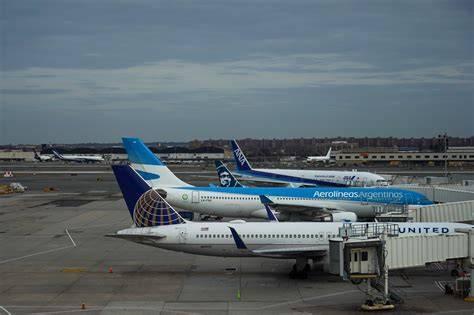
United Airlines is preparing for another major move in the New York aviation market, with John F. Kennedy International Airport (JFK) emerging as a potential target for renewed expansion. Chief Executive Officer Scott Kirby recently indicated that the airline is exploring ways to acquire valuable JFK takeoff and landing slots from competitors operating routes that are failing to generate acceptable returns.
The strategy would give United a potentially powerful way back into one of the world’s most competitive airports without relying entirely on organic slot growth. Because JFK is heavily slot-constrained, obtaining existing operating rights can be far more practical than waiting for new capacity to become available. For United, the opportunity could also fit neatly into its broader strategy of growing its international network and premium-focused business.
United Airlines Targets JFK Slots From Unprofitable Routes
In an interview with CNBC, Kirby said United is actively looking for opportunities to purchase JFK slots from airlines that may no longer consider their operations economically attractive. His comments suggest that the carrier is examining the market for weaknesses among rivals and looking for slots that could be redeployed toward higher-value services.
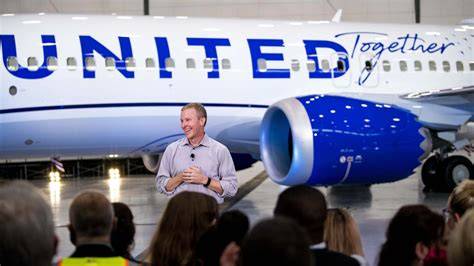
The concept is straightforward but potentially significant. An airline flying a low-fare, highly price-sensitive route from JFK may struggle to generate sufficient revenue from its allocated aircraft and schedule. United could potentially acquire that slot and use it for a different service designed around stronger demand, larger aircraft, or a higher proportion of premium passengers.
That makes JFK slots valuable strategic assets, rather than simply pieces of an airport schedule. At an airport where additional operating opportunities are difficult to obtain, buying or leasing existing slots can allow a carrier to expand much faster than waiting for regulatory or market conditions to create new openings.
United has not publicly detailed which airlines or specific slots it is targeting. Kirby’s comments therefore point to an ongoing search rather than a completed transaction. Still, the strategy reveals how seriously the airline is considering a return to a larger presence at JFK.
United Could Bring Premium International Capacity to JFK
United’s interest in JFK is closely connected to the transformation of its network under the United Next strategy. Since Kirby became CEO, the airline has increasingly emphasized premium cabins, international flying, and routes capable of generating stronger yields rather than simply maximizing passenger volume.
That approach could make JFK particularly attractive. New York is one of the world’s most important markets for corporate travel, international tourism, finance, and high-income consumers. A carrier capable of using limited airport capacity to attract passengers willing to pay for premium products can potentially generate substantially more revenue from each flight.
United has already demonstrated its willingness to connect American travelers directly with destinations that historically depended on major European or Asian hubs. Services to places such as Mallorca, Palermo, and Ulaanbaatar via Tokyo illustrate the airline’s appetite for international opportunities beyond conventional mega-hub markets.
At the same time, United has introduced upgraded aircraft interiors and premium-focused products designed to capture more lucrative passengers. Bringing that philosophy to JFK could allow the airline to build a network specifically designed around New York’s international demand.
JFK Would Add Another Dimension to United’s New York Strategy
United’s current New York operation is centered on Newark Liberty International Airport (EWR), where the airline has a major hub and extensive domestic and international connectivity. A larger JFK presence would therefore not simply represent another airport for United; it could reshape how the carrier serves the entire New York metropolitan market.
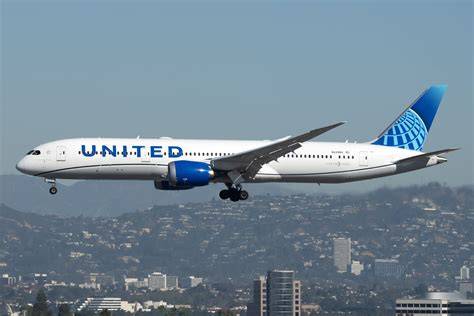
A return to JFK could give United access to passengers who strongly prefer the Queens airport because of its location, international connectivity, or airline competition. It could also provide additional flexibility when developing long-haul services in a market where demand is exceptionally deep.
The challenge is avoiding unnecessary duplication. Operating the same markets from both Newark and JFK would only make sense where passenger demand and aircraft economics justify the additional capacity. The most compelling opportunities would likely involve destinations where United can exploit its international brand, premium cabin strategy, and extensive connecting network.
Slot Acquisition Could Turn Rival Weakness Into United Growth
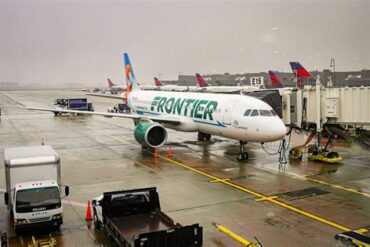
The most interesting part of United’s strategy is its potential to turn competitors’ weak economics into an expansion opportunity. Smaller carriers and ultra-low-cost airlines can face difficult conditions at JFK because operating costs are high while many leisure routes depend heavily on low fares.
If a carrier concludes that a particular JFK service is losing money, its slots may become an attractive source of value. United could offer a financial incentive for those operating rights while replacing the existing service with aircraft and routes better suited to its own business model.
The economics would ultimately depend on the price of the slots, aircraft utilization, route demand, airport costs, and the revenue United could generate from each flight. Nevertheless, the principle is powerful: United does not necessarily need more airport capacity overall; it needs access to capacity that can produce better returns.
That logic also explains why JFK could become an important part of United’s next phase of growth. The airline has increasingly shown that it is willing to enter markets where competitors see limited potential if it believes its own network, aircraft, and customer base can produce a different financial outcome.
United’s JFK Plans Reflect a Larger Global Battle
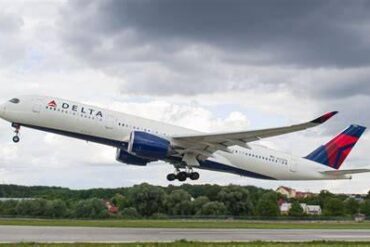
United’s potential JFK expansion also arrives as the major US airlines intensify their competition for international passengers. United has built a particularly strong position across the Pacific, while Delta Air Lines has signaled ambitions to challenge that dominance.
Delta has expanded from Los Angeles and other major gateways, while United continues adding long-haul opportunities across Asia and beyond. The competitive battle is increasingly about more than the number of destinations. It is about securing premium customers, deploying the right aircraft, and controlling scarce airport capacity.
JFK fits directly into that equation. If United can obtain attractive slots from struggling operators, it could transform limited airport capacity into a new platform for profitable international growth.
What United’s JFK Return Could Mean
United’s potential return to a larger JFK operation remains dependent on securing suitable slots and developing commercially viable routes. Kirby’s comments make clear, however, that the airline is actively exploring its options rather than treating JFK as a distant possibility.
If United succeeds, its strategy could be remarkably efficient: acquire scarce slots from weaker operators, deploy higher-value aircraft, and build services around New York’s enormous premium international market. That would give the airline another tool for expanding its global network while putting competitive pressure on both legacy carriers and smaller airlines operating at JFK.
For United, the opportunity is not simply about coming back to JFK. It is about finding a way to make every scarce slot work harder.