United Airlines is preparing to give passengers an early look at its newest long-range narrowbody aircraft, but the Airbus A321XLR will initially fly much shorter domestic routes. The airline has scheduled the aircraft between Washington Dulles International Airport (IAD) and both San Diego International Airport (SAN) and Los Angeles International Airport (LAX) before its planned entry into transatlantic service.
The temporary deployment is significant because United has acquired the A321XLR primarily as a replacement for its aging Boeing 757-200 fleet on selected international routes. Rather than immediately sending the new aircraft across the Atlantic, the carrier will use several months of domestic flying to introduce the aircraft into everyday operations, familiarize crews with its systems, and allow passengers to experience a cabin designed specifically for premium long-haul narrowbody travel.
According to the current schedule, the first United A321XLR domestic flight will depart Washington Dulles for San Diego on September 9, 2026. The aircraft will operate one of the three daily flights on the route. On October 1, United is scheduled to add the A321XLR to its Washington Dulles–Los Angeles service, where it will operate one of seven daily rotations. Both assignments are currently scheduled through November 30, 2026, immediately before the aircraft begins its first international missions.
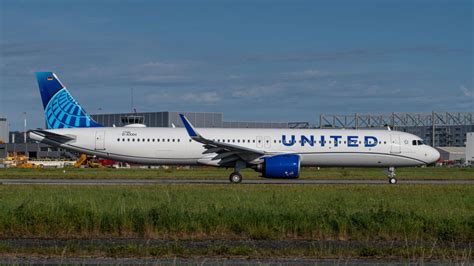
United Airbus A321XLR Begins With Washington–California Flights
The choice of Washington Dulles for the aircraft’s domestic introduction is strategically important. United’s Washington hub will become one of the principal bases for its A321XLR operation, particularly because the aircraft is scheduled to begin flying from Dulles to Europe only a few months after its domestic debut.
The San Diego service will start first, with the A321XLR replacing a conventional aircraft on one daily departure from September 9. Los Angeles will follow on October 1. These are both important premium-heavy transcontinental markets, making them useful proving grounds for an aircraft that United describes as its most premium narrowbody airplane.
The domestic schedule also creates an unusual opportunity for travelers. Passengers purchasing tickets on the affected flights can experience the aircraft’s long-haul-oriented interior without actually crossing the Atlantic. The A321XLR will eventually be associated with flights of several thousand miles, but its first United passengers will instead spend several hours traveling between the East Coast and California.
That approach is more than a marketing exercise. Operating the aircraft domestically gives United an opportunity to establish procedures, train operating crews, refine maintenance routines, and identify operational issues before committing the aircraft to demanding international schedules. United had previously indicated that its initial A321XLRs would spend several months flying domestically, making the September-to-November deployment consistent with that plan.
A 150-Seat Cabin Designed for Premium Travel
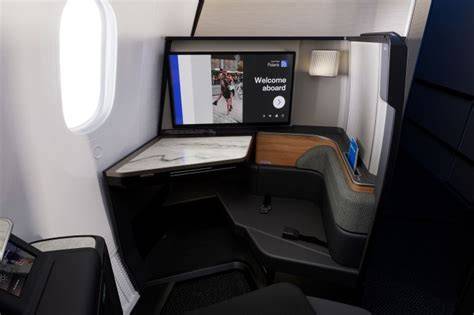
United’s A321XLR has a 150-seat configuration, giving it a notably premium-oriented layout compared with many narrowbody aircraft. The cabin includes 20 United Polaris suites, 12 Premium Plus seats, 34 Economy Plus seats and 84 standard economy seats.
The 20 Polaris suites are particularly important to the aircraft’s intended mission. Each provides a lie-flat seat and a privacy door, giving United a genuine business-class product on an aircraft that is considerably smaller than the widebodies traditionally used for long-haul international services.
The 12-seat Premium Plus cabin adds another premium tier, while Economy Plus provides additional space for passengers who want more legroom without purchasing a premium cabin. United has also created an unusual Economy Plus arrangement in which two middle seats are replaced by shared tables, producing a small area with additional personal space.
The aircraft’s onboard technology further reinforces its premium positioning. Passengers will have access to 4K OLED entertainment screens, while Starlink Wi-Fi is available for MileagePlus members. A rear economy snack bar is another feature designed to make the cabin feel more like an international aircraft than a conventional domestic narrowbody.
The A321XLR Will Cross the Atlantic in December
The domestic preview is scheduled to end on November 30. From December 1, 2026, United plans to transform the A321XLR from a domestic aircraft into a transatlantic workhorse, launching daily flights from Washington Dulles to Amsterdam Schiphol Airport (AMS) and Dublin Airport (DUB).
Those routes illustrate why United selected the A321XLR in the first place. The aircraft offers substantially more range than a conventional narrowbody while requiring fewer seats than a widebody. That combination can make smaller European markets viable without requiring United to fill a larger aircraft every day.
United ordered 50 A321XLRs in 2019, with the aircraft intended to replace selected Boeing 757-200s and support new international opportunities from both Washington and Newark. The strategy is particularly valuable for markets where demand may be strong enough for a narrowbody but not consistently strong enough for a larger widebody.
The planned European expansion will become considerably broader in 2027. United currently expects to launch Newark–Luxembourg on April 2, Washington Dulles–Toulouse on April 26, Newark–Ibiza on May 31, Newark–Valencia on June 2 and Newark–Marseille on June 4. Most of these services are scheduled daily, although Ibiza will operate four times weekly and Valencia three times weekly.
United’s A321XLR Fleet Is Set to Grow Quickly
United’s regulatory filings provide a clearer picture of how quickly the A321XLR fleet could expand. The airline had received its first aircraft by June 30, 2026, leaving 49 aircraft remaining from its 50-aircraft commitment.
United expects another five aircraft during the second half of 2026, followed by 15 deliveries in 2027. The remaining 29 aircraft are expected after 2027. If the delivery schedule proceeds as currently anticipated, United could have 21 A321XLRs in its fleet by the end of 2027.
That fleet growth will be essential if United is to operate its planned European network while maintaining sufficient flexibility for maintenance and schedule changes. The aircraft’s relatively small capacity gives network planners another useful tool between conventional narrowbodies and widebody aircraft.
However, United is taking a cautious approach to the aircraft’s advertised range. Patrick Quayle, United’s senior vice president of global network planning and alliances, has said the airline is “very conservative with the range” of the A321XLR. According to Quayle, Airbus’s marketing figures represented greater capability than United believes is realistically available from the aircraft in its actual configuration.
This conservative approach matters because the A321XLR’s business case depends heavily on its ability to connect cities that cannot economically support larger aircraft. United has indicated that its planned Spain and France routes fit comfortably within its operational expectations, while some farther European destinations from New York present greater limitations.
United and American Are Taking Different A321XLR Paths
United’s strategy also differs from that of American Airlines, which became the first U.S. airline to operate the A321XLR domestically in December 2025. American initially deployed the aircraft between New York’s John F. Kennedy International Airport and Los Angeles, later adding routes such as Boston–Los Angeles and JFK–San Francisco.
American’s A321XLR configuration is similarly premium-heavy, with 20 Flagship Suites, 12 premium-economy seats and 123 economy or Economy Plus seats, for a total of 155 passengers. The airline is using the aircraft both to replace its premium A321T operation and to develop long-haul international markets.
United, however, has a more specialized plan. Its separate A321neo Coastliner fleet is intended to handle the premium transcontinental role, while the A321XLR is primarily being positioned for international flying.
That makes the Washington–California flights a temporary chapter rather than the aircraft’s long-term identity at United. From September through November, travelers will see the A321XLR operating familiar domestic routes. Beginning December 1, however, the aircraft’s real purpose becomes clear as United sends it across the Atlantic.
A Short Domestic Introduction With a Much Bigger Mission
United’s decision to introduce the A321XLR on domestic routes demonstrates how carefully the airline is approaching the aircraft’s arrival. The California flights provide a controlled environment in which United can establish the aircraft’s operating rhythm before beginning long-haul international service.
For passengers, the arrangement offers a rare chance to experience a long-range premium narrowbody on a domestic ticket. For United, the more important objective is preparing an entirely new aircraft type for the role it was purchased to perform.
The September and October launches will therefore be brief compared with the A321XLR’s expected career at United. Once Amsterdam and Dublin begin on December 1, the aircraft will start reshaping the airline’s European network, with additional destinations from Washington and Newark following in 2027.
The significance of the aircraft ultimately goes beyond replacing the 757. With 150 seats, lie-flat Polaris suites and long-range capability, the A321XLR gives United a way to pursue thinner international markets without committing a larger widebody. The first domestic flights from Washington Dulles may be short, but they represent the opening move in a much larger transatlantic strategy.