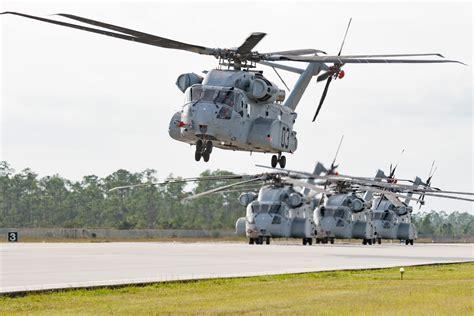
For nearly sixty years, the CH-53 family of helicopters has formed the backbone of the U.S. Marine Corps’ heavy-lift aviation fleet. First introduced during the Vietnam War, the CH-53 series evolved from the early CH-53A to the improved CH-53D, and later, the CH-53E Super Stallion, a legend in its own right. As these airframes aged, their importance never waned, but the need for modernization became undeniable.
Now, with a landmark $10.8 billion contract awarded to Sikorsky, the Marine Corps embarks on a new era with the CH-53K King Stallion. This fleet of 99 next-generation helicopters is more than a replacement — it is a transformation of capability, resilience, and mission readiness.
What Makes the CH-53K So Valuable?
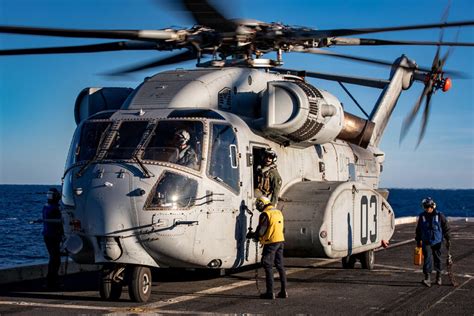
Despite its visual resemblance to the CH-53E, the King Stallion is an entirely new beast under its composite skin. At the heart of its capabilities lies a suite of technological enhancements, powerplant upgrades, and structural refinements that redefine what a heavy-lift helicopter can accomplish.
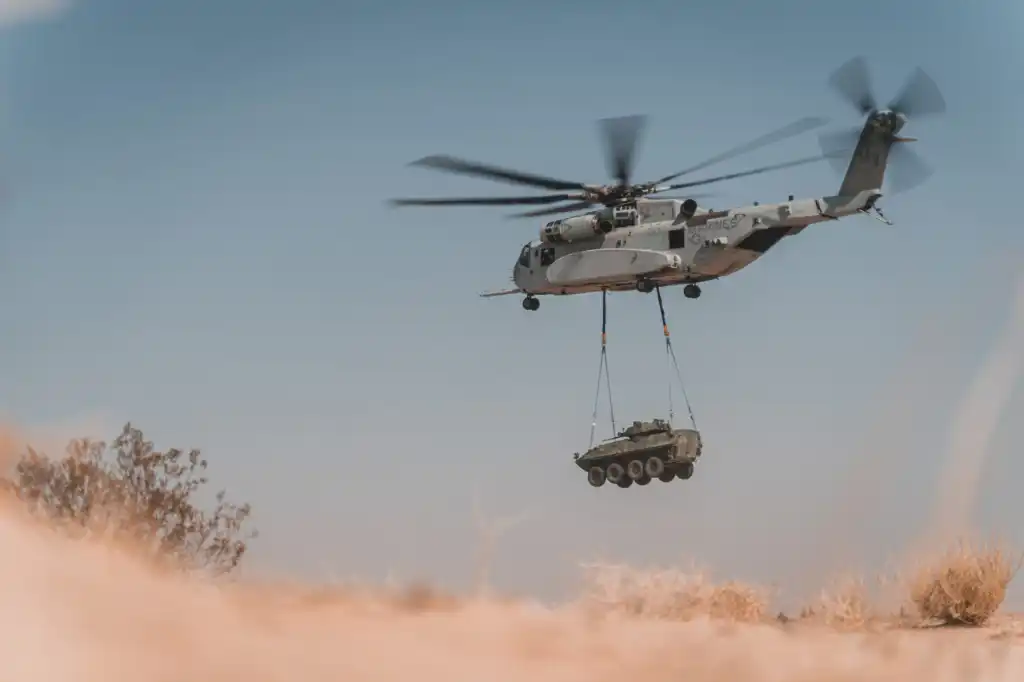
- Lift Capacity: With a maximum external lift capability of 36,000 pounds, the CH-53K surpasses its predecessor by nearly a third. This allows it to airlift critical battlefield assets such as the M777 howitzer, JLTVs, and even light armored vehicles — a mission that once required multiple aircraft.
- Powertrain Overhaul: Powered by three General Electric T408-GE-400 engines, each producing 7,500 shaft horsepower, the King Stallion delivers 57% more power than the CH-53E’s T64 engines.
- Fly-by-Wire Controls: The CH-53K introduces digital fly-by-wire systems, reducing pilot workload, increasing safety in adverse conditions, and enabling precise handling during low-visibility operations — a must in modern combat environments.
These attributes make the CH-53K the most powerful helicopter in the U.S. military inventory and a quantum leap in lift logistics.
Strategic Milestone: $11 Billion for 99 Helicopters
In September 2025, Sikorsky secured a five-year agreement with the U.S. Department of Defense to manufacture and deliver up to 99 CH-53K helicopters for the Marine Corps. The $10.8 billion deal covers deliveries scheduled between 2029 and 2034, aligning with the Marine Corps’ aim to declare full operational capability (FOC) by fiscal year 2029.
This procurement strategy ensures that the Marines will benefit from production cost stability, improved supply chain predictability, and the gradual phasing out of the aging CH-53E fleet.
Designed for Modern Warfare: Combat-Ready Features
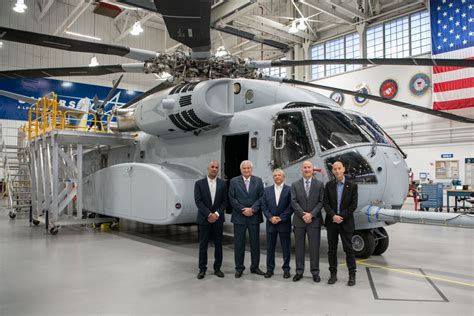
The CH-53K is not just a transport aircraft — it’s a combat enabler. Built to meet the rigorous demands of expeditionary warfare, this platform incorporates robust survivability features and unparalleled adaptability.
Key Combat Features Include:
- Composite Rotor Blades: Designed to withstand harsh maritime environments, these blades offer higher durability and lower maintenance than traditional metal blades.
- Elastomeric Rotor Head: A low-maintenance solution that reduces wear and tear, enhancing reliability during prolonged deployments.
- Corrosion-Resistant Airframe: Essential for maritime operations, particularly in littoral combat zones, where saltwater corrosion is a persistent threat.
- Health and Usage Monitoring Systems (HUMS): Advanced onboard diagnostics reduce maintenance turnaround times by 35%, ensuring higher mission availability.
Each of these improvements serves a purpose: to maximize sortie rates, minimize downtime, and enhance operational readiness in high-stakes, forward-deployed environments.
Interior Versatility: Troops, Cargo, and MedEvac
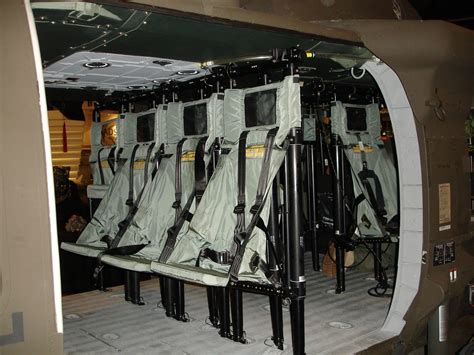
The CH-53K is a multi-role workhorse. Its cabin, designed with modular architecture, adapts to a variety of mission profiles, offering commanders the flexibility they need in the field.
- Troop Transport Mode: Accommodates 34 personnel (2 pilots, 2 crew chiefs, and 30 combat troops), enabling rapid air assault insertions.
- Mixed Mode: Carries troops alongside essential cargo, featuring folding seats for quick reconfiguration.
- Medical Evacuation Mode: Transports up to 24 patients in a single sortie, a critical capability in mass casualty situations.
The internal cabin measures 30 feet long, 5.6 feet wide, and 6.4 feet high, making it compatible with a wide array of military and humanitarian payloads.
Speed, Range, and Altitude: Tactical Mobility Redefined
The CH-53K isn’t just powerful — it’s fast and agile. Clocking in at 170 knots (195 mph), it can rapidly deploy assets across vast operational theaters. It reaches altitudes up to 16,200 feet, crucial for operations in high-altitude terrains such as Afghanistan or the Andes.
In high/hot environments, where helicopters often struggle due to thin air and elevated temperatures, the CH-53K can still haul 27,000 pounds over 110 nautical miles — a payload range performance that triples that of the CH-53E.
This opens strategic possibilities for littoral combat zones, mountain warfare, and disaster response in remote regions.
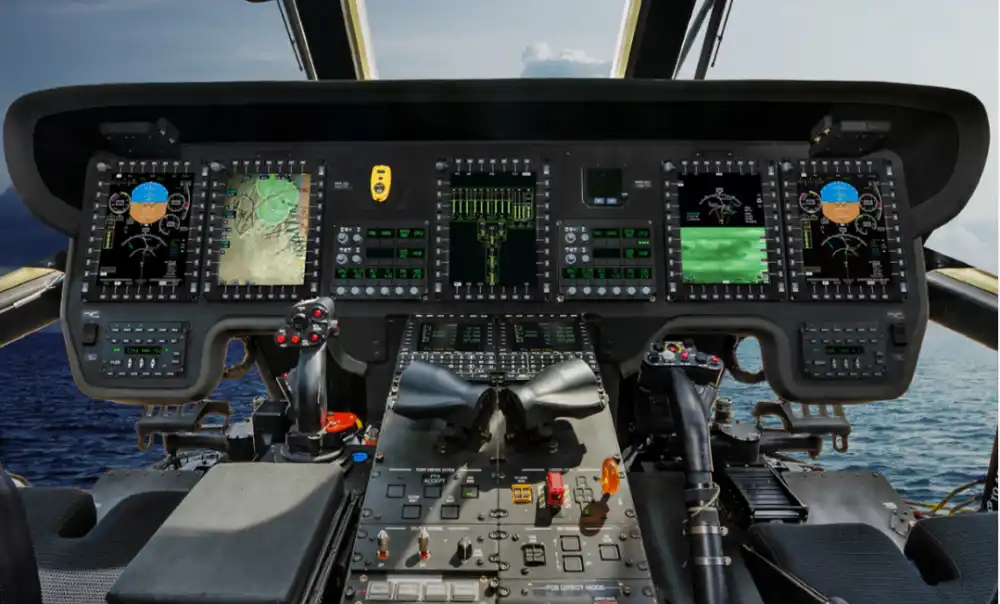
Digital Avionics: A Smarter Cockpit
Inside the CH-53K’s flight deck, pilots benefit from cutting-edge avionics, including:
- Avionics Management System: Centralizes cockpit data, simplifying mission management.
- Modular Open Systems Architecture (MOSA): Allows seamless integration of future technologies, such as tactical synthetic vision, weather avoidance systems, and AI-enabled decision support tools.
This forward-thinking design ensures that the aircraft is future-proof, enabling incremental upgrades without the need for a complete platform overhaul.
Logistical Efficiency: Easier to Maintain, Ready to Deploy
One of the major pain points with legacy platforms like the CH-53E was the high maintenance burden. The King Stallion tackles this head-on with:
- 35% Reduction in Mean Time to Repair (MTTR)
- Integrated Health Monitoring Systems
- Corrosion-Resistant Materials for Coastal Ops
These changes lead to fewer maintenance hours per flight hour, translating to more mission-ready helicopters per day, fewer spare parts, and lower long-term costs.
Operational Integration and Training
The U.S. Marine Corps is already adapting its training pipeline to accommodate the CH-53K. Pilots transitioning from the CH-53E undergo simulator-based training before logging live flight hours. The Marine Heavy Helicopter Training Squadron (HMHT) at MCAS New River, North Carolina, is leading the effort in conversion training and operational testing.
Initial operational capability (IOC) was declared in April 2022, and the aircraft has already participated in fleet exercises and logistics demonstrations, proving its interoperability with other assets like the MV-22 Osprey and F-35B Lightning II.
Strategic Impact: Power Projection and Global Readiness
The CH-53K gives the Marine Corps the ability to project power across domains:
- From Sea to Shore: Seamlessly integrates with amphibious assault ships, delivering critical cargo and troops directly to contested beachheads.
- Rapid Humanitarian Response: Its range and cargo flexibility make it ideal for evacuating civilians or delivering aid in natural disasters.
- Expeditionary Maneuver Warfare: Enables distributed operations across Indo-Pacific island chains, aligning with current U.S. strategic priorities.
In essence, this platform becomes the logistical backbone of Marine Corps operations, capable of sustaining frontline units across dispersed battlefields.
Conclusion: The Future of Heavy Lift Has Landed
With the CH-53K King Stallion, the U.S. Marine Corps isn’t just replacing an old helicopter — it’s fielding a next-generation war machine purpose-built for modern combat, humanitarian relief, and multi-domain operations. Its blend of raw power, technological sophistication, and operational versatility ensures it will remain a pivotal asset well into the 2040s and beyond.
The $11 billion investment reflects more than procurement; it signals a strategic commitment to mobility, readiness, and dominance in the evolving battlefield landscapes of the 21st century.