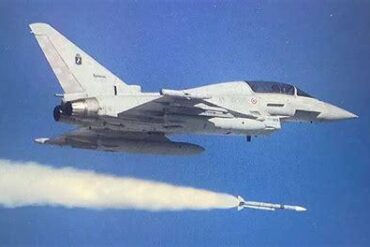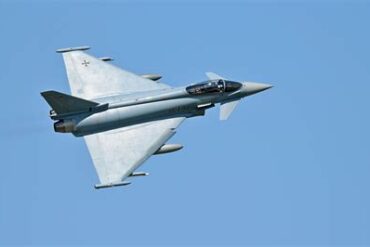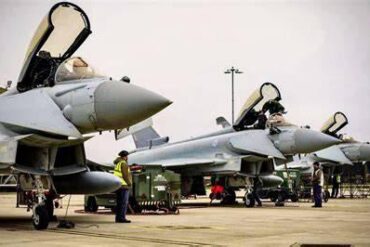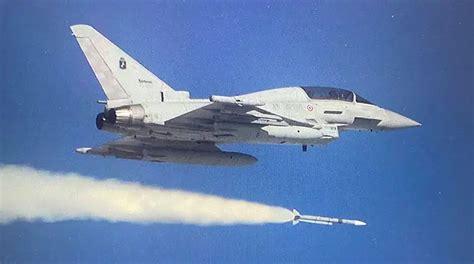
The Italian Air Force has successfully completed the second phase of its Operational Test & Evaluation (OT&E) campaign involving the Meteor Beyond Visual Range Air-to-Air Missile (BVRAAM) on the Eurofighter Typhoon platform. Conducted in early March 2025 at the UK’s Hebrides Range, this highly technical campaign signifies a critical milestone in Italy’s pursuit of full-spectrum air dominance through advanced air-to-air missile capability.
Strategic Importance of the Hebrides Campaign
The test campaign unfolded from RAF Leuchars and RAF Lossiemouth, leveraging the UK’s expansive training ranges and support infrastructure. The Meteor BVRAAM, renowned for its extended range and lethal endgame performance, was evaluated under realistic combat scenarios, enhancing Italy’s operational confidence in employing the missile under contested and degraded environments.
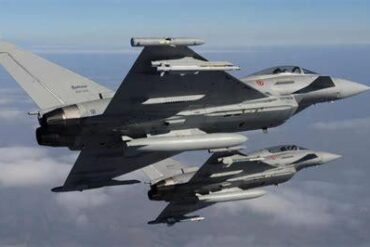
The second firing phase replicated and expanded upon the objectives of the first, with the F-2000A Typhoons (the Italian designation for the single-seat Eurofighter) performing live missile launches. This time, Italy’s fifth-generation F-35A Lightning II fighters also joined the exercise, operating in an integrated fashion alongside the Typhoons. While the F-35s did not launch Meteors during this phase, their use of AIM-120C-5 AMRAAMs underscored the synergistic approach to Italy’s future air combat doctrine.
Meteor Missile: The European Edge in BVRAAM Combat
The Meteor represents a paradigm shift in air-to-air missile design. Developed by MBDA in collaboration with several European partners—including Italy, the UK, Germany, France, Spain, and Sweden—this missile leverages a throttleable ramjet propulsion system to achieve sustained high-speed flight and energy retention deep into its engagement envelope. Unlike traditional solid rocket motors such as that in the AIM-120, Meteor’s ramjet can adjust thrust during flight, ensuring maximum kinetic energy in the terminal phase, precisely when it is most critical.
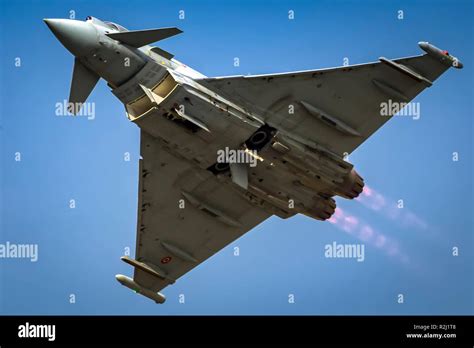
This propulsion feature results in an exceptionally wide No-Escape Zone, dramatically increasing the Probability of Kill (Pk) against maneuvering targets. Additionally, the Meteor’s two-way datalink allows for dynamic in-flight target updates from the launch aircraft, further refining its terminal attack path.
The warhead, a blast fragmentation design equipped with both impact and proximity fuses, ensures effectiveness even in high-speed close-quarters engagements. In its current configuration, the Meteor has already been integrated on the Typhoon, Gripen, and Rafale, and is undergoing integration with the F-35 and South Korea’s KF-21.
Italy’s P2E(b) Upgrade and Typhoon Modernization
The second Meteor launch campaign was made possible through the Phase 2 Enhancement bravo (P2E(b)) upgrade, corresponding to Service Release Package 22 (SRP22). This package includes Production Software Package 5 (PSP5) and Production System Configuration 22 (PSC22)—an alignment of hardware and software delivering the required operational capability to support Meteor employment on the Italian Typhoons.
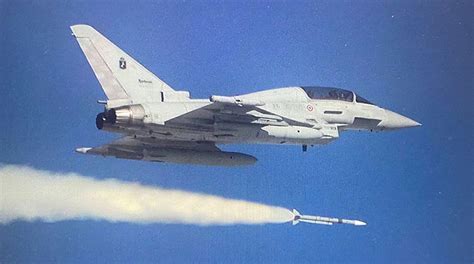
This configuration was pivotal in enabling the Typhoon Operational Evaluation Team to safely conduct increasingly complex air combat scenarios during the campaign. This team, comprised of personnel from the Reparto Sperimentale di Volo, front-line unit Weapon Instructors, and Electronic Warfare mission data specialists, coordinated a suite of trials tailored to mimic real-world combat operations.
The trials made use of the Meteor Telemetered Operational Missile (TOM) variant, combined with Flight Test Instrumentation (FTI) fitted Typhoons. These tools offered real-time telemetry, missile health diagnostics, and performance monitoring, vital for analyzing the weapon’s true behavior in live-fire conditions.
Interoperability with the F-35 Platform
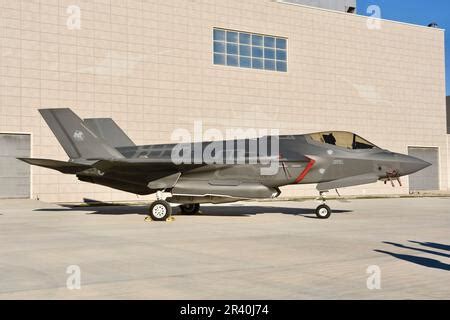
Italy’s integration of its F-35A fighters into the campaign is indicative of a forward-looking vision centered around fifth-generation and legacy platform interoperability. While the Italian F-35s did not deploy the Meteor missile in this campaign, their operational participation foreshadows future integration plans.
The UK, a primary partner in both the F-35 and Meteor programs, is already spearheading the Meteor integration on the F-35B variant at the Patuxent River Integrated Test Force (Pax ITF). The first F-35B flight with Meteor occurred in February 2025, suggesting that full operational capability for Meteor on the F-35 is on the near horizon.
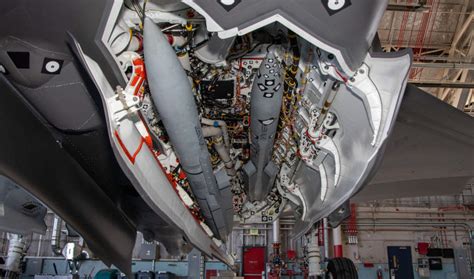
As the only nation operating both F-35A and F-35B variants, Italy will likely follow the UK’s path, eventually arming its fifth-generation fleet with the Meteor for true multi-platform commonality. This reflects a broader European strategic approach to streamline armament systems across platforms for logistical efficiency and tactical flexibility.
Lessons from the Meteor Test Campaign
The culmination of this second campaign confirms several operational insights. First, the Meteor missile functions reliably under a wide range of dynamic and contested scenarios. The test matrix included engagements with real targets, ground-controlled and designed to present increasingly complex challenges for the missile’s sensors and propulsion logic.
Second, the P2E(b) Typhoon upgrade has matured into a stable and combat-relevant configuration. This represents a significant milestone not only for Italy but also for other Eurofighter consortium members who have adopted similar upgrade paths. In tandem, Italy’s use of AIM-120C-5 AMRAAMs during the same campaign allows for direct operational comparison, further validating the superior lethality envelope of the Meteor.
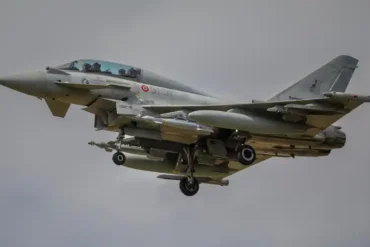
Finally, the presence of dual-seat TF-2000 aircraft in safety chase and telemetry roles highlights the safety protocols and redundancy layers involved in complex live-fire trials. The seamless integration of these assets underscores the operational maturity of the Italian Air Force’s test and evaluation ecosystem.
Future Outlook: From Trials to Full Combat Readiness
While this marks only the second Meteor firing campaign for Italy, it clearly sets the stage for the missile’s full deployment across Italian Typhoon squadrons. The extended testing and verification process underscores a cautious but methodical approach to combat system integration—balancing rapid capability fielding with thorough validation.
Recent multinational exercises, including those in the Mediterranean and Central Europe, have hinted at the operationalization of the Meteor. These exercises showcased Italian Typhoons in air superiority roles, where long-range engagement capabilities and superior missile kinematics are decisive factors.
The implications for air superiority in European and NATO airspaces are profound. The Meteor allows pilots to dictate the terms of engagement, operate under a larger protective bubble, and neutralize threats before visual range contact. When networked with fifth-generation platforms like the F-35, the shared battlespace awareness combined with Meteor’s agility delivers a capability edge that few peer adversaries can match.
As we look ahead, the integration of the Meteor onto Italy’s entire Typhoon fleet, and potentially its F-35A jets, signals a new chapter in Europe’s defense posture. With next-generation threats looming and global tensions rising, Italy’s successful deployment of one of the world’s most advanced air-to-air weapons reinforces its role as a frontline airpower within NATO.
Conclusion
The Italian Air Force’s completion of the second Meteor BVRAAM live fire campaign is more than a technical benchmark—it is a declaration of readiness and resolve. The Meteor missile, with its unmatched range and energy retention, elevates the Eurofighter Typhoon into a new league of air combat supremacy. With continued upgrades, seamless F-35 integration on the horizon, and strengthened multinational cooperation, Italy is securing its place at the forefront of 21st-century aerial warfare.