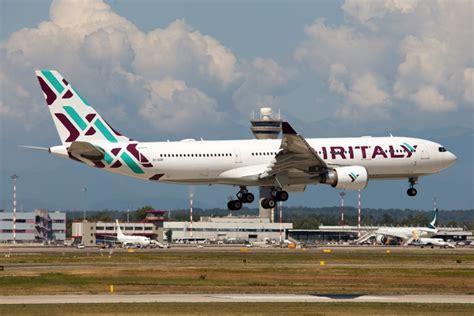
In an ambitious bid to revolutionize the Italian aviation sector, Air Italy emerged in 2018 as a revitalized carrier under the strategic influence of Qatar Airways and Alisarda, headquartered in Olbia, Sardinia. Heralded as Italy’s best chance at replacing the declining Alitalia, the airline was launched amid great fanfare with bold visions, a modern fleet, and an eye on the global stage. However, the company’s soaring aspirations were abruptly grounded by early 2020. The story of Air Italy is not merely about a failed airline—it’s a reflection of the complexities of aviation economics, state protectionism, and geopolitical friction.
From Alisarda to Air Italy: A Legacy Reimagined
Air Italy’s origins are deeply entwined with Alisarda, a regional airline formed in 1963 to connect Sardinia with mainland Italy and Europe. Over the decades, this modest carrier morphed into Meridiana, later Meridiana Fly, following a merger with Eurofly. In 2011, it inherited the Air Italy brand, a Milan-based charter airline founded in 2005. The seeds of the modern Air Italy were truly sown in 2017, when Qatar Airways acquired a 49% stake in the parent company AQA Holding, partnering with Alisarda, which held the remaining 51%.
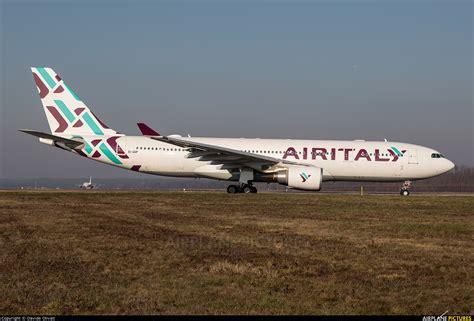
This collaboration materialized into the rebranding of Meridiana into a revitalized Air Italy, officially launched on February 19, 2018, and operationally replacing Meridiana as of March 1, 2018. The airline adopted a striking visual identity featuring maroon and mint green tones, a sleek stylized “Y” symbolizing flight, and a clean white fuselage marked with billboard-style branding.
Ambitious Growth and Bold Strategic Moves
From the outset, Air Italy positioned Milan Malpensa as its primary hub, distancing itself from the Rome-centric focus of Alitalia. The airline set forth a target to operate 50 destinations by 2022, aggressively expanding into North America, India, and other long-haul markets using a combination of leased Airbus A330-200s and Boeing 737 MAX 8s.
Air Italy’s long-haul debut began on June 1, 2018, with the Milan–JFK route, followed by services to Los Angeles, San Francisco, Toronto, Chicago, Delhi, and Mumbai within the same year. By capitalizing on the premium cabin experience and competitive pricing, the airline managed to achieve an impressive 90% load factor on U.S. routes, a notable feat for a newcomer in such competitive markets.
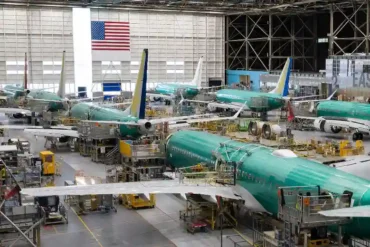
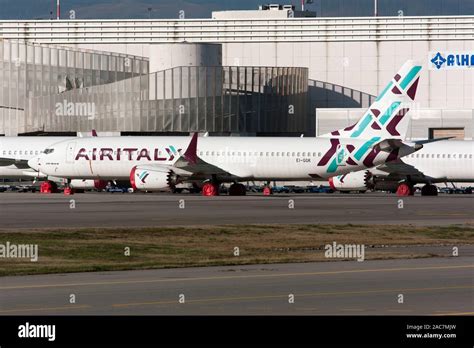
Fleet modernization played a critical role in this growth. Air Italy became Italy’s launch customer for the Boeing 737 MAX 8, receiving its first unit in May 2018, alongside new crew uniforms and an overhauled onboard experience. However, following the global grounding of the MAX in March 2019, the airline was forced to lease aircraft such as the Airbus A319 from Bulgaria Air to sustain operations.
Onboard Excellence: Redefining the Flying Experience
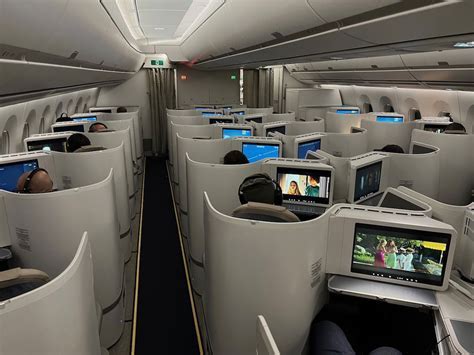
The airline invested heavily in customer experience, especially in business class, which featured fully flat seats in a 2-2-2 layout aboard A330s. Passengers were offered high-end amenity kits by Fedon and Acca Kappa, designer pajamas, personalized meal selections, and ample connectivity via AC power and USB ports.
Economy class on long-haul flights maintained a 2-4-2 layout with complimentary meals and drinks. For short-haul flights, the 737s and 737 MAX aircraft offered 3-3 seating with light refreshments. In-flight entertainment on A330s included seat-back screens, and satellite Wi-Fi was available—free up to 60MB in business class. Passengers could also enjoy the airline’s in-flight magazine, “Atmosphere”, published by Ink UK.
Corporate Identity and Management Structure
Air Italy’s corporate headquarters remained in Olbia, despite operations being centered in Milan. The executive leadership featured prominent industry professionals: Rossen Dimitrov as COO, Roberto Spada as Chairperson, and Shiju Thomas as CIO. These appointments were part of a wider effort to integrate global aviation expertise into the Italian context.
Its corporate structure was wholly owned by AQA Holding, with Qatar Airways bringing both capital and strategic oversight. Subsidiaries such as Meridiana Maintenance, Wokita tour operator, and Air Italy Fleet Management supported its core operations.
Sponsorships also formed part of Air Italy’s brand strategy, most notably its official partnership with Dinamo Sassari, a top-tier basketball team, and public presence at events like Toronto Pride and Gelato Festival.
Controversy and Competitive Turbulence
Air Italy’s rise was not without friction. The airline became embroiled in a public dispute with U.S. legacy carriers—Delta, American, and United, who accused it of being a proxy for Qatar Airways, violating the spirit of the Open Skies agreement and Fifth Freedom rights. While Air Italy did not operate any such Fifth Freedom routes, the accusations highlighted deeper geopolitical and trade tensions.
Despite public denials from Air Italy and Qatar Airways, the scrutiny affected the airline’s international image. The dispute led to intense lobbying in Washington and eventually added regulatory pressure that discouraged potential alliances and expansion.
Strategic Alliances and Network Expansion
Air Italy pursued an aggressive partnership strategy through codeshare agreements with Qatar Airways, British Airways, LATAM Brasil, Iberia, Bulgaria Air, and others. These collaborations extended its network reach significantly, supporting the goal of turning Milan Malpensa into a competitive transcontinental hub.
Moreover, Special Prorate Agreements were signed with carriers such as Alaska Airlines, Aegean Airlines, and El Al, allowing broader booking options and increased connectivity across Europe, Asia, and the Americas.
By February 2019, the airline served 21 year-round and 5 seasonal destinations, spanning Europe, Africa, Asia, and North America. Among the more exotic routes added for winter were flights to the Maldives, Tenerife, Mombasa, and Zanzibar, reinforcing its ambition to serve both business and leisure markets.
The Unraveling and Liquidation
Despite its ambitions and backing, Air Italy’s financial foundation proved fragile. By early 2020, a confluence of factors—including the Boeing 737 MAX crisis, competitive pricing pressures, lukewarm domestic demand, and escalating international scrutiny—contributed to mounting losses.
On February 11, 2020, AQA Holding resolved to liquidate the company. Flights continued temporarily via third-party carriers until February 25, with PSO routes to Olbia resumed briefly until airport maintenance halted operations in April. The airline’s final flight landed on February 26, and by August 25, 2020, its Air Transport Certificate was officially revoked.

The Fleet That Couldn’t Fly Far Enough
At its peak, Air Italy operated 12 aircraft, including:
- 4 Airbus A330-200s (228 seats; 24 Business, 204 Economy)
- 1 Boeing 737-700 (149 Economy)
- 4 Boeing 737-800s (189 Economy)
- 3 Boeing 737 MAX 8s (186 total; Business and Economy mix)
The future fleet strategy envisioned a total of 50 new aircraft by 2022, including 20 Boeing 737 MAX 8s and 30 Boeing 787-8 Dreamliners sourced through Qatar Airways. However, following the MAX grounding and delivery delays, Air Italy leased additional A330s and explored the Airbus A320neo family as alternatives.
Legacy and Lessons
The demise of Air Italy stands as a cautionary tale of ambition without sustainable grounding. While the airline demonstrated a modern fleet, luxurious cabins, and a strategic vision, it lacked the robust domestic loyalty and political support enjoyed by entrenched competitors.
The presence of a Middle Eastern backer triggered political backlash in key international markets, while the fragmented Italian domestic market failed to provide a consistent revenue base. Air Italy’s short flight through the skies—from March 2018 to February 2020—was a vivid display of what could have been a transformational player in Europe’s airline landscape.