For half a century, Air Malta symbolized more than just a flight connection for the island nation—it stood as an emblem of Malta’s aspirations, resilience, and increasing global presence. From its maiden flight in 1974 to its final descent in 2024, Air Malta charted a turbulent yet fascinating trajectory shaped by geopolitics, tourism trends, strategic partnerships, and national identity.
The Founding Vision: Malta’s Skyward Ambition
In the years following World War II, Malta’s air travel was fragmented across small private players. Companies like The Malta Instone Airline and BAS (Malta) Ltd formed the nascent foundation of Maltese aviation. These merged in 1947 to form Air Malta Ltd, though competition remained fierce with Malta Airlines until 1951, when the latter absorbed its rival and partnered with British European Airways (BEA).
The tides turned in the early 1970s when the Maltese government, determined to assert national control over air transport, appointed Albert Mizzi as chairman and brought in Pakistan International Airlines (PIA) as a technical and strategic partner. On 31 March 1973, Air Malta Co. Ltd was born. Its inaugural flight took off on 1 April 1974, opening routes to Rome, Tripoli, London, Manchester, and more using wet-leased Boeing 720Bs.
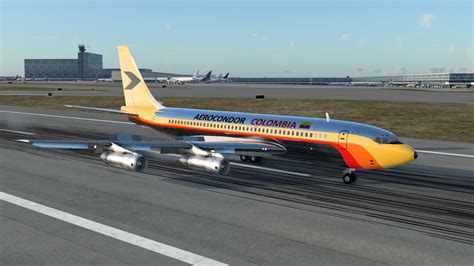
The early 1980s marked an era of rapid fleet expansion. By 1983, the airline owned three Boeing 737-200s, which were later increased and complemented with Airbus A320s by the end of the decade. The introduction of these jets modernized the fleet, facilitated new European connections, and positioned Air Malta as a serious regional competitor.
Fleet Transformation and Global Ties
Through the 1990s and early 2000s, Air Malta continually evolved its fleet, retiring older aircraft and welcoming newer Airbus models. This transition, culminating in the complete shift to Airbus A319s and A320s by 2007, was a strategic step to boost fuel efficiency, reduce maintenance costs, and modernize the passenger experience.
The airline also initiated CargoSystems following the opening of Malta International Airport in 1992, expanding its footprint into logistics and freight handling.
Significantly, Air Malta established 190+ interline agreements and operated codeshare partnerships with industry giants like Emirates, Lufthansa, Air France, and Qatar Airways, vastly expanding the carrier’s global reach beyond its modest hub.
A Brand of Malta: Cultural Identity Meets the Skies
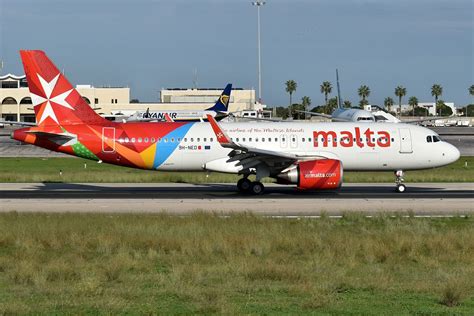
Air Malta was more than an airline—it was a flying ambassador. The Maltese cross adorned aircraft tails, while on-board service often reflected the island’s hospitality. For decades, tourists associated their first and last impression of Malta with its national airline.
However, branding missteps created controversy. In 2012, the airline underwent a rebranding exercise that minimized the “Air” in its name, featuring only “Malta” on fuselage titles. This drew backlash from loyalists and aviation historians who saw the change as eroding the airline’s identity.
Nonetheless, the airline’s cultural roots remained strong. In 2014, Air Malta celebrated its 40th anniversary by painting an Airbus A320-200 (9H-AEI) in retro livery, honoring the original Boeing 720B colors that had first graced European skies in the 1970s.
Seasonal Strategy and Financial Challenges
Operating in a small, tourism-driven market, Air Malta faced distinct seasonal flux. Winters meant reduced demand, and to remain profitable, the airline often wet-leased aircraft to other carriers during low periods. These included Etihad Airways, Sky Airline of Chile, and others.
Despite these efforts, the company battled financial turbulence. By 2018, after nearly two decades of losses, Air Malta finally turned a profit of €1.2 million. The profit was short-lived, as structural inefficiencies, overstaffing, and limited scalability remained ongoing concerns.
The Final Descent: EU Ruling and Strategic Exit
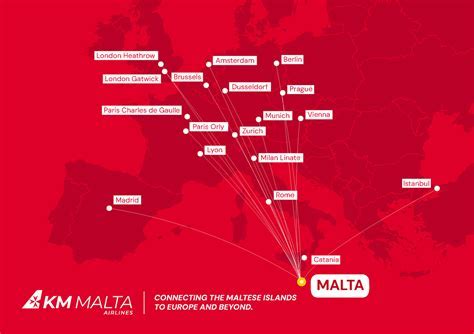
The decisive blow came not from the market but from Brussels. In April 2023, the European Commission denied a €290 million state aid request—essentially grounding any hope for recapitalization. Chairman David Curmi announced that the carrier would cease operations on 30 March 2024, to be succeeded by a leaner entity: KM Malta Airlines.
This transition was carefully orchestrated. A new red and dark red livery was introduced in 2023, symbolically passed on to KM Malta Airlines. Intellectual property, assets, and staff were strategically reassigned, allowing the successor to sidestep EU state aid constraints while preserving core operations.
Fleet Legacy: Evolution Across Decades
Air Malta’s final fleet was modest but efficient—comprised of 1 Airbus A320-200 and 6 Airbus A320neos, totaling 7 aircraft. Yet its historic fleet showcased a broader narrative of experimentation and adaptation.
From Boeing’s 720Bs and 737-200s to Airbus’s A310s, A319s, and short-haul jets like the Avro RJ70, Air Malta’s inventory evolved alongside the airline’s ambition. Occasionally, the airline tested long-haul waters with leased widebodies like the A310-300, though such ventures were ultimately unsustainable.
Allies in the Sky: Codeshare and Interline Power
Crucial to Air Malta’s extended global footprint were its codeshare agreements with major international carriers:
- Emirates
- Lufthansa
- Air France
- Etihad Airways
- KLM
- Swiss International Air Lines
- Qatar Airways
These partnerships enabled passengers to book flights from Malta to far-flung destinations with seamless baggage transfers and shared ticketing. This was vital for a small airline operating from a geographically peripheral hub.
Safety Record and High-Profile Incidents
Air Malta maintained a commendable zero-fatality record across its 50-year history. However, its name was linked—however peripherally—to one of the most devastating terrorist attacks in aviation history: Pan Am Flight 103.
In 1988, unaccompanied luggage from Air Malta Flight 180 was transferred onto the ill-fated Pan Am flight, which exploded over Lockerbie, Scotland, killing 270 people. While Air Malta was cleared of wrongdoing, the incident thrust the airline into the global spotlight.
Other incidents included a 1981 bombing in Cairo, a 1997 hijacking resolved peacefully in Cologne, and a 2004 ground collision at Malta International Airport. Each tested but ultimately affirmed the airline’s operational resilience.
Corporate Infrastructure and Workforce
Air Malta’s headquarters resided at the Skyparks Business Centre, adjacent to Malta International Airport in Luqa. At its closure, the company employed 375 staff, down from previous years of larger employment. Sub-brands like Malta MedAir helped offload auxiliary operations, further focusing the parent brand’s core activities.

The End, and the Beginning
When Air Malta’s final flight landed in March 2024, it wasn’t just the end of an airline—it was the end of an era. The airline helped build modern Malta’s connectivity, tourism infrastructure, and international standing.
In its place, KM Malta Airlines steps into the breach. Whether this new carrier can avoid its predecessor’s pitfalls while inheriting its legacy remains to be seen. But the story of Air Malta will forever be part of the Mediterranean’s aviation heritage.
As the sun sets on its red-and-white fleet, it’s clear that Air Malta’s contribution to Malta’s national identity and economy cannot be overstated. For five decades, it wasn’t merely a way to reach the island—it was a way to understand it.