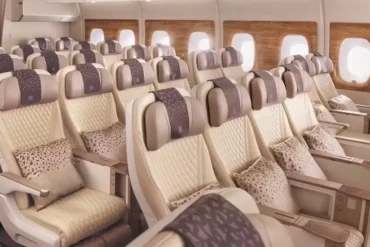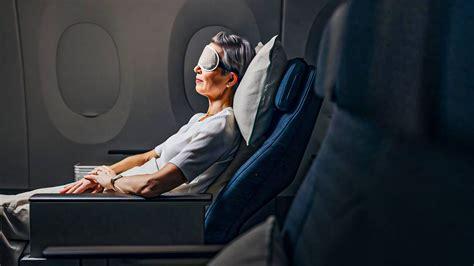
Transpacific flights are where aviation ambition meets human endurance. Crossing vast oceans for twelve to sixteen hours demands more than just a comfortable seat—it requires an environment that supports sleep, productivity, privacy, and even a sense of calm detachment from time itself. In this space, business class has evolved into something far more sophisticated, blurring the line between transportation and a curated living experience at 35,000 feet.
Airlines competing on these routes understand that passengers are not simply buying a ticket—they are investing in rest, recovery, and efficiency. The best carriers have responded with seats that feel like private suites, enhanced by refined service, elevated dining, and thoughtful technological integration. What separates the exceptional from the merely good is not just width or recline, but how every detail comes together to create a seamless long-haul experience.
Across the Pacific, a handful of airlines have emerged as clear leaders, consistently delivering business class products that redefine expectations. These are not incremental upgrades—they are intentional redesigns of how premium travel should feel when time stretches and comfort becomes essential rather than optional.
All Nippon Airways “The Room”: Redefining Space at Altitude
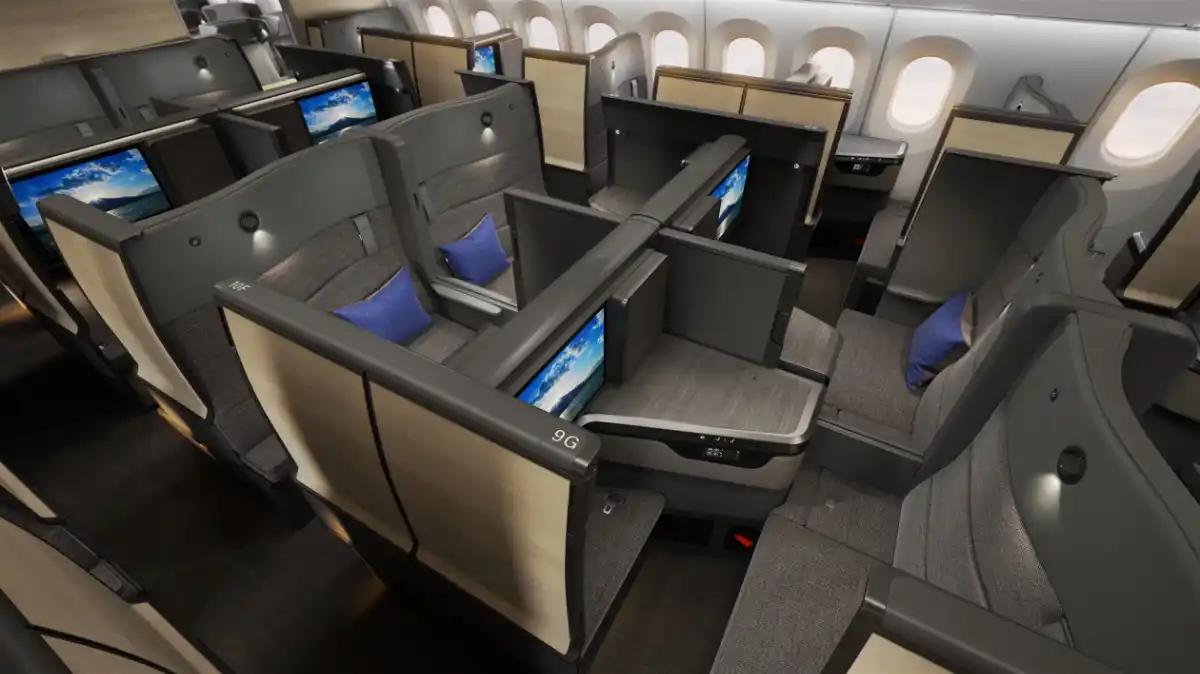
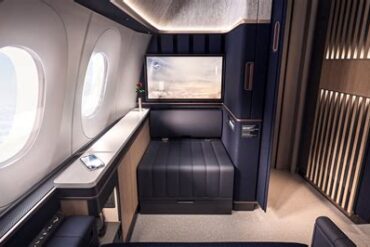
All Nippon Airways didn’t just improve business class—they reimagined it entirely. “The Room” lives up to its name with a seat that feels more like a private lounge than a traditional airline seat. Its defining feature is sheer width, offering a level of personal space rarely seen in commercial aviation.
Instead of forcing passengers into a forward-facing posture, the design encourages natural movement. You can sit cross-legged, stretch out diagonally, or recline casually as if you were in a living room rather than a pressurized cabin. On ultra-long-haul routes like Tokyo Haneda to New York JFK, this flexibility becomes transformative, allowing the body to avoid the stiffness typically associated with long flights.
Privacy is equally well executed. High walls and a sliding door create a semi-enclosed suite that shields passengers without feeling confining. It strikes a delicate balance—private enough for rest, open enough to avoid claustrophobia.
The seat converts into a fully flat bed, but the real brilliance lies in the lounging experience. This is where ANA quietly outperforms competitors: it understands that passengers spend more time relaxing than sleeping. Add to that meticulously paced service, refined Japanese cuisine, and premium bedding, and the result is an experience that feels effortless rather than engineered.
Singapore Airlines Business Class Suite: Precision Meets Luxury
Singapore Airlines has long been synonymous with consistency and excellence, and its latest business class suite reinforces that reputation with precision. The seat is impressively wide—around 30 inches—and transforms into an 81-inch fully flat bed, making it one of the most spacious offerings in the sky.
But raw dimensions only tell part of the story. The suite’s design focuses on intentional usability. Every control, storage compartment, and surface is positioned with purpose, allowing passengers to transition seamlessly between work, dining, and rest. On routes like Singapore to New York or Newark—among the longest flights in the world—this adaptability becomes invaluable.
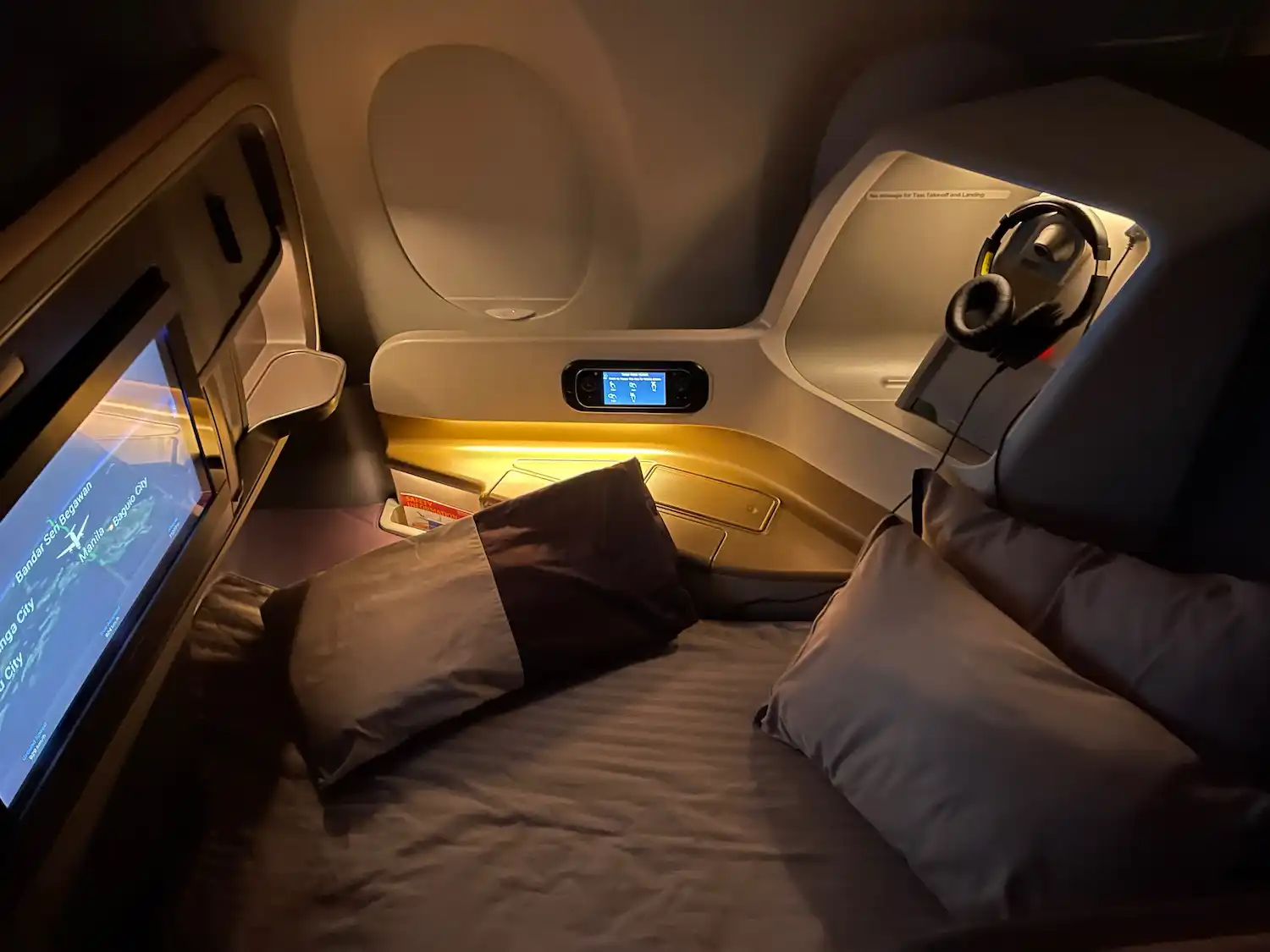
The addition of full-height privacy doors elevates the experience into something resembling first class. Once closed, the suite becomes a quiet, personal sanctuary, ideal for uninterrupted sleep or focused work. The bedding is carefully designed to support long rest cycles, ensuring passengers arrive refreshed rather than fatigued.
Service remains the airline’s defining strength. Cabin crew deliver attentive yet unobtrusive care, anticipating needs without disrupting the passenger’s rhythm. Dining is equally impressive, offering a diverse menu that caters to global tastes while maintaining exceptional quality and presentation.
This is not a flashy product—it’s a disciplined execution of luxury, where every detail aligns with the realities of ultra-long-haul travel.
Cathay Pacific Aria Suite: A Modern Revival of Premium Travel
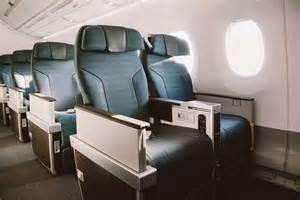
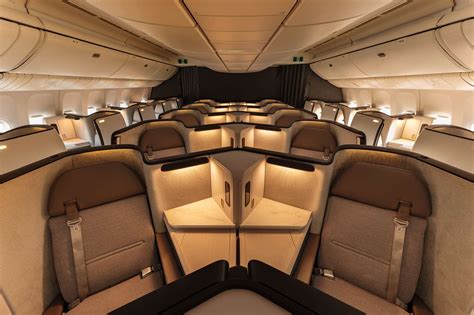
Cathay Pacific’s Aria Suite signals a confident return to the top tier of business class innovation. With a fully enclosed design and sliding door, the suite delivers a level of privacy that rivals many first class cabins, while maintaining the efficiency expected in business class.
The aesthetic is distinctly modern: clean lines, muted tones, and high-quality materials create a calming environment that feels both contemporary and timeless. This is not luxury that demands attention—it’s luxury that invites relaxation.
Technology plays a central role in the Aria Suite’s appeal. The 24-inch 4K screen is among the largest in business class, transforming in-flight entertainment into a genuinely immersive experience. Bluetooth connectivity allows passengers to use their own headphones, while wireless charging eliminates the clutter of cables—a small but meaningful upgrade on long flights.
Beyond hardware, Cathay Pacific has refined its soft product. Dining has seen a notable resurgence, with menus that balance Asian culinary heritage and international sophistication. Presentation is elegant without being excessive, reinforcing the airline’s understated approach to premium service.
On competitive transpacific routes from Hong Kong, the Aria Suite positions Cathay as a serious contender once again, offering a product that feels modern, cohesive, and deeply considered.
Japan Airlines Sky Suite: Quiet Excellence in Comfort
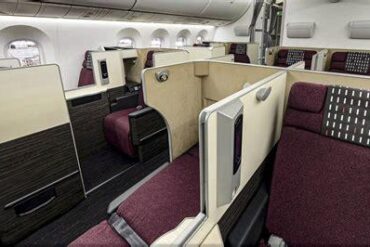
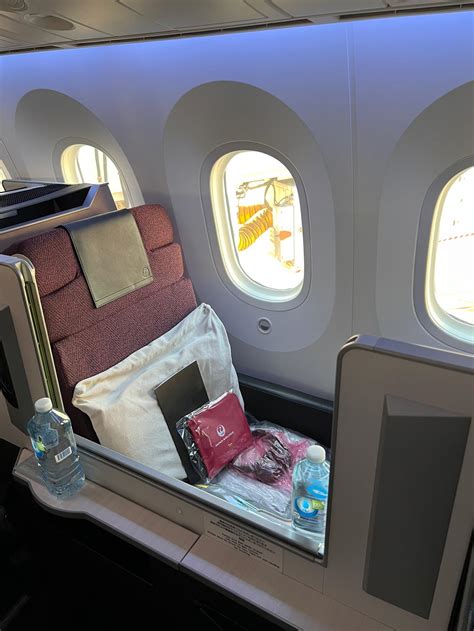
Japan Airlines takes a different path—less about spectacle, more about reliability and comfort. The Sky Suite may not boast the widest seat or the newest technology, but it excels where it matters most: sleep quality and consistency.
The cabin layout prioritizes privacy through well-designed partitions, giving each passenger a clearly defined personal space without isolating them completely. When converted into bed mode, the seat becomes a remarkably comfortable sleeping surface, enhanced by a thick mattress pad and high-quality duvet.
This focus on sleep is not accidental. On overnight transpacific flights, the ability to achieve deep, uninterrupted rest is arguably the most valuable feature a business class product can offer. Japan Airlines understands this, and it delivers with quiet confidence.
Service reflects the principles of Japanese hospitality, emphasizing politeness, precision, and attentiveness. Cabin crew maintain a consistent level of care throughout the journey, creating an atmosphere that feels calm and respectful.
Dining further reinforces this identity, offering a thoughtful mix of traditional Japanese cuisine and Western options. Meals are carefully prepared and presented, contributing to a sense of balance and refinement.
The Sky Suite doesn’t try to impress with bold innovation—it succeeds by delivering exactly what passengers need, without unnecessary complexity.
EVA Air Royal Laurel: Consistency as a Competitive Advantage
EVA Air’s Royal Laurel business class proves that excellence doesn’t always require dramatic reinvention. Instead, it focuses on precision, cleanliness, and reliability, creating a product that consistently ranks among the best for transpacific travel.
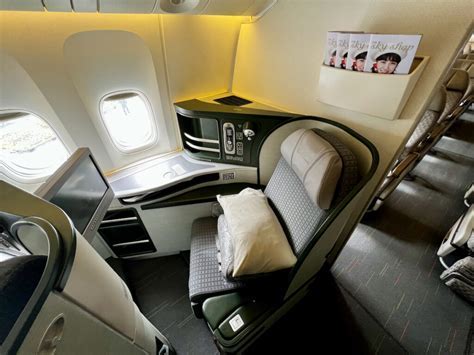
The cabin features a 1-2-1 configuration, ensuring direct aisle access for every passenger—a standard that has become essential in modern business class. Seats are spacious and convert into fully flat beds, providing a comfortable foundation for long-haul journeys.
Where EVA Air truly stands out is in its attention to detail. Cabins are meticulously maintained, service is polished, and the overall experience feels remarkably consistent across routes and aircraft. For frequent travelers, this predictability is a significant advantage.
Dining is another highlight. The airline offers a diverse menu that blends Asian and international flavors, with meals that are both flavorful and thoughtfully presented. Combined with attentive service, the experience feels cohesive and dependable.
Royal Laurel may not have the most eye-catching seat on this list, but it delivers something arguably more valuable: a consistently high-quality journey, free from surprises or compromises.
What Truly Defines the Best Transpacific Business Class Seats
Choosing the best business class seat for transpacific flights isn’t just about comparing specifications—it’s about understanding how those features perform over time. A seat that feels impressive for two hours can become uncomfortable over twelve. The airlines on this list succeed because they design for duration, not just first impressions.
Several factors consistently separate top-tier products:
- Space and flexibility, allowing passengers to move naturally during long flights
- Privacy, enabling rest and focus without interruption
- Sleep quality, including bedding and seat ergonomics
- Service consistency, ensuring a smooth and predictable experience
- Dining excellence, turning meals into highlights rather than necessities
Each of these airlines approaches the challenge differently, yet all converge on the same goal: transforming long-haul travel into something that feels manageable, even enjoyable.
The Future of Transpacific Business Class
The competition across the Pacific shows no signs of slowing down. Airlines are continuing to refine their products, integrating new materials, smarter layouts, and advanced technology to further enhance passenger comfort.
We are already seeing trends toward greater personalization, where passengers can tailor lighting, temperature, and entertainment to their preferences. Sustainability is also becoming a factor, influencing everything from cabin materials to catering choices.
What remains constant is the expectation that business class should deliver more than just comfort—it should provide a meaningful improvement in how passengers experience long-distance travel.
Final Perspective: Choosing the Right Airline for Your Journey
The “best” business class seat ultimately depends on what matters most to you. If space and innovation are priorities, All Nippon Airways stands out. For precision and service excellence, Singapore Airlines remains unmatched. Cathay Pacific offers a modern, tech-forward experience, while Japan Airlines delivers exceptional sleep quality. EVA Air rounds out the list with unwavering consistency.
Each airline brings a distinct philosophy to the challenge of ultra-long-haul travel, yet all share a commitment to elevating the passenger experience beyond expectations. On routes where time stretches across oceans, that commitment makes all the difference.