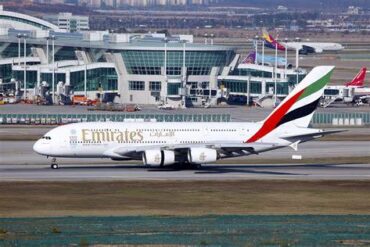
Flying on Emirates’ Airbus A380 in 2026 is not simply transportation; it is a carefully choreographed long-haul experience built around space, scale, and refinement. No other airline has committed itself so fully to the world’s largest passenger aircraft, and that commitment shows in how deeply Emirates has optimized every cabin, every aisle, and every seat. With more than 100 A380s still active and freshly refurbished, choosing the right seat is not a trivial detail—it is the difference between a good flight and an exceptional one.
Emirates operates the A380 on some of the longest and busiest routes on Earth, linking Dubai with Europe, Asia, the Americas, and Oceania. Flights regularly exceed six, ten, or even sixteen hours. Over that span of time, subtle differences in seat pitch, privacy, galley proximity, or even lavatory placement quietly shape your comfort. The aircraft may be enormous, but not all seats are created equal.
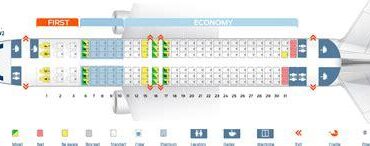
Before diving into the best seats in each cabin, it helps to understand how Emirates configures its A380 fleet in 2026. The airline operates eight distinct layouts, ranging from ultra-long-haul four-class aircraft with First, Business, Premium Economy, and Economy, to high-density two-class jets designed for regional demand. These differences affect everything from legroom to noise levels, especially in Economy and Premium Economy, where galley placement can dramatically change the feel of a row.
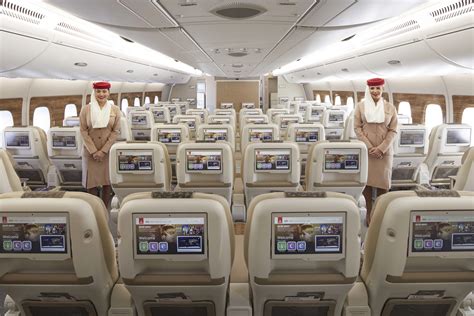
The most modern and increasingly common configuration is the four-class A380, introduced during Emirates’ extensive retrofit program. This version typically seats 14 in First Class, 76 in Business Class, 56 in Premium Economy, and around 340 in Economy. It represents Emirates’ vision for long-haul travel through the late 2020s: layered luxury, clear segmentation, and consistent comfort across all cabins.
With that foundation set, the question becomes precise and personal: where exactly should you sit?
Best Seats in Emirates A380 First Class: Choosing the Perfect Suite
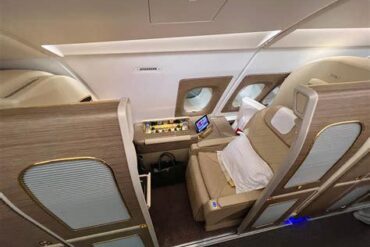
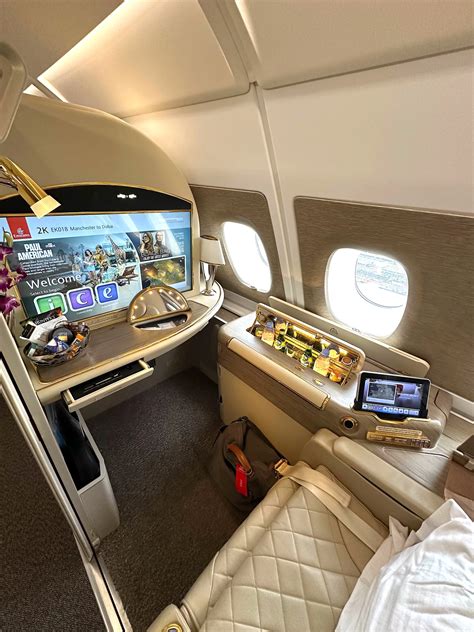
Emirates’ A380 First Class is already legendary, but even within this elite cabin, seat choice matters. The First Class cabin occupies the forward section of the upper deck and features 14 fully enclosed suites in a 1-2-1 layout. Each suite is a private room in the sky, complete with sliding doors, a personal minibar, a vanity mirror, and an expansive 27-inch HD entertainment screen.
The suites convert into fully flat beds measuring up to 75 inches long and nearly 28 inches wide, with an industry-leading 86-inch pitch. Two onboard Shower Spas at the front of the cabin remain exclusive to First Class passengers, adding another layer of novelty and indulgence.
For solo travelers, window suites such as 2A and 2K are widely considered the best seats in the cabin. They are positioned away from both the galley and the shower area, reducing foot traffic and ambient noise. The window alignment in these seats also enhances the sense of privacy, making the suite feel even more cocooned.
Passengers traveling together often gravitate toward the center suites in rows 2 and 3, which feature electronically adjustable privacy dividers. These allow conversation when desired and complete separation when not. It is a rare balance of intimacy and discretion.
For families flying with infants, 1A and 1K stand out. These bulkhead suites are equipped with bassinet positions and offer marginally more usable space. While they are closer to the galley, the trade-off is practicality and room to maneuver.
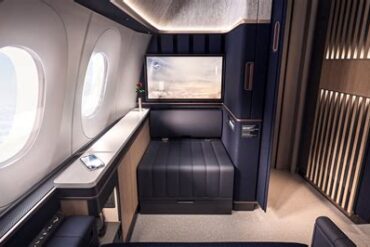
Looking ahead, Emirates has hinted at a future A380 First Class refresh, potentially inspired by its ultra-private “Game Changer” suites on the Boeing 777. Even if that redesign materializes later in the decade, the current First Class product remains one of the most complete luxury offerings in commercial aviation.
Best Seats in Emirates A380 Business Class: Privacy, Space, and Strategy
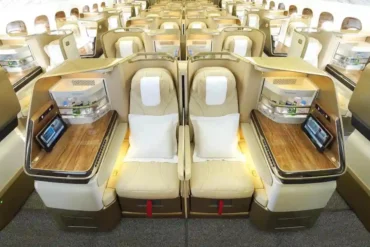
The Business Class cabin on Emirates’ A380 occupies most of the upper deck, creating a uniquely spacious atmosphere that few other aircraft can replicate. In standard three- and four-class layouts, the cabin features 76 lie-flat seats arranged in a staggered 1-2-1 configuration, ensuring direct aisle access for every passenger.
All Business Class seats are based on the Safran SkyLounge platform and convert into fully flat beds. However, not all beds are equal in length. Window and some aisle seats—specifically A, E, F, and K—offer a 48-inch pitch and extend into beds measuring 79 inches long. Other seats, including B, D, G, and J, have a shorter pitch of 39 inches and a bed length of 70 inches.
For solo travelers, A and K window seats are the clear favorites. They sit slightly farther from the aisle, offering greater privacy and a quieter feel. The side console also feels more spacious in these positions, making them ideal for working, dining, or sleeping undisturbed.
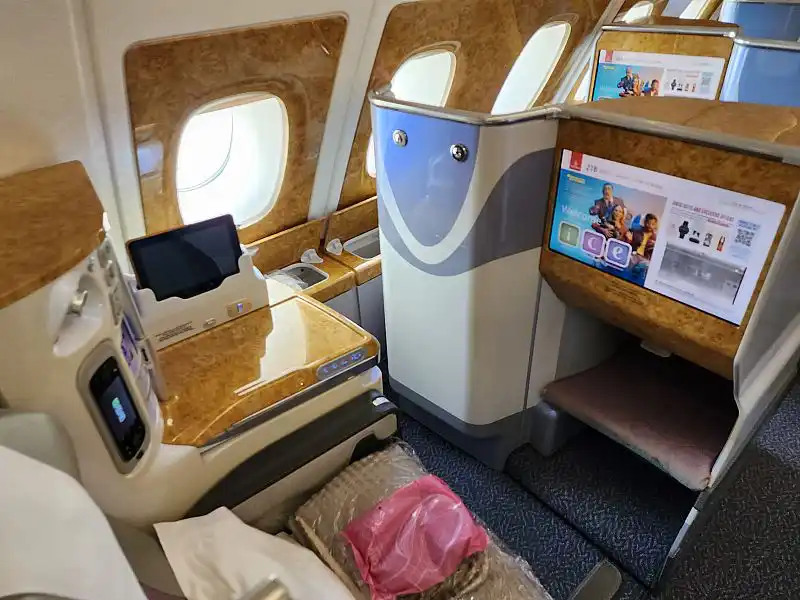
If a window seat is unavailable, D and G are better alternatives than B or J. They are shielded by the seat structure and feel less exposed to aisle traffic, especially during meal services.
Couples traveling together often prefer the E and F center seats, which are positioned close enough for easy conversation without sacrificing direct aisle access. These seats preserve the social aspect of travel while maintaining Emirates’ high privacy standards.
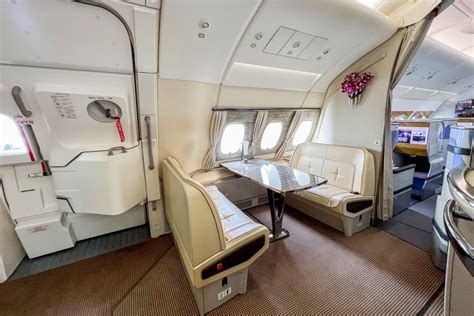
At the rear of the Business Class cabin lies one of the A380’s defining features: the onboard bar and lounge. It is a social hub and a signature Emirates experience. That said, passengers seeking uninterrupted rest should avoid seats in rows 25 and 26, which sit closest to the bar and nearby lavatories. These rows experience noticeably more foot traffic, particularly on overnight flights.
Best Seats in Emirates A380 Premium Economy: Where Value Peaks
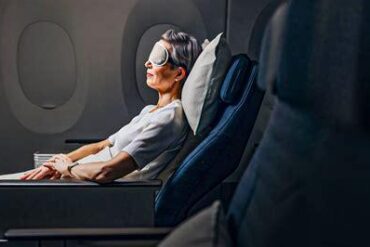
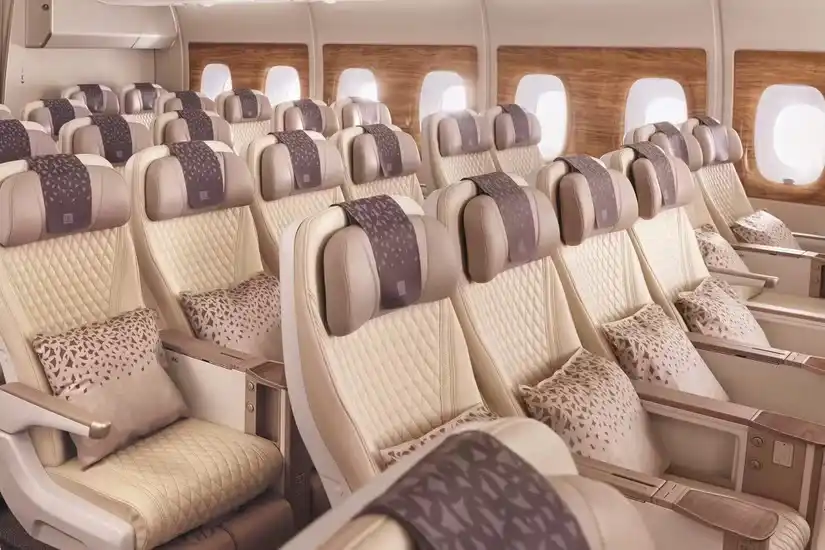
Emirates’ introduction of Premium Economy marked a pivotal shift in its long-haul strategy, and by 2026, the cabin is firmly established across a growing portion of the A380 fleet. Located at the front of the main deck, Premium Economy serves as a buffer between Business Class above and Economy behind, both physically and experientially.
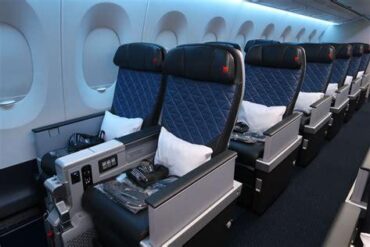
The cabin features 56 Recaro PL3530 seats in a comfortable 2-4-2 layout. Each seat offers 40 inches of pitch, a generous 19.5-inch width, and up to 8 inches of recline, supported by a calf rest and footrest. A 13.3-inch HD touchscreen, USB-A and USB-C ports, and a shared AC outlet round out the tech offering.
Among all Premium Economy seats, row 33—specifically 33A/B and 33J/K—stands out. These bulkhead seats offer significantly more legroom than the rest of the cabin, making them ideal for taller passengers or anyone who values the ability to stretch freely. While personal items must be stowed during takeoff and landing, the comfort payoff during cruise more than compensates.
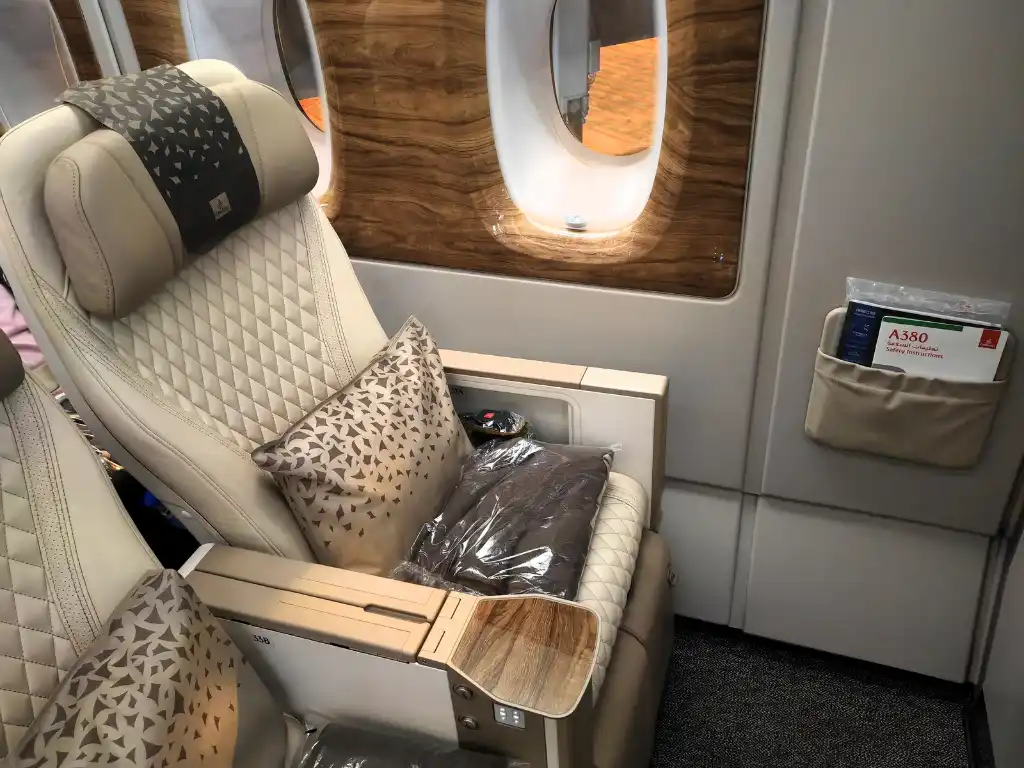
The middle seats, particularly E and F, are best avoided unless traveling as part of a group. Even in Premium Economy, the psychological difference between a window-adjacent seat and a true middle seat is noticeable on long flights.
Premium Economy on the A380 strikes a rare balance: it feels meaningfully elevated without approaching Business Class pricing. For many routes, this cabin delivers the strongest ratio of comfort to cost in the Emirates network.
Best Seats in Emirates A380 Economy Class: Maximizing Comfort at Scale
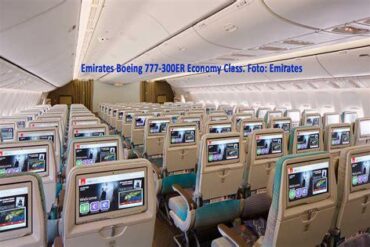
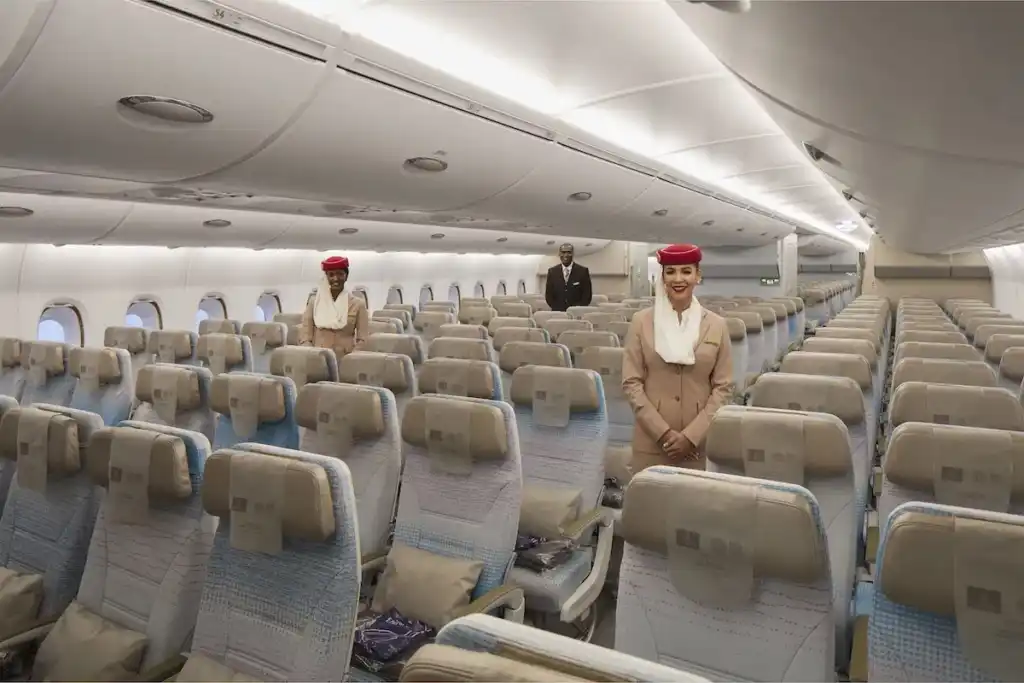
Economy Class on the Emirates A380 is vast, accommodating anywhere from 338 to 557 passengers, depending on configuration. Despite the scale, seat quality remains consistent across the fleet. Seats are arranged in a 3-4-3 layout on the lower deck, with select two-class aircraft extending Economy to the upper deck in a 2-4-2 configuration.
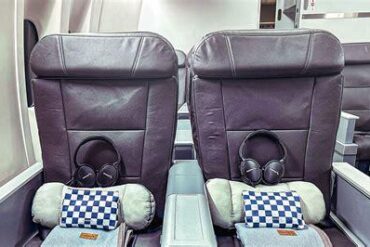
Each seat features 32 inches of pitch, 17.9 inches of width, a 13.3-inch HD screen, and a USB-A charging port. While these numbers are standard for long-haul Economy, seat location makes a dramatic difference.
The most sought-after Economy seats are those with extra legroom, particularly at bulkheads and exit rows. Rows 41, 52, 67, and 80 are generally strong choices across multiple configurations, though proximity to galleys and lavatories can introduce additional noise.
Among the best standard Economy seats are A and K seats in rows 68 and 81, where the absence of a third seat in front creates extra space without the restrictions of an exit row. For couples, 67B/C/H/J and 80B/C/H/J offer more room than average and reduce the likelihood of being seated next to a stranger.
On two-class A380s with Economy seating on the upper deck, the 2-4-2 layout significantly improves comfort. Side pairs become especially attractive, as they eliminate one middle seat entirely and create a calmer, more intimate atmosphere than the lower deck.
Why the Emirates A380 Still Defines Long-Haul Travel
In an era where many airlines have retired the Airbus A380, Emirates has done the opposite. With over 100 aircraft undergoing a multi-billion-dollar retrofit program, the airline has doubled down on the superjumbo as the backbone of its long-haul network. The average fleet age remains just over 10 years, leaving ample life for continued upgrades and refinements.
By 2026, the Emirates A380 is no longer a relic of pre-pandemic aviation. It is a modernized flagship, equipped with refreshed cabins, improved materials, and a clearly tiered onboard experience. From enclosed First Class suites to thoughtfully designed Economy seating, the aircraft rewards passengers who take the time to choose wisely.
The best seat on an Emirates A380 is not universal. It depends on your priorities: privacy, legroom, sleep quality, or value. What remains constant is this: on the world’s largest passenger aircraft, small decisions carry enormous weight. Choosing the right seat transforms the journey, turning hours in the air into an experience that feels intentional, comfortable, and unmistakably Emirates.