Artificial intelligence is transforming beach safety by giving lifeguards and coastal authorities an entirely new way to monitor the ocean. Instead of relying solely on lookout towers, patrol boats, or reports from swimmers, AI-assisted drones can detect sharks from the air in real time and provide early warnings before dangerous encounters occur. The technology is rapidly becoming one of the most promising innovations for reducing shark attacks while also supporting marine conservation.
AI-Powered Drones Are Revolutionizing Shark Detection
For decades, sharks have been portrayed as relentless predators, largely influenced by popular culture. In reality, attacks on humans remain extremely uncommon, and most shark species have little interest in people. Nevertheless, because sharks are powerful wild animals capable of causing severe injuries, coastal communities continue searching for better ways to minimize accidental encounters.
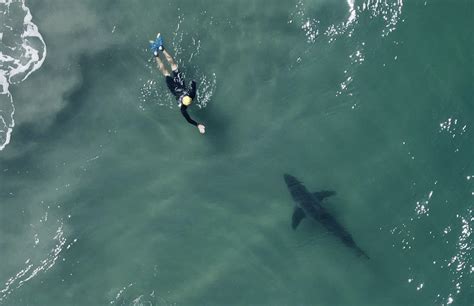
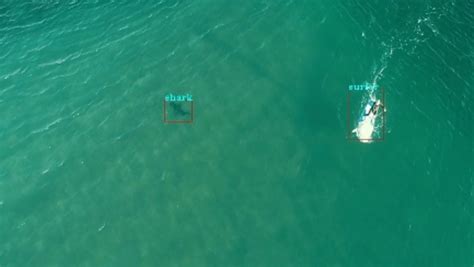
Artificial intelligence has emerged as a practical solution. Equipped with high-resolution cameras, drones can patrol beaches from above, scanning large stretches of coastline far more efficiently than observers stationed on shore. Advanced machine learning algorithms analyze the live video feed, distinguishing sharks from dolphins, rays, surfers, boats, and floating debris. When a shark enters a swimming area, authorities receive immediate notifications, allowing them to issue warnings or temporarily close sections of the beach before anyone is placed at risk.
Unlike traditional spotting methods that depend on clear visibility of a dorsal fin, aerial AI systems identify the complete body shape and movement patterns of marine animals, significantly improving detection capabilities.
How SharkEye Uses Artificial Intelligence to Improve Beach Safety
One of the leading research initiatives demonstrating this technology is SharkEye. The project combines autonomous drone flights with sophisticated AI software capable of recognizing multiple shark species along California’s coastline.
During routine patrols, drones capture continuous aerial footage over popular beaches. The collected images are processed using trained neural networks that have learned to recognize great white sharks and other large marine predators. Once detected, their locations are relayed to public safety officials, researchers, and beach management teams.
Beyond protecting swimmers, SharkEye also provides valuable scientific information. Researchers can monitor migration routes, seasonal movements, habitat preferences, and behavioral patterns without disturbing the animals. This creates a unique balance between improving public safety and advancing marine biology research.
Instead of treating sharks solely as threats, the technology helps scientists better understand their role within coastal ecosystems while reducing unnecessary panic among beachgoers.
SharkSpotter Demonstrates Real-World Success
Another pioneering system, SharkSpotter, was developed by researchers at the University of Technology Sydney. The platform combines drones, artificial intelligence, and human oversight to continuously monitor Australian beaches.
During its first year of operation, the system reportedly helped prevent incidents that may have placed two individuals in serious danger. Its AI model achieves approximately 90 percent detection accuracy while distinguishing sharks from dolphins and other marine life that frequently trigger false alarms during visual observations.
The platform also identifies surfers, swimmers, paddleboarders, boats, and additional objects in the water. Live video streams are transmitted directly to a monitoring station, where trained operators verify AI detections before making decisions regarding beach evacuations or public safety announcements.
This combination of automated detection and human judgment significantly reduces false positives while maintaining confidence in emergency responses.
Machine Learning Continues to Improve Detection Accuracy
The effectiveness of AI-assisted drones continues to improve as larger datasets become available. Every successful flight generates additional images that help train detection algorithms under varying ocean conditions.
Factors such as waves, changing sunlight, water clarity, shadows, and weather can make identifying marine animals challenging. Modern machine learning systems continually adapt by learning from these difficult scenarios, allowing them to recognize sharks even when visibility is less than ideal.
Future versions may integrate thermal imaging, multispectral cameras, and predictive behavioral models capable of estimating where sharks are likely to travel based on tides, currents, and historical migration data. These advancements could provide earlier warnings while expanding monitoring coverage across larger coastal regions.
The Future of Autonomous Shark Surveillance
Today’s systems still rely on trained human operators to confirm AI detections before authorities act. However, researchers envision networks of autonomous drones capable of coordinating with one another across extensive coastlines.
These drone fleets could automatically patrol beaches, recharge themselves, communicate detected threats, and maintain nearly continuous surveillance throughout daylight hours. Combined with cloud computing and increasingly sophisticated AI models, future systems may dramatically reduce response times while lowering operational costs.
Such technology could eventually become standard infrastructure for popular beaches worldwide, protecting millions of swimmers without disrupting marine ecosystems.
Rather than portraying sharks as enemies, AI-assisted drone technology encourages peaceful coexistence by giving humans more awareness of their surroundings. By detecting sharks before close encounters occur, these intelligent monitoring systems enhance public safety, improve scientific research, and demonstrate how artificial intelligence can solve real-world environmental challenges while preserving the natural balance of the ocean.