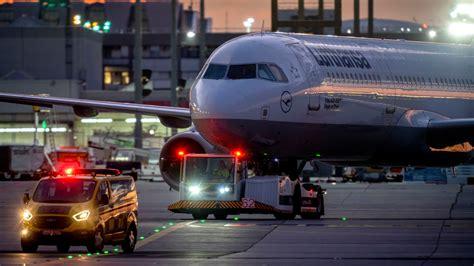
The scale of aviation safety concerns in the United States may be far greater than most travelers realize. During a recent Senate hearing focused on aviation safety, Airlines for America (A4A) President and CEO Chris Sununu told lawmakers that hundreds of near-miss incidents occur across the National Airspace System every single day, highlighting a troubling reality that extends well beyond the incidents that capture national headlines.
According to Sununu, the public typically becomes aware of only a small fraction of the close calls that take place in American skies and at airports. While major incidents often generate widespread media attention, he emphasized that safety databases reveal a much larger number of events that rarely reach public awareness. His remarks came during a Senate Commerce Subcommittee on Aviation, Space, and Innovation hearing examining runway incursions, operational risks, and efforts to strengthen aviation safety nationwide.
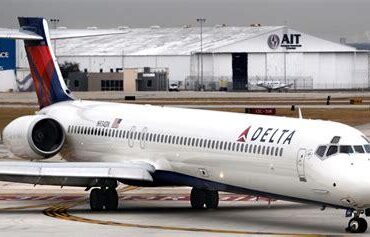
The comments arrived just days after a concerning incident at Boston Logan International Airport, where a Delta Air Lines aircraft on final approach executed a go-around after its flight crew identified a potential collision risk involving an American Airlines aircraft departing the same airport. The quick response by the Delta pilots prevented what could have become a far more serious event and once again drew attention to ongoing concerns surrounding runway and airspace safety.
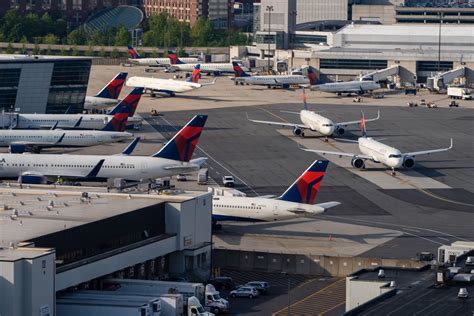
Growing Concern Over Hidden Aviation Safety Risks
During questioning by lawmakers, Sununu stated that the number of near misses recorded throughout the aviation system significantly exceeds the incidents reported publicly. He explained that while headline-grabbing events may appear relatively infrequent, aviation safety data points to thousands of additional close calls occurring throughout the year.
His testimony underscored the difference between public perception and operational reality. Commercial aviation remains one of the safest forms of transportation, yet the frequency of near-miss events demonstrates the complexity of managing one of the world’s busiest air traffic environments. Every day, thousands of commercial, military, cargo, and private aircraft operate within crowded airspace, creating conditions that require constant coordination between pilots, controllers, and airport operators.
The hearing took place amid increased scrutiny of aviation safety following several high-profile incidents and accidents that have raised questions about infrastructure, staffing, and technological modernization across the aviation sector.
Federal Efforts To Modernize The National Airspace System
The United States Department of Transportation and the Federal Aviation Administration are currently investing billions of dollars in modernization initiatives designed to reduce operational risks and improve situational awareness for both pilots and air traffic controllers.
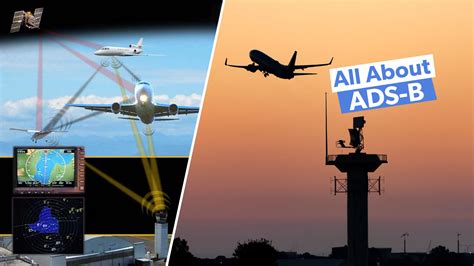
Among the most significant upcoming requirements is the broader deployment of ADS-B In technology, which will become mandatory for many aircraft by December 2031. The technology enables pilots to receive more comprehensive real-time traffic information, enhancing awareness of nearby aircraft and helping crews identify potential conflicts earlier.
Authorities are also expanding runway safety programs, introducing advanced monitoring tools, and upgrading aging infrastructure throughout the National Airspace System. These initiatives support the FAA’s long-term objective of achieving zero close calls, an ambitious target that reflects growing concern about runway incursions and airspace conflicts.
Information Sharing Remains A Critical Challenge
The hearing also featured testimony from Todd Hauptli, President and Chief Executive Officer of the American Association of Airport Executives. Hauptli argued that one of the industry’s most pressing challenges involves the flow of safety information among key stakeholders.
According to his assessment, pilots, air traffic controllers, airports, and other operational participants do not always receive the complete information necessary to maximize situational awareness. Improving communication channels and ensuring that critical safety data is shared effectively could play a major role in reducing future incidents.
The discussion highlighted how aviation safety increasingly depends not only on technology but also on the efficient exchange of information among organizations operating within a highly interconnected transportation system.
Ronald Reagan Washington National Airport Under Intense Scrutiny
One airport receiving particular attention during the hearing was Ronald Reagan Washington National Airport. Senator Jerry Moran noted that approximately 15,000 close calls were recorded in and around the airport over a three-year period, reflecting the challenges associated with operating in one of the nation’s most congested and complex airspaces.
Safety concerns surrounding the airport intensified following the January 2025 collision involving American Airlines Flight 5342 and a US Army Black Hawk helicopter. The tragedy renewed calls for enhanced oversight, improved traffic management procedures, and accelerated modernization efforts across the aviation sector.
FAA Data Reveals Mixed Safety Trends
Federal Aviation Administration statistics present a mixed picture of current safety performance. While the overall rate of runway incursions per one million takeoffs and landings has declined in 2026 compared with the previous year, the most severe incidents continue to occur.
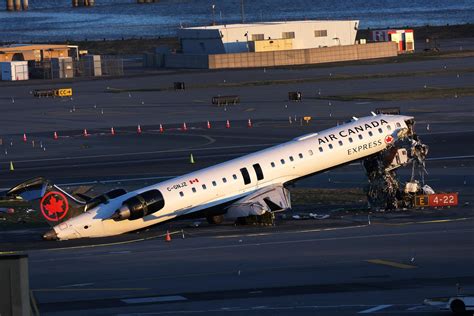
Three Category A runway incursions—the most serious classification—have already been recorded during 2026. One of the most significant occurred at New York LaGuardia Airport in March when an Air Canada Express Bombardier CRJ900 struck a fire truck that had been cleared to cross the runway.
The recent Boston Logan incident further demonstrated how rapidly routine operations can evolve into potentially catastrophic situations. Aviation experts view such events as reminders that continuous investment in technology, training, infrastructure, and communication remains essential to maintaining and improving safety throughout America’s increasingly busy air transportation network.