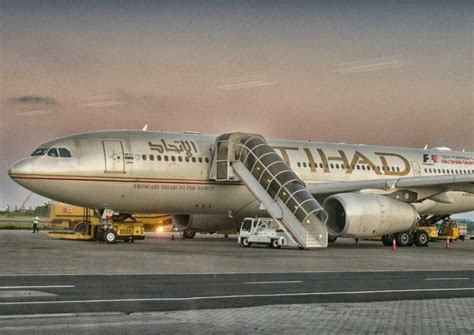
Etihad Airways promotes its Abu Dhabi stopover program as a signature perk—an enticing promise of free hotel stays for up to four nights, designed to elevate long-haul journeys and position Abu Dhabi as a destination worth exploring. On the surface, it appears to be a compelling addition to any itinerary. Yet recent firsthand accounts reveal a troubling pattern: what is marketed as a streamlined, cost-saving benefit often turns into a maze of broken guarantees, delayed communication, and unexpected costs that leave passengers scrambling at the last minute.
Travelers planning complex journeys rely on dependable information at the booking stage, especially when airlines position perks as part of the package. When the promise of a complimentary stay collapses, so does the trust that passengers place in a flagship carrier. The narrative is not isolated; the experiences of multiple travelers suggest a broader problem in the execution of Etihad’s stopover policy.
A Breakdown in Communication: When “Confirmation Pending” Never Ends
Numerous travelers recount an almost identical sequence of events: the stopover program appears available during the booking process, the system prompts guests to select the length of stay—sometimes up to four nights—and then displays a reassuring note such as “Hotel booking in progress. Confirmation details will be emailed shortly.” Days pass. Then weeks. Silence.
For one passenger traveling from Istanbul to Thailand, the warning signs emerged early. Despite completing the hotel selection immediately after booking, the confirmation never arrived. Checking the Etihad app only revealed the same message in limbo. When the traveler contacted customer support through Etihad’s verified Instagram channel, agents repeatedly insisted there was nothing to worry about, claiming that confirmation “should be sent soon.”
This false sense of security persisted until mere days before departure, when the passenger—still without confirmation—was asked to provide three hotel preferences. Even after doing so, the airline returned with yet another request for a hotel selection. By this stage, the pattern had shifted from mere administrative delay to something more concerning.
The Unexpected Fees: When “Free” Suddenly Costs Hundreds
The unraveling reached its peak when Etihad informed the traveler that the four-night stopover would cost USD 250 per person, or USD 500 per room—a detail absent from the booking interface. The hotel options they presented did not match the value of the fee, adding another layer of frustration. A price check on Dusit Thani Abu Dhabi—a participating hotel—revealed a two-night rate of USD 223 on mainstream booking platforms, significantly lower than the airline’s four-night surcharge.
Passengers are left questioning how an advertised “free hotel stay” could transform into a high-priced surcharge without prior notice. When the traveler presented screenshots of the promotional banner stating “free hotel up to 4 nights,” Etihad’s response was abrupt: the airline insisted the offer was never valid for four nights and claimed that all stopover hotels were fully booked. No apology, no alternative arrangements, and no assistance in modifying the itinerary.
A Pattern Across Travelers: Mixed Outcomes, Consistent Confusion
The stopover program’s inconsistency becomes even clearer when examining the experiences of dozens of other passengers sharing their stories online. Some describe smooth interactions and near-instant confirmation—often when booking directly via Etihad’s desktop website rather than the mobile app. Others report months of unanswered emails, eligibility errors, contradictory agent explanations, and booking systems that count hours incorrectly, resulting in ineligibility.
The disparity suggests that the process hinges on luck rather than a reliable system. A few travelers successfully received confirmation within minutes, while others contacted Etihad more than 50 times before receiving incomplete or unusable vouchers—for instance, spouses being assigned different hotels because the system processed their bookings separately.
Misleading Messaging: The Ambiguity Behind “Up to Four Nights”
The core issue lies in the ambiguity of Etihad’s promotional language. The bold red banner inside the booking interface often displays: “Free hotel up to 4 nights.” Passengers are then allowed—encouraged, even—to select four nights as part of the booking flow. No warnings appear, no disclaimers interrupt the process, and no alternative information corrects expectations.
Yet Etihad’s public stopover page elsewhere describes two free nights, with additional nights potentially provided at a “discounted rate,” depending on availability. This mismatch between the booking interface and the generic marketing page fuels frustration. Travelers reasonably assume that the interface shown during flight purchase reflects the actual, enforceable offer.
Airlines regularly modify promotional campaigns, but failing to synchronize real-time availability with the booking flow creates an environment ripe for misunderstanding. When communication is fragmented across pages, platforms, and agents, passengers inevitably pay the price.
Broken Processes and Lack of Accountability
The recurring theme across traveler reports is the absence of accountability. When availability issues arise, passengers are told hotels are “fully booked”—even when more than fifteen participating hotels are listed in the program. Some are told they are ineligible because their stopover spans an extra calendar day, even if they intend to spend that final stretch inside the airport. Others are told that availability can only be confirmed after a flight booking is made, leaving customers locked in without guarantees.
Refunds for stopover fees are often rejected. Passengers who attempt to dispute charges with their banks describe airlines withholding nonrefundable minor fees as though they were hotel charges. Others recount customer-service loops where every new agent requests the same details, with no record of prior correspondence.
What emerges is a fragmented, opaque process lacking the infrastructure required to support a global stopover service. Rather than acting as a strategic enhancement, the program becomes a source of friction.

Comparing Industry Practices: Why Etihad’s Program Stands Out for the Wrong Reasons
Other major airlines also offer stopover benefits—Qatar Airways, Turkish Airlines, TAP Air Portugal, Copa Airlines—but their structures vary. Some include complimentary hotel nights, while others provide discounted packages. The key distinction is that many competing programs clearly outline eligibility, communicate limitations early, and deliver confirmation in predictable timeframes.
Travelers familiar with Turkish Airlines, for example, report smoother experiences when booking two-night stays in Istanbul, with transparency about which fare classes and itineraries qualify. Copa Airlines offers stopovers up to five nights in Panama, again with clear booking flows. Even Emirates—whose stopover program some find confusing—typically resolves issues on the spot at the airport.
Etihad’s challenge is not that complications exist—airline promotions frequently involve logistics—but rather the consistent mismatch between expectation and reality. The conflicting information between marketing materials, booking tools, and customer support erodes confidence in the airline’s reliability.
The Traveler Fallout: Stress, Costs, and Last-Minute Scrambling
When a long-haul itinerary involves stopovers, travelers often plan activities, arrange meals, or coordinate with local accommodations around the expectation of a hotel room. Being told—days before departure—that no stay will be provided leaves passengers with limited options. Hotel prices surge close to travel dates, especially in destinations with high seasonal variability. A four-day unscheduled stay in Abu Dhabi, booked last minute, can easily stretch into hundreds of dollars.
For the passenger whose story has drawn attention, the lack of support from Etihad made the situation worse. The airline did not assist with rebooking to reduce the stopover duration, nor did it offer vouchers, alternative accommodations, or compensation. Left to resolve the problem independently, the traveler chose to avoid Abu Dhabi entirely and stay in Dubai instead—an ironic detour resulting from a promotion meant to attract tourism.
Why This Matters: Trust, Transparency, and the Passenger Experience
A stopover program is more than a marketing tactic; it is part of an airline’s relationship with its passengers. When airlines advertise benefits but fail to deliver them consistently, the cost is more than financial. Passengers lose confidence, brand loyalty erodes, and online discussions gain momentum—eventually creating reputational challenges far exceeding the expense of honoring a hotel room.
Etihad positions itself as a premium carrier with world-class service standards. A promotional program that repeatedly leaves passengers stranded undermines that identity. Transparent policies and reliable execution are essential for rebuilding trust.
What Future Travelers Should Know Before Booking
Passengers considering an Etihad stopover should be aware of the inconsistencies that multiple travelers have experienced. While some guests do successfully receive free or discounted hotel stays—especially those who book through the full website rather than the app—others encounter delays, eligibility errors, or sudden costs.
Those intent on pursuing the stopover may find it useful to:
- Monitor stopover confirmation closely during the weeks leading up to departure.
- Contact the dedicated stopover email ([email protected]) early rather than relying solely on app notifications.
- Verify that inbound and outbound flights fall cleanly within the allowed timeframe.
- Maintain backup hotel plans, especially for longer stopovers.
The underlying lesson is that the program’s reliability is unpredictable. Travelers seeking a low-stress trip may prefer to arrange accommodations independently rather than depend on the airline.
A Call for Clearer Standards and Better Execution
Etihad’s Abu Dhabi stopover program has tremendous potential. The concept aligns perfectly with the UAE’s tourism vision, and Abu Dhabi is a city filled with world-class museums, beaches, cultural districts, and architectural landmarks. A transparent, smoothly operated stopover program could genuinely enrich the travel experience.
Yet the current execution falls short. The program’s mixed results reflect systemic shortcomings—communication gaps, outdated interfaces, inconsistent eligibility checks, and undertrained support staff. Until these issues are addressed, travelers will continue sharing stories of confusion and disappointment.
Airlines succeed when passengers feel informed and supported. By ensuring that promotional offerings are reliable and accurately represented, Etihad could transform the stopover program from a point of contention into a standout advantage. For now, however, travelers must navigate it with caution.
The experiences circulating online serve as a reminder that even reputable global carriers can falter when execution fails to match expectations. Until Etihad fully aligns its booking systems, support teams, and marketing promises, passengers should approach its stopover program with skeptical diligence rather than hopeful trust.