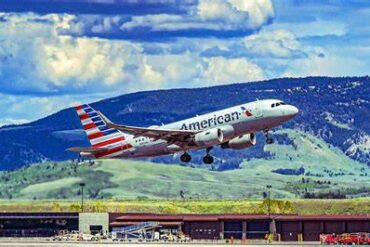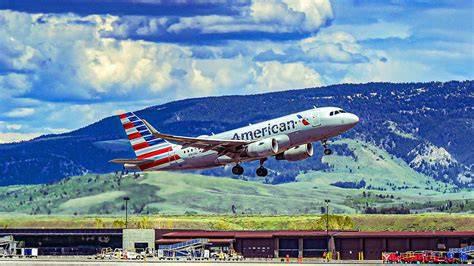
American Airlines offered as much as $3,500 per passenger to travelers willing to give up their seats on an oversold flight from Philadelphia to Nashville, as a large wave of Philadelphia Eagles fans headed south for the team’s Week 2 matchup with the Tennessee Titans. The unusually high offer reflected the intense demand for seats on a flight carrying passengers whose plans were closely tied to a major NFL event.
The flight was traveling from Philadelphia International Airport (PHL) to Nashville International Airport (BNA) on Saturday, with the Eagles scheduled to face the Titans in Nashville. NBC Sports Philadelphia reporter John Clark, who was aboard the flight, reported that the aircraft was packed with Eagles supporters and that American Airlines was offering thousands of dollars to passengers willing to switch to another flight.
The airline’s offer reportedly began at $400 approximately 24 hours before departure, before increasing as American continued seeking volunteers. By the time the offer reached $3,500, several passengers apparently decided that the financial incentive was sufficient to abandon their original flight and travel later. One passenger said that approximately five people ultimately accepted the deal.
American Airlines Raises Oversold Flight Compensation to $3,500
The $3,500 amount was particularly notable because it was substantially above the compensation ceiling that applies when an airline involuntarily denies boarding under federal oversales rules. According to the passenger who accepted the offer, American provided the $3,500 as three separate travel vouchers worth $1,300, $1,200 and $1,000.
Those passengers were also rebooked onto the next available flight without paying additional airfare. That combination made the voluntary arrangement considerably different from an involuntary denied-boarding situation. Instead of selecting passengers against their wishes, American was able to find enough travelers prepared to change their plans voluntarily.
For passengers who remained aboard, the flight ultimately became something of a traveling Eagles gathering. After landing in Nashville, the pilot played “Fly, Eagles Fly” over the cabin public-address system. Video from inside the aircraft showed an overwhelming sea of green, with Eagles fans occupying much of the cabin as they prepared for the game.
Why American Needed Volunteers for the Nashville Flight
American’s unusually generous offer was closely connected to the special circumstances surrounding the flight. The airline had already anticipated heavy demand for football travel and announced in May that it would add 23,000 seats across dozens of routes between September 17 and January 5. Philadelphia-Nashville was among the markets receiving additional capacity.
Even with additional seats, demand on individual flights can exceed available capacity when a major sporting event attracts large numbers of travelers at roughly the same time. Eagles fans traveling to Nashville had another complication: many had already paid for game tickets, hotels, ground transportation and other travel arrangements. Missing the intended flight could therefore create costs far beyond the price of the airline ticket itself.
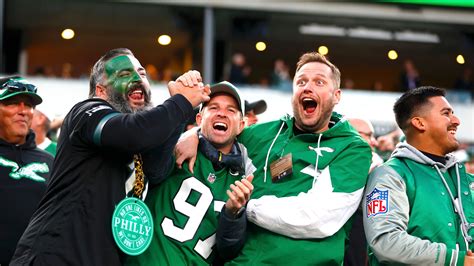
That helps explain why American progressively increased its voluntary-bump offer. A passenger who was simply traveling to Nashville might have been willing to accept a lower voucher and take a later flight. A fan determined to reach Nashville before kickoff had a much stronger reason to remain on the original aircraft.
How Oversold Flights Work Under U.S. Rules
Overselling is a long-established airline practice, and U.S. regulations require carriers to seek volunteers before involuntarily denying boarding to passengers when more people are confirmed for a flight than there are available seats.
Under Department of Transportation oversales regulations in 14 CFR Part 250, airlines can ask passengers to voluntarily surrender their seats in exchange for compensation and alternative transportation. The value of those offers can change rapidly according to demand and the number of volunteers still needed.
If an airline ultimately has to deny boarding involuntarily, federal compensation rules can become considerably more restrictive. Depending on the circumstances, compensation can reach 400% of the passenger’s one-way fare, subject to a maximum of $2,150 under the figures cited in the reference material.
The distinction is important. The $3,500 offered on the Philadelphia-Nashville flight was a voluntary incentive, not an involuntary denied-boarding payment. American could negotiate with passengers until enough people accepted the deal.
American Has Offered Other Large Voluntary-Bump Payments
The $3,500 Nashville offer was unusually high compared with the $400 to $800 range often associated with ordinary voluntary bump requests, but it was not unprecedented.
Earlier in the summer, American reportedly offered $4,500 in travel vouchers to three passengers on an oversold Philadelphia-Athens flight. In another case involving a Miami-Barcelona flight, a passenger reportedly received a $3,600 voucher along with hotel and meal expenses after voluntarily giving up a seat.
One of the most striking examples came from Delta Air Lines in June 2022, when eight passengers on an oversold Grand Rapids-Minneapolis flight reportedly accepted $10,000 each.
Why Airlines Prefer Volunteers
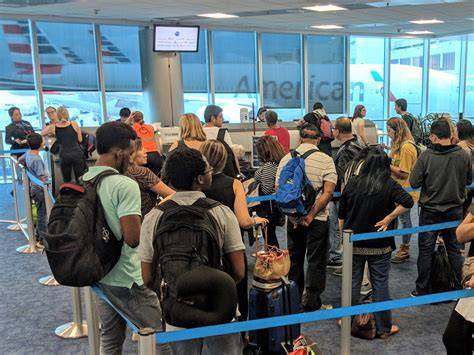
For an airline, finding volunteers can be far easier than forcibly removing passengers from a flight. Voluntary agreements give travelers a choice while allowing the carrier to control rebooking and compensation before a situation escalates.
The importance of that distinction became particularly visible after the widely publicized 2017 United Express passenger-removal incident involving David Dao at Chicago O’Hare International Airport. The incident generated enormous public attention and intensified scrutiny of airline practices surrounding oversold flights.
Since then, airlines have had strong incentives to manage oversales carefully and make voluntary offers attractive enough to avoid involuntary removals whenever possible. Some carriers have also changed their overbooking practices.
In Nashville, American’s escalating offer demonstrated how quickly the economics can change when an oversold flight is filled with passengers who have a common and time-sensitive destination. $3,500 may sound extraordinary for giving up a seat, but for an airline trying to fill a later flight while avoiding involuntary denied boarding, it can become a practical solution.