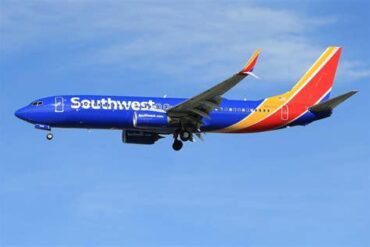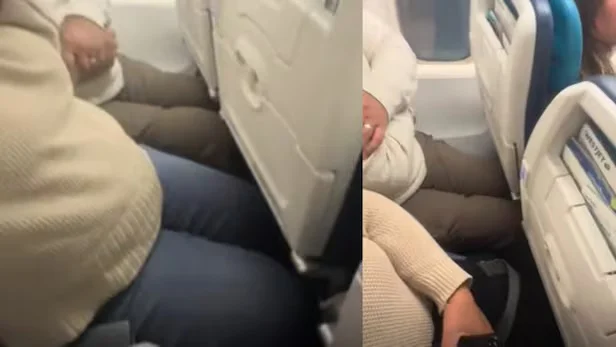
WestJet is facing a fresh wave of criticism after a viral video posted by a Canadian family ignited widespread debate over airline legroom standards, passenger comfort, and regulatory oversight. The footage, shared widely across social platforms and later reported by CBC, shows an elderly passenger struggling to fit into an economy-class seat on a domestic WestJet flight from Edmonton to Toronto. What might once have been dismissed as an isolated complaint quickly became a visual indictment of how tightly packed modern aircraft cabins have become.
The timing amplified the impact. The flight took place in late December, during the peak holiday travel season, when families, seniors, and infrequent flyers are more likely to be onboard. The four-hour journey turned into an uncomfortable ordeal that many viewers found instantly relatable. In an era when airline frustrations are often abstract, this video offered something harder to ignore: knees pressed firmly against a seatback, no visible legroom, and no meaningful ability to adjust posture.
What pushed the clip into viral territory was not outrage alone, but recognition. Passengers across Canada and beyond flooded comment sections with stories of similar experiences, comparing seat pitch across airlines and questioning whether economy-class travel has quietly crossed a line. The discussion quickly expanded from one family’s discomfort to a broader examination of how airlines balance cost efficiency against basic passenger dignity.
The video itself centers on Manfred Schmidt, an older passenger whose height is only slightly above average, yet enough to make the seat unusable. His knees were visibly jammed into the seat in front, leaving no margin for movement. According to the family, the lack of space raised concerns not just about comfort, but also about circulation, stiffness, and general well-being during a multi-hour flight. For elderly passengers, these are not trivial inconveniences but legitimate health considerations.
Flight attendants eventually allowed Schmidt to move to another seat with more legroom, defusing the immediate situation but not the broader controversy. WestJet responded by explaining that seat pitch varies by aircraft type and configuration, noting that the aircraft in question had recently been reconfigured. While technically accurate, this response did little to calm critics who argue that compliance with internal standards does not necessarily align with reasonable passenger expectations.
In his interview with CBC, Schmidt described the experience bluntly, explaining that he physically could not get into the seat without contorting himself. Reclining was impossible, shifting position offered no relief, and the realization that this would last four hours was unsettling. His comments resonated because they were ordinary. He was not unusually tall, not requesting special treatment, and not flying an ultra-low-cost carrier. This was a mainstream domestic flight on one of Canada’s largest airlines.
The incident has also refocused attention on a little-known reality of Canadian aviation regulation. Canada has no explicit minimum legroom requirement for airline seats. Transport Canada prioritizes safety metrics such as emergency evacuation times, leaving comfort considerations largely unregulated. As long as passengers can exit the aircraft within mandated timeframes, airlines are free to determine how tightly seats are arranged.
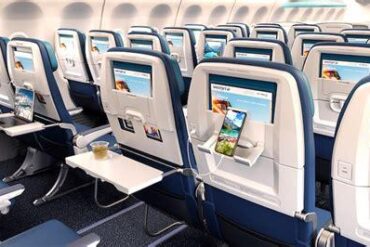
This regulatory philosophy mirrors that of the United States, where no federal minimum seat pitch exists either. Over the past two decades, airlines have steadily reduced legroom, especially in economy cabins, using thinner seat designs and tighter row spacing to add capacity. Average seat pitch, once around 34 inches in the 1990s, has dropped to as low as 28–30 inches on some modern aircraft. While engineering improvements have made seats slimmer, many passengers experience the change as a clear loss of personal space.
WestJet’s situation is shaped by broader strategic shifts. In recent years, the airline has moved toward a hybrid business model, blending full-service elements with cost-conscious practices designed to compete with ultra-low-cost carriers. Cabin densification is part of that strategy, particularly on domestic and transborder routes where price sensitivity is high. The viral video, however, suggests that the margin for densification may be narrowing in the court of public opinion.
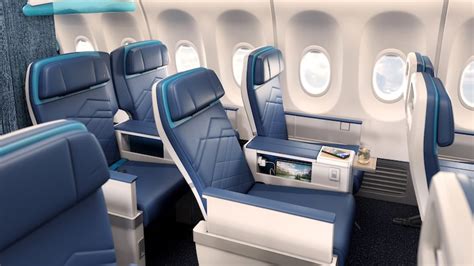
Consumer advocates argue that clearer standards would help travelers make informed choices and prevent situations where seat assignments become physically unworkable for certain passengers. Others counter that stricter rules could push fares higher, reducing accessibility for budget-conscious travelers. The tension between affordability and comfort is not new, but the visibility of this case has made it harder to ignore.
What makes this episode significant is how quickly it escalated. A single smartphone video reframed a technical configuration decision into a reputational issue. In a media environment driven by visuals and personal narratives, airlines are increasingly vulnerable to moments like this, where policy compliance clashes with lived experience. WestJet maintains that its seating remains competitive within the Canadian market, yet competitiveness alone may not satisfy evolving expectations.
The long-term consequences remain uncertain. There is no immediate indication that Transport Canada will revise seating regulations, nor that WestJet will reverse recent cabin changes. Still, the incident has reinserted legroom into public discourse, reminding airlines that efficiency gains are scrutinized not just by regulators, but by passengers with cameras and a willingness to share.
As aircraft cabins continue to evolve, the debate sparked by this family’s video underscores a simple truth: comfort may not be mandated, but it is remembered. In an industry where loyalty is fragile and alternatives are one click away, those memories can travel faster than any airplane ever will.