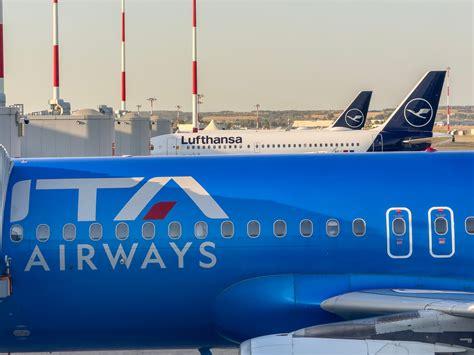
Italy has become the newest battleground in Europe’s airline consolidation war, and the implications stretch far beyond Rome. The decision by Lufthansa Group to raise its ownership stake in ITA Airways from 41% to 90% is not simply another investment in a struggling flag carrier. It is a strategic maneuver designed to reshape the balance of power across European aviation for the next decade.
The German airline giant has spent years building a sprawling multi-hub empire that now stretches from Frankfurt and Munich to Zurich, Vienna, and Brussels. Rome is set to become the newest pillar in that structure. Yet the deeper Lufthansa pushes into Southern Europe, the more difficult its next strategic objective may become: securing a stake in TAP Air Portugal.
What appears on the surface to be a victory for Lufthansa could ultimately weaken its political and regulatory case in Lisbon. European regulators, Portuguese officials, and transatlantic competition authorities are all watching carefully as Europe’s biggest airline groups race to secure the continent’s final major aviation prizes.
The result is a high-stakes contest involving Lufthansa, Air France-KLM, and potentially the future structure of European aviation itself.
Lufthansa’s ITA Airways Deal Signals a Much Bigger Strategy
Lufthansa’s decision to increase its stake in ITA Airways to 90% for approximately €325 million marks another decisive step in the group’s long-term consolidation strategy. Although the Italian government will temporarily retain the remaining 10%, Lufthansa now effectively controls the future direction of Italy’s national carrier.
The speed of the integration has surprised many analysts across the industry. Within a remarkably short period, ITA Airways has already begun aligning itself deeply with Lufthansa’s operational structure. The carrier transitioned into Lufthansa’s Miles & More loyalty ecosystem, strengthened network coordination with other group airlines, and moved key operations into Lufthansa-controlled terminal spaces at Frankfurt and Munich.
The integration accelerated further when ITA formally entered the Star Alliance network, giving Lufthansa another strategic tool to funnel premium and long-haul traffic through its expanding European hub system.
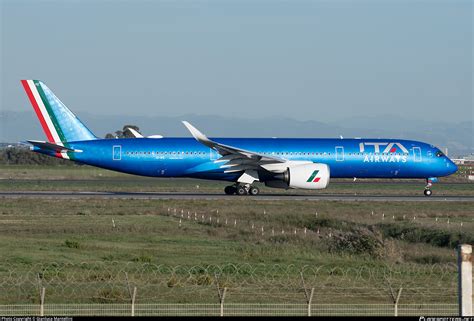
For Lufthansa CEO Carsten Spohr, Rome is not merely another city added to the network map. It fills one of the largest geographic weaknesses Lufthansa historically faced: a lack of a dominant Southern European gateway.
Frankfurt and Munich remain powerful business hubs, but Rome offers something strategically different. Positioned closer to Mediterranean leisure flows, North Africa, the Middle East, and South America, Rome Fiumicino Airport provides Lufthansa with an opportunity to diversify long-haul connectivity far beyond Central Europe.
That geographic advantage matters enormously in modern aviation economics. Airlines increasingly compete not just for local passengers but for global connecting traffic. Rome’s position allows Lufthansa to strengthen flows between Europe and regions where demand continues to expand rapidly, particularly Latin America and leisure-focused Mediterranean markets.
Why Rome Has Become Lufthansa’s Southern European Power Center
The strategic importance of Rome becomes clearer when viewed against broader industry trends. Europe’s legacy airline groups are evolving into interconnected aviation ecosystems built around multiple hubs rather than single flagship airports.
Lufthansa already controls dominant positions in Germany, Switzerland, Austria, and Belgium through airlines such as Swiss International Air Lines, Austrian Airlines, and Brussels Airlines. Yet Southern Europe remained fragmented territory.
That gap became increasingly problematic as leisure and premium long-haul demand shifted southward following the pandemic recovery. Southern European gateways now capture enormous seasonal traffic volumes tied to tourism, cruise travel, and transatlantic leisure demand.
Rome offers Lufthansa a platform to challenge rivals more effectively across these flows. The airport’s expanding long-haul capabilities make it especially valuable for routes to Brazil, Argentina, the Middle East, and North Africa. Lufthansa also gains stronger access to high-value Italian outbound traffic, one of Europe’s largest aviation markets.
The timing is equally important. European airline consolidation has accelerated dramatically as carriers seek scale advantages to offset rising fuel prices, sustainability costs, labor pressures, and aircraft delivery delays. Size increasingly determines survival.
Lufthansa’s acquisition of ITA is therefore not just about Italy. It is about ensuring the group remains large enough to dominate Europe’s next aviation era.
But every strategic gain creates new complications.
Lufthansa’s TAP Air Portugal Ambitions Now Face Greater Resistance
While Lufthansa tightens its grip on ITA Airways, another crucial battle is unfolding on the western edge of Europe.
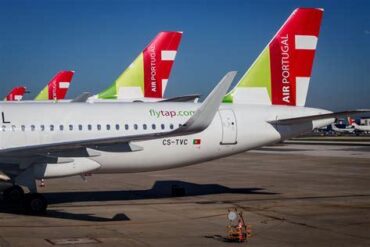
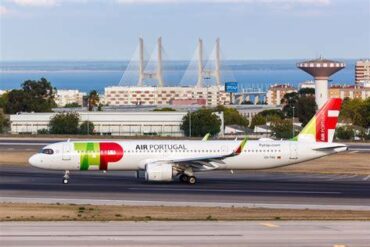
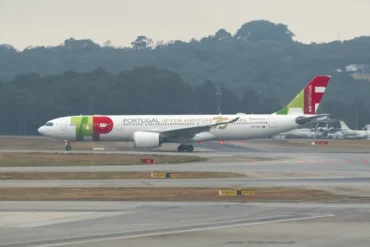
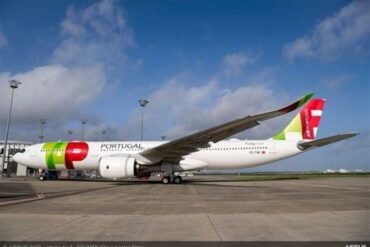
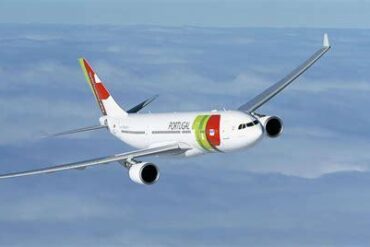
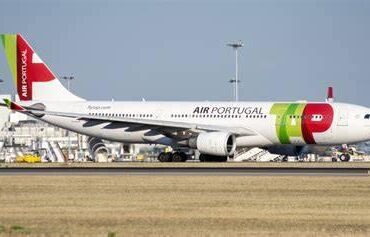
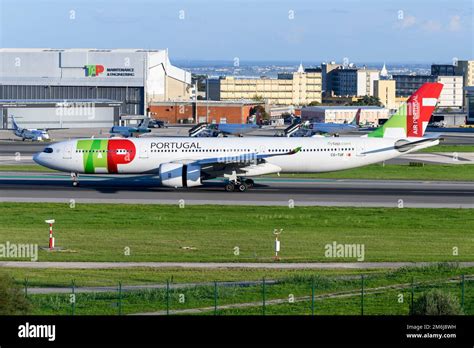
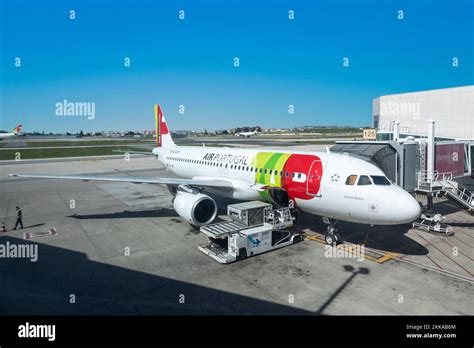
Portugal is preparing to privatize a 49.9% stake in TAP Air Portugal, one of the most strategically valuable remaining airline assets in Europe. TAP’s importance extends far beyond Portugal itself. The airline operates one of the strongest Europe-to-Brazil networks in the world while maintaining deep links to Portuguese-speaking African nations, Atlantic island territories, and North America.
For Lufthansa, TAP represents the missing piece in a larger Southern European strategy. Combining Rome and Lisbon under one corporate umbrella would create an enormous aviation corridor stretching across Mediterranean and Atlantic markets.
Yet that exact possibility is precisely what worries regulators.
European competition authorities already imposed conditions when Lufthansa first invested in ITA Airways. Regulators expressed concern over reduced competition on routes linking Italy with Central Europe, as well as the growing concentration of transatlantic traffic under Lufthansa’s joint venture partnerships.
Adding TAP into the same ecosystem would dramatically intensify those concerns.
Lisbon and Rome together would place two highly strategic Southern European hubs under Lufthansa influence. Regulators may fear that such concentration could weaken competition on intra-European routes, transatlantic flights, and South American services.
The issue becomes even more sensitive because Lufthansa participates in one of the aviation industry’s most powerful Atlantic joint ventures alongside United Airlines and Air Canada. If ITA and TAP were both folded deeper into that structure, authorities on both sides of the Atlantic would likely increase scrutiny significantly.
Portuguese Officials Fear Lisbon Could Become Secondary to Rome
Regulatory concerns are only part of the problem for Lufthansa. Politics may prove even harder to navigate.
Portuguese authorities have repeatedly emphasized that TAP Air Portugal is not simply a commercial airline asset. Lisbon serves as a strategic national gateway connecting Portugal with Brazil, Angola, Mozambique, Madeira, the Azores, and major North American destinations.
Government officials want assurances that any foreign investor will strengthen TAP’s role rather than dilute it within a larger airline empire.
That becomes more complicated now that Lufthansa is building Rome into a major Southern European hub. Portuguese policymakers may reasonably question whether Lisbon would eventually become secondary to Rome inside Lufthansa’s expanding network strategy.
The fear is not necessarily that TAP would disappear. The greater concern is gradual marginalization.
If Lufthansa prioritizes Rome for long-haul growth, premium investment, and fleet expansion, Lisbon could risk becoming a feeder operation supporting a broader group strategy rather than remaining an independent strategic center.
Those fears already appear to be influencing political sentiment within Portugal. Labor unions, particularly pilot groups, have voiced skepticism toward Lufthansa’s intentions. National stakeholders remain highly protective of TAP’s global role and its economic importance to Portugal.
For Lufthansa, this creates a delicate balancing act. The very acquisition that strengthens its position across Europe may simultaneously weaken its credibility in Lisbon.
Why Air France-KLM Suddenly Looks Like the Cleaner Option
Lufthansa’s growing complexity creates an opportunity for Air France-KLM.
Unlike Lufthansa, the Franco-Dutch airline group lacks a major Southern European hub. Paris and Amsterdam dominate its network structure, while its recent investment in Scandinavian Airlines primarily strengthens Northern Europe rather than overlapping with Lisbon.
That distinction matters enormously from a regulatory perspective.
SAS does not possess extensive Latin American operations, nor does it create the same transatlantic concentration concerns associated with TAP. As a result, Air France-KLM’s broader expansion strategy appears less threatening to regulators evaluating the Portuguese sale.
More importantly, Air France-KLM can argue that Lisbon would become a cornerstone of its future growth strategy rather than just another hub inside an already crowded system.
That message resonates politically. Portuguese officials may view Air France-KLM as more likely to prioritize TAP’s independence, network identity, and strategic role connecting Europe with Brazil and Africa.
The contrast between the two bidders has therefore become sharper:
Lufthansa now appears as a rapidly expanding aviation empire seeking another Southern European platform on top of Rome.
Air France-KLM appears as a group attempting to fill a geographic gap without creating the same degree of market overlap.
That distinction could prove decisive once the final stages of the bidding process begin.
Europe’s Airline Industry Is Entering a Three-Group Era
The larger story behind Lufthansa’s ITA expansion extends far beyond Italy or Portugal. Europe’s airline sector is rapidly consolidating into three dominant power blocs.
The first is Lufthansa Group, anchored by airlines across Germany, Switzerland, Austria, Belgium, and now Italy.
The second is Air France-KLM, increasingly reinforced by its ties to SAS and potentially TAP.
The third is International Airlines Group, parent company of British Airways, Iberia, and several other carriers.
This consolidation wave reflects the brutal economics of modern aviation. Airlines require enormous scale to survive mounting pressures tied to sustainability mandates, volatile fuel markets, aircraft shortages, infrastructure constraints, and increasingly expensive premium competition.
Smaller standalone carriers are becoming rarer with every passing year.
That reality makes TAP Air Portugal exceptionally valuable because it may represent the final truly strategic European network airline still available for acquisition.
For Lufthansa, increasing control over ITA Airways undoubtedly strengthens its operational footprint and long-term competitiveness. Yet the move may also create unintended consequences by amplifying regulatory fears and political resistance surrounding TAP.
In the end, Rome may become both Lufthansa’s greatest strategic victory and its biggest obstacle. The closer Lufthansa moves toward dominating Southern Europe, the harder it may become to convince Portugal that Lisbon would remain central rather than secondary within an expanding aviation empire.