In the modern age of technological marvels and multi-billion-dollar vessels, it’s easy to overlook the historical platforms that once defined naval supremacy. Yet, today’s U.S. Navy would do well to revisit the principles that guided the design, deployment, and evolution of the legendary Essex-class aircraft carriers. These formidable ships didn’t just win battles—they redefined warfare, endurance, and adaptability in ways that remain strikingly relevant.
A Strategic Turning Point Born of Crisis
The world changed forever on December 7, 1941, when the Japanese attack on Pearl Harbor demonstrated the vulnerability of battleships and elevated the aircraft carrier as the new capital ship. At that moment, American naval doctrine underwent a seismic shift, and the timing could not have been more fortuitous.
Thanks to the Naval Act of 1938, construction was already underway on what would become the Essex-class carriers. These were not rushed war machines cobbled together in response to disaster—they were preemptive investments in sea power. When the Pacific Fleet’s battleships lay in ruins, three U.S. carriers were at sea, sparing them from the onslaught and positioning them to take immediate strategic initiative.
The Essex-Class: Engineered for Victory and Built to Endure
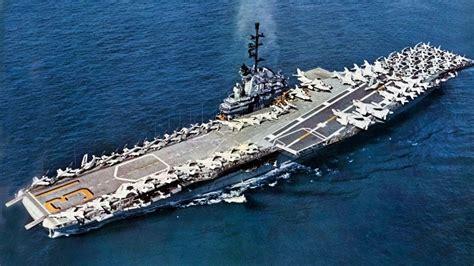
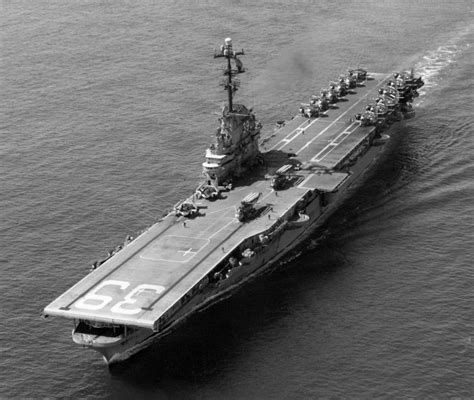
From 1942 to 1950, 24 Essex-class carriers were built, forming the core of the U.S. Navy’s Pacific operations during World War II. Notably, not a single Essex-class carrier was lost to enemy action, despite many sustaining critical damage. This remarkable survival rate spoke not only to their robust design but also to the Navy’s ability to repair, refit, and redeploy them rapidly.
Their effectiveness was grounded in several key advantages:
- Modular construction techniques allowed for mass production.
- Generous hangar deck space enabled greater aircraft capacity.
- Unprecedented adaptability made them ideal platforms for continuous upgrades.
The ships’ sheer resilience and their ability to evolve beyond their original specifications enabled them to outlast their era and remain relevant well into the Cold War.
Built for Evolution: From Straight Deck to Angled Flight Operations
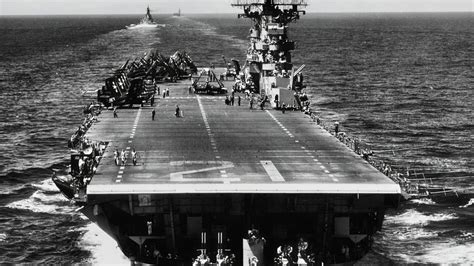
The most remarkable feature of the Essex-class was not merely its size or survivability—it was its capacity for transformation. Initially designed with a straight flight deck, these ships underwent groundbreaking refits that introduced the angled flight deck—a modification that became the industry standard.
This was no minor upgrade. It required overhauling the deck, launching mechanisms, recovery systems, and flight operations doctrine. Yet, 15 Essex-class carriers were successfully converted for jet operations, a feat that speaks volumes about the visionary nature of their original architecture.
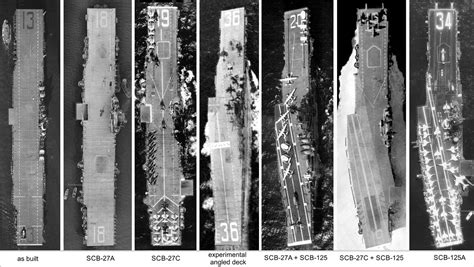
These updates included:
- Jet-blast deflectors (JBDs) for high-thrust engines
- Catapult and arresting gear systems to accommodate faster, heavier aircraft
- Strengthened hulls and reinforced decks to bear new operational stress loads
In essence, the Navy managed to repurpose World War II-era vessels into Cold War combat platforms. This ability to extend operational relevance is sorely lacking in today’s rigid procurement cycles.
Carrier Strike Groups: Born From the Essex Doctrine
The Essex-class didn’t just change shipbuilding—they redefined fleet composition. The concept of Carrier Strike Groups (CSGs)—now the cornerstone of modern naval strategy—was born from the operational structure around Essex-class vessels.
Each Essex-class carrier became the nucleus of a battle group, supported by cruisers, destroyers, submarines, and supply ships. This integrated force projection model proved decisive in campaigns across the Pacific, establishing a doctrinal foundation still in use today.
But what made these battle groups so effective was the carrier’s adaptability and reliability. Commanders could count on the Essex to launch missions, recover aircraft, and absorb damage while remaining combat-capable.
Operational Legacy: From WWII to Apollo
While newer classes like the Midway and Forrestal eventually replaced the Essex-class in frontline roles, many continued serving in critical secondary capacities through the 1970s.
- During the Vietnam War, modified Essex-class ships provided essential close-air support.
- In the 1960s space race, ships like USS Hornet (CV-12) recovered astronauts from the Apollo missions, including Apollo 11.
- The USS Lexington (CV-16) played a central role in the Cuban Missile Crisis blockade, later transitioning into a training carrier and, eventually, a floating museum in Texas.
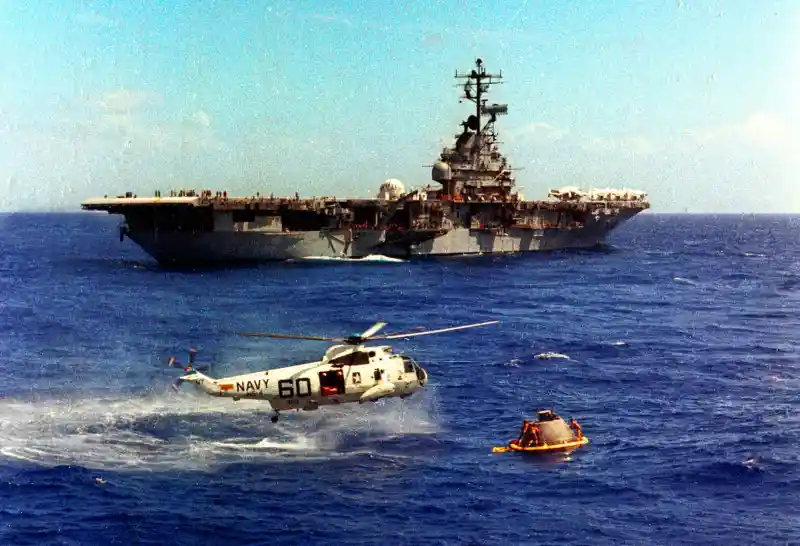
This adaptability speaks to a lifespan and flexibility far beyond expectations, with several ships remaining in service for over 30 years—a remarkable achievement for conventionally powered warships.
Modern Supercarriers: Technological Marvels, Logistical Nightmares
Contrast this with the modern U.S. Navy’s Gerald R. Ford-class carriers, technological marvels that cost upwards of $13 billion each. While undeniably powerful, they suffer from massive complexity, cost overruns, and long development cycles. The Ford-class has faced:
- Delays in the Electromagnetic Aircraft Launch System (EMALS)
- Reliability issues with the Advanced Arresting Gear (AAG)
- Integration problems with F-35C Lightning II aircraft
While these ships promise a 50-year service life, they lack the flexibility and modifiability that defined the Essex-class. Instead of evolutionary platforms, they are monolithic machines, dependent on future-proofing rather than in-service adaptability.
Lessons in Naval Simplicity and Strategic Modularity
The Essex-class experience teaches us that simplicity and modularity are not constraints but strengths. In an era where geopolitical threats evolve faster than procurement timelines, a modern navy requires vessels that can adapt across decades.
Designing platforms with adaptability in mind allows:
- Faster incorporation of new technologies
- Reduced downtime for refits
- Extended service life with lower lifecycle costs
The Essex-class demonstrates that you don’t need to build the most advanced ship to field the most effective navy. You need to build ships that can evolve with changing threats.
Strategic Redundancy vs. Singular Overreliance
Another vital takeaway from the Essex-era is the concept of force redundancy. The U.S. Navy once had two dozen operational carriers, creating a web of global power projection. Today, the Navy struggles to maintain 11 operational carriers, each representing a singular point of failure.
Losing a modern supercarrier would be not only a financial catastrophe but also a strategic disaster. Essex-class carriers, by contrast, offered distributed lethality—the Navy could absorb losses without sacrificing regional control.
In today’s contested maritime environment, smaller, more numerous, and adaptable carriers may offer greater deterrent power than fewer, gold-plated giants.
The Human Element: Learning From a Culture of Ingenuity
Finally, the Essex-class era fostered a culture of innovation, flexibility, and responsiveness. Crews were trained to solve problems on the fly. Upgrades were implemented in months, not decades. This institutional agility helped the U.S. Navy dominate multiple oceans across multiple wars.
Today’s Navy must regain that spirit. Modern sailors and officers can benefit from historical study, cross-disciplinary training, and decentralized decision-making to echo the successes of their WWII counterparts.
Conclusion: Relearn the Past to Command the Future
The Essex-class aircraft carriers were more than just floating airfields—they were strategic instruments of global influence, honed by necessity and perfected by adaptation. Their legacy remains a powerful reminder that durability, modularity, and mass production can win wars just as effectively as cutting-edge systems.
As the U.S. Navy faces 21st-century challenges from peer competitors, asymmetric threats, and budgetary constraints, it must embrace not only futuristic technologies but also historical wisdom. The Essex-class teaches us that success lies not just in what we build, but how we build it—and whether it can stand the test of time.
To secure maritime dominance in an uncertain future, the U.S. Navy must look back at the past—not to replicate it, but to refine and reapply its lessons. The steel may be different, but the principles remain eternal.