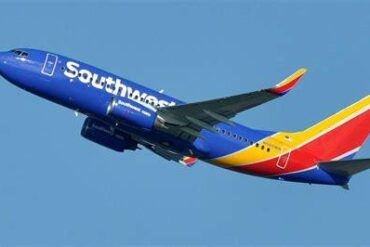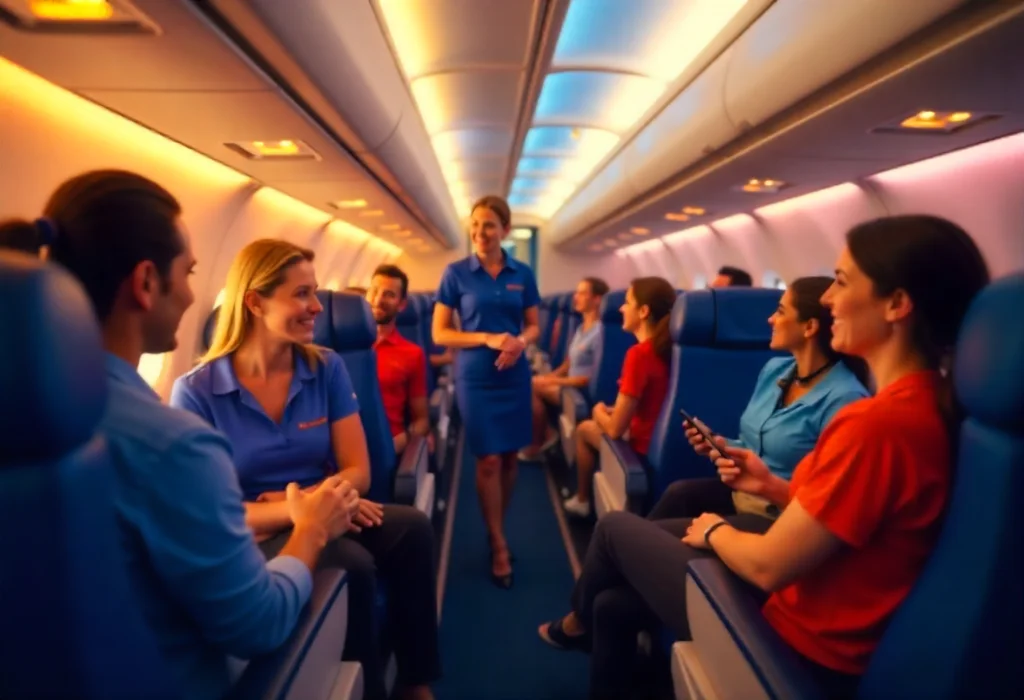
For decades, Southwest Airlines was the quintessential example of a no-frills, low-cost carrier. Its open seating, free checked bags, and single-class cabin made it a disruptive force in the U.S. airline industry. But in 2025, Southwest is undergoing a historic transformation, abandoning many of the very traits that made it distinctive. The airline’s recent strategic pivot toward premium upsells signals not just a shift in service, but a calculated effort to survive in a fiercely competitive market.
Southwest Airlines’ Legacy: Simplicity and Loyalty
Founded in 1967, Southwest Airlines operated for years under the radar, flying exclusively within Texas before expanding nationally following the Airline Deregulation Act of 1978. It earned a reputation for efficiency and affordability, eventually becoming the largest domestic airline by passenger volume. Its strategy revolved around:
- Point-to-point routing instead of hub-and-spoke systems.
- A single aircraft type — the Boeing 737 — to reduce maintenance and training costs.
- Open seating with no assigned seats.
- No baggage fees for the first two checked bags.
- A direct booking model, excluding Global Distribution Systems (GDS).
These features not only streamlined operations but fostered an unusually high level of brand loyalty. Passengers knew what to expect and appreciated the value-driven consistency.
Cracks in the Foundation: Post-Pandemic Headwinds
The COVID-19 pandemic brought Southwest’s 47-year profit streak to an end. While the carrier weathered the initial turbulence better than some, its recovery plateaued in the years that followed. The low-cost model that had once made Southwest a juggernaut began to falter in a post-pandemic landscape where passenger preferences evolved, and operational resilience was tested.
Adding to the strain was a catastrophic system meltdown in December 2022, which cost the airline over $1 billion and revealed the brittle underpinnings of outdated internal systems. Competitors like Delta and United not only rebounded faster but also leaned heavily into premium cabin offerings, creating lucrative revenue streams that Southwest simply could not match with its economy-only layout.
The Catalyst: Elliott Investment Management Enters the Cockpit
In 2024, Elliott Investment Management, a well-known activist investor group, acquired a substantial stake in Southwest Airlines and placed representatives on the board. Their goal was clear: revitalize Southwest’s financial performance through strategic realignment.
This realignment came at the cost of several long-standing policies:
- Free checked bags are no longer guaranteed — now $35 for the first and $45 for the second.
- Open seating will be discontinued by January 2026, replaced with assigned seating and possible surcharges.
- Extra-legroom seats are being added, accompanied by reduced legroom in the remaining cabin to increase seating density.
- Global Distribution System (GDS) participation now allows bookings via third-party platforms.
- New partnerships, including with Icelandair and China Airlines, mark a significant departure from the airline’s historically insular approach.
These changes represent more than incremental policy shifts — they signify a full strategic pivot designed to align Southwest with a model that emphasizes ancillary revenue and premium monetization.
Southwest in 2025: A New Identity Takes Shape
Today, booking a flight on Southwest feels more familiar to those used to legacy carriers. The airline has joined GDS platforms, embraced interline agreements, and introduced fare-based seating options. While aircraft remain all-economy, the configuration now includes premium seat zones, drawing a clear line between standard economy and enhanced comfort options.
In-flight WiFi remains available, and the streaming-only entertainment model continues. However, these changes are layered atop a new operational philosophy where revenue optimization supersedes brand tradition. The airline is also retooling its Rapid Rewards loyalty program, incorporating higher fees and added benefits that cater to travelers who are willing to spend more.
The Profit Motive Behind Premium Upselling
The rationale is simple: airlines make more money from fees than fares. With leisure travel evolving and premium seating now commanding the highest margins, Southwest can no longer afford to ignore this revenue stream. Even legacy carriers now derive a significant portion of their profits from premium leisure passengers and branded credit card partnerships.
By following suit, Southwest gains the potential to:
- Tap into the premium leisure market, especially on high-demand domestic routes.
- Increase credit card and loyalty program revenue, following trends set by competitors.
- Modernize distribution channels, reaching more travelers through OTAs and partner carriers.
While the carrier’s lack of long-haul international flights limits access to the most lucrative premium segments, domestic upsells still offer a viable path to margin improvement.
Can Southwest Compete Without Widebodies?
Despite these changes, Southwest still faces fundamental limitations. It operates an all-737 fleet with no plans for widebody aircraft. As such, it cannot service the international long-haul routes where competitors earn the bulk of their premium revenues.
Its recent interline agreements with Icelandair and China Airlines are a step in the right direction, but they are unlikely to move the needle significantly unless these relationships evolve into deeper codeshare or alliance-level partnerships. The airline’s footprint remains predominantly domestic, and its model still lacks the scalability for premium transcontinental or intercontinental growth.
Erosion of Brand Loyalty: A Double-Edged Sword
The greatest risk to Southwest lies not in execution, but in brand erosion. The carrier’s loyal customer base was not attracted by perks or comfort but by reliability, simplicity, and predictability. These were the defining attributes of the Southwest experience.
Now, by becoming more like its competitors, Southwest risks blending into the noise. It is abandoning a unique identity to chase the same dollars as every other airline. This creates a customer perception problem: why choose Southwest over Delta or United if the prices and product are now similar?
Worse, acquiring new customers costs significantly more than retaining existing ones, and if long-time passengers defect, the airline must spend heavily to replace them in a saturated market.
A Necessary Evolution or Strategic Misstep?
Southwest’s move into premium upselling is, in many ways, a logical and inevitable evolution. The industry has changed, and consumer expectations are no longer centered around low fares alone. Airlines must offer tiered products, flexible fare classes, and digital compatibility across platforms.
Still, the very elements that made Southwest a category-defining brand are now being traded for short-term gains. This creates a precarious balance between financial sustainability and customer loyalty. Should market dynamics shift again — for instance, in the event of a downturn in premium travel — Southwest may find itself poorly positioned, having compromised its core advantage.
Conclusion: A Fork in the Sky
The pivot toward premium upsell marks a dramatic departure from Southwest Airlines’ founding principles. While the carrier is adapting to survive in an unforgiving landscape, the cost may be higher than anticipated. Profitability may improve in the short term, but the erosion of brand differentiation poses long-term strategic risks.
In chasing broader appeal and premium revenue, Southwest is no longer the maverick it once was. It has joined the mainstream, for better or worse. What remains to be seen is whether the airline can successfully navigate this identity shift without losing the very soul that made it America’s most beloved low-cost airline.