The modern space age has delivered breathtaking connectivity, real-time global navigation, and an unprecedented view of our planet. Yet beneath the triumph lies an uncomfortable reality: orbital expansion is creating atmospheric consequences we are only beginning to understand. As satellite constellations multiply and re-entries become routine, scientists are examining what truly happens when spacecraft burn up above our heads. The answer points toward an unlikely hero—wooden satellites.
For decades, satellites have been built primarily from aluminum alloys, titanium, and composite materials engineered to endure brutal temperature swings and radiation. These materials are remarkably durable in orbit. But durability becomes a liability during re-entry. When conventional satellites descend and incinerate, they release metallic particles and chemical byproducts into the upper atmosphere. The environmental footprint of this process has sparked rising concern among atmospheric scientists studying potential impacts on the ozone layer and stratospheric chemistry.
The rapid deployment of mega-constellations such as Starlink has intensified scrutiny. Thousands of satellites will eventually deorbit, each undergoing fiery disintegration. While individually small, collectively they introduce measurable quantities of metal oxides and aerosols into sensitive atmospheric layers. The scenario raises a troubling possibility: are we solving Earth’s connectivity problems by quietly engineering a future pollution crisis above it?
The Science Behind Re-Entry Pollution and Ozone Risk
When a satellite re-enters Earth’s atmosphere, friction with air molecules generates extreme heat. Traditional metal components vaporize, fragment, and chemically transform. Studies analyzing rocket re-entry events have detected particulate clouds composed of aluminum oxide and other compounds. These particles can linger in the stratosphere, where delicate chemical reactions govern ozone stability.
The ozone layer shields life from harmful ultraviolet radiation. Even subtle disruptions in stratospheric chemistry can have cascading ecological effects. While current data does not confirm catastrophic damage, researchers emphasize caution. The scale of upcoming satellite decommissioning is unprecedented. Atmospheric systems evolve slowly, and by the time measurable harm appears, mitigation may be complex.
Why Wooden Satellites Offer a Radical Alternative
The concept of a wood-based satellite initially sounded whimsical. Wood in space evokes images of antique sailing ships drifting among the stars. Yet the engineering logic is surprisingly rigorous. In 2023, the Japan Aerospace Exploration Agency (JAXA), in collaboration with Kyoto University, proposed constructing a satellite from treated wood panels. The goal was elegantly simple: ensure that when the satellite completes its mission, it burns up cleanly.
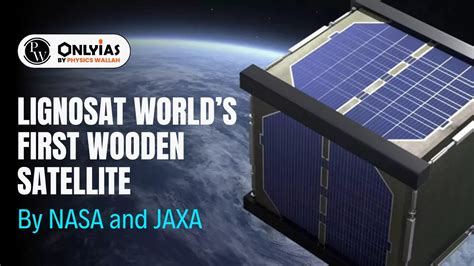
Wood behaves differently under extreme heat compared to metals. Rather than forming metallic oxides, it largely combusts into gases and fine soot, reducing the risk of persistent metallic particles in the stratosphere. In late 2024, the launch of LignoSat, the world’s first wooden satellite, transformed theory into experiment.
Its structure uses traditional Japanese woodworking techniques, including blind miter dovetail joints, eliminating the need for excessive metal fasteners. The design significantly reduces alloy content while maintaining structural integrity in orbit. That fusion of heritage craftsmanship and aerospace engineering is not nostalgia—it is calculated sustainability.
Engineering Challenges and Scientific Unknowns
Wood in space faces formidable stressors: vacuum conditions, radiation exposure, micrometeoroids, and temperature extremes swinging hundreds of degrees between sunlight and shadow. Extensive testing demonstrated that specially treated wood can withstand these conditions without cracking or warping.
Still, unanswered questions remain. Combustion of onboard electronics during re-entry may release chemical residues. Soot formation, although potentially less harmful than metallic oxides, requires deeper atmospheric modeling. Researchers approach this cautiously, framing it as a working hypothesis rather than a guaranteed environmental cure.
Scientific progress thrives on measured experimentation. LignoSat functions not only as a satellite but as a data-gathering probe into the environmental cost of orbital infrastructure.
Reducing Space Debris and Ground Risk
Beyond atmospheric chemistry, wooden satellites may also mitigate space debris hazards. Traditional satellite fragments can survive partial re-entry, occasionally reaching Earth’s surface. Although injuries are rare, the statistical probability increases as launch frequency rises.
Wood-based structures are more likely to fully incinerate, decreasing the chance of debris impacting populated regions. In a world racing toward tens of thousands of active satellites, even marginal improvements in safety scale dramatically over time.
A Sustainable Path for the Expanding Space Economy
Humanity’s expansion into space is not slowing. Communications, climate monitoring, disaster forecasting, and navigation depend on orbital systems. Halting satellite deployment is unrealistic. The real challenge is innovation that aligns technological ambition with planetary stewardship.
Wooden satellites represent a powerful shift in mindset: design for disappearance. Instead of engineering objects to resist destruction at all costs, engineers are reconsidering what happens at end-of-life. That perspective mirrors sustainable design principles already reshaping industries on Earth.
If successful, wood-based spacecraft could redefine materials science in orbit. Hybrid designs, biodegradable components, and low-impact re-entry engineering may become standard practice. The quiet revolution unfolding above our atmosphere reminds us that sometimes progress is not about adding more complexity—but about rediscovering simplicity in unexpected places.
The future of space exploration may depend not only on advanced propulsion or AI navigation, but on humble materials rooted in Earth itself.