Modern air travel has conditioned passengers to expect order, comfort, and predictable routines. Boarding gates, safety demonstrations, warm meals, and uniformed cabin crews define the commercial flying experience. Yet when geopolitical crises collapse normal aviation networks, an entirely different form of flight emerges—one where comfort disappears and survival logistics take center stage. In those moments, the military airlifter known as the C-17 Globemaster III becomes a lifeline.
When regional conflict erupts and civilian infrastructure begins to unravel, evacuation flights transform into urgent extraction missions. As tensions escalate between the United States and Iran, airports across the Middle East can suddenly shut down, commercial airlines suspend operations, and diplomatic compounds restrict movement. Thousands of stranded civilians may need to leave quickly, yet conventional airlines vanish from the sky almost overnight.
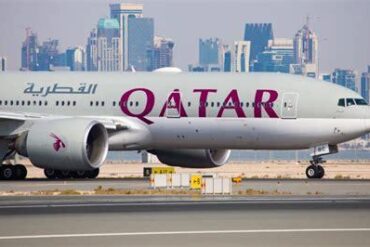
In these conditions, the U.S. government sometimes turns to its strategic airlift fleet operated by the United States Air Force. Unlike passenger jets designed around comfort and service, the C-17 exists to move people and cargo under extreme operational pressure. For civilians accustomed to premium cabins on airlines like Emirates or Qatar Airways, stepping inside a military cargo plane is a shock to the system.
The aircraft is not built to pamper passengers. It is built to move bodies and equipment fast, often through dangerous or unstable airspace.
A Cargo Aircraft Turned Emergency Lifeline
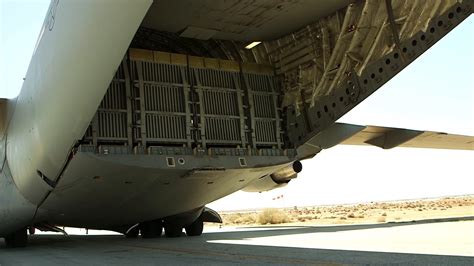
Boarding a rescue flight on a C-17 feels less like catching a plane and more like entering a logistical operation. There are no gate announcements or neatly organized boarding groups. Instead, passengers are guided across an open tarmac toward a towering aircraft whose rear cargo ramp is lowered like a steel drawbridge.
This massive aft ramp, normally used to load armored vehicles or pallets of supplies, becomes the entry point for evacuees. The cavernous interior resembles a warehouse more than an airplane cabin. Metal flooring runs the entire length of the fuselage, designed to handle heavy cargo rather than rolling suitcases.
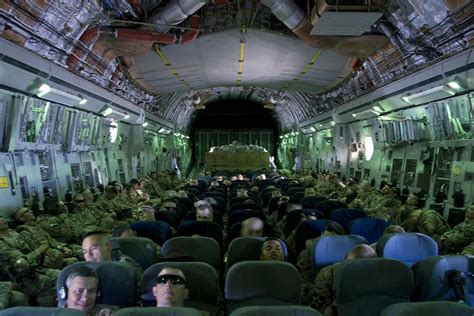
Once inside, the seating arrangement reveals just how utilitarian the aircraft really is. Sidewall seats line both sides of the fuselage—simple webbed straps attached to the aircraft structure. Additional palletized seating modules can be installed in the center section when the mission requires moving large numbers of people.
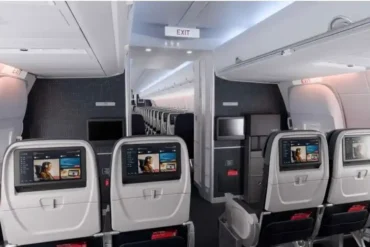
There are no reclining seats, entertainment systems, or overhead bins. Instead, the aircraft prioritizes maximum capacity and rapid loading. In troop configuration, a single C-17 can carry roughly 100 passengers, sometimes more depending on mission requirements.
The experience quickly makes one thing clear: this is not transportation designed for convenience. It is transportation designed for urgency.
No Cabin Crew, No Service—Only Mission Focus
A commercial aircraft cabin operates like a miniature hospitality operation at 35,000 feet. A C-17 evacuation flight functions more like a mobile logistics hub. The entire crew usually consists of only three specialists: two pilots and a loadmaster.
The loadmaster becomes the central authority inside the aircraft cabin. This crew member manages cargo balance, supervises passenger positioning, and ensures that everyone remains clear of critical equipment during flight. Safety briefings are delivered quickly and directly, often amid the echo of engines and hydraulic systems.
Passengers are instructed where to sit, how to secure themselves, and what to expect during the flight. Instructions may include guidance on turbulence, noise levels, and emergency procedures unique to military aircraft.
According to reporting from the The Washington Post, evacuation passengers are often kept grouped tightly to maintain balance within the aircraft’s cargo hold. Equipment, tie-down chains, and cargo pallets remain visible throughout the cabin.
The environment can feel stark and mechanical. Cold metal surfaces replace the soft textures of commercial interiors. Conversations compete with the deep rumble of military turbofan engines. Yet every element inside the aircraft serves a purpose.
The mission is simple: get people out safely and quickly.
Evacuations Within a Rapidly Shifting Conflict
The use of a C-17 for civilian evacuation signals how rapidly regional security conditions can deteriorate. When missile strikes, drone attacks, or embassy closures disrupt normal aviation routes, even major international hubs may become inaccessible.
In such situations, evacuations become a constantly shifting puzzle. Airspace can close with little warning, and diplomatic convoys must coordinate movements within narrow windows of opportunity.
Military planners must evaluate several factors simultaneously:
- Whether the airspace is safe enough for transport aircraft
- Whether runways remain operational
- Whether evacuees can safely reach the airport
- Whether nearby host nations permit military landings
Even when conditions allow a flight to operate, timing becomes critical. A single safe corridor might remain open only briefly before security risks return.
For stranded civilians, this means evacuation flights often appear suddenly—and depart just as quickly.
Built for Austere Airfields and Crisis Logistics
The engineering philosophy behind the C-17 explains why it becomes indispensable during emergencies. The aircraft was designed from the start to support global military mobility under unpredictable conditions.
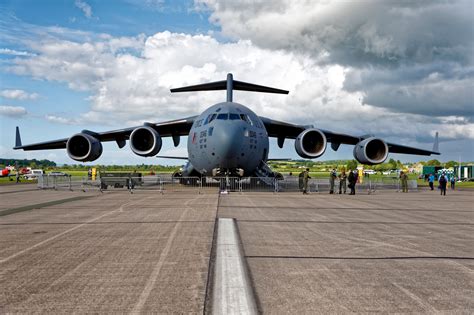
Its enormous cargo bay can carry up to 170,900 pounds (77,519 kilograms) of payload, including armored vehicles, helicopters, humanitarian supplies, or large groups of personnel. Yet raw capacity is only part of the aircraft’s value.
The C-17 can operate from surprisingly short runways—around 3,500 feet long and only 90 feet wide. This capability allows the aircraft to access smaller or damaged airfields that commercial jets cannot safely use.
Equally important is its ability to perform rapid loading and unloading through the rear ramp. Entire vehicle convoys can roll directly onto the aircraft, while pallets of aid supplies can be secured in minutes.
The aircraft also supports in-flight refueling, dramatically extending its operational reach. With tanker support, the C-17 can effectively travel across continents without landing.
These features combine to create a transport platform optimized for crisis mobility—exactly the kind of aircraft required when civilian aviation infrastructure fails.
A Stark Reminder of Aviation’s Dual Role
For many passengers, stepping onto a military cargo aircraft during an evacuation becomes an unforgettable moment. The experience strips aviation down to its most basic purpose: moving people through the sky when the ground becomes unsafe.
There are no cabin upgrades or inflight meals on a rescue flight. There is only the hum of engines, the discipline of military procedure, and the shared understanding that everyone aboard is leaving a dangerous situation behind.
The C-17’s cavernous cargo hold may feel austere, even intimidating, but it represents something profoundly reassuring during a crisis. When commercial networks disappear and borders close, strategic airlifters remain capable of reaching places others cannot.
In the complex machinery of international conflict and diplomacy, the C-17 often becomes the final bridge between instability and safety—an aircraft built not for comfort, but for resilience when the world suddenly stops flying.