Elite athletes sometimes travel with passports, entourages, and carefully planned itineraries. In the world of international equestrian sport, those athletes may weigh half a ton and travel in custom-built airborne stables. When geopolitical tensions escalated across the Gulf region, a remarkable aviation operation unfolded as Qatar Airways deployed Boeing 777F cargo aircraft to evacuate 147 elite horses, moving them from Doha to safety in Europe through a carefully orchestrated international airlift.
Crisis in the Gulf Forces an Unusual Airlift
The evacuation began when rising military tensions involving Iran, the United States, and Israel created increasing uncertainty across the region. Airspace restrictions soon followed, forcing commercial flights to halt operations at Doha’s Hamad International Airport. For the equestrian community gathered for the Doha Equestrian Tour, the stakes were unusually high. Among the horses were world-class showjumping competitors, including mounts ridden by German champion Janne Friederike Meyer-Zimmermann.
With the risk of disruption growing by the day, organizers coordinated with Qatar Airways Cargo and local authorities to move the animals out of the country quickly. The solution required creativity. With Qatari airspace effectively closed, the horses could not depart directly from Doha.
Instead, the animals embarked on the first leg of their journey by road.
A 217-Mile Desert Journey to Reach a Safe Runway
Transport teams loaded the horses into specialized horse floats and trucks for a four-hour, 217-mile (350-kilometer) convoy from Doha across the desert to King Khalid International Airport in Riyadh, Saudi Arabia. The overland journey was the only viable route to reach an airport where long-haul cargo flights could operate without airspace restrictions.
Each vehicle carried highly valuable equine passengers worth millions of dollars collectively. Handlers, veterinarians, and grooms accompanied the convoy, monitoring the horses’ condition throughout the journey. The operation required careful scheduling to minimize stress and ensure that animals accustomed to stable routines remained calm.
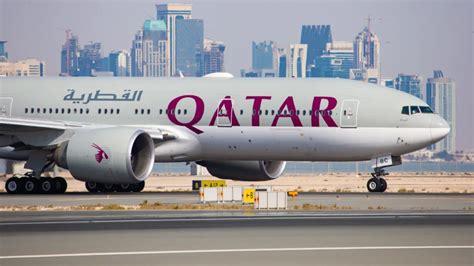
By the time the convoy reached Riyadh, two Qatar Airways Boeing 777F freighters were already prepared for departure.
Why the Boeing 777F Became the Perfect Rescue Aircraft
The Boeing 777F is one of the most capable long-range cargo aircraft in the world, designed to carry heavy freight across intercontinental distances with remarkable efficiency. For this mission, its large cargo hold and environmental control systems made it ideal for transporting live animals.
Two flights were organized. The first aircraft carried 74 horses, while the second transported 73, bringing the total to 147 evacuated animals. Some grooms and staff members were allowed to travel on board, ensuring continuous supervision during the journey.
The flights departed Riyadh on a six-hour nonstop route to Liège Airport in Belgium, a major European cargo hub renowned for its specialized facilities for transporting animals, including racehorses and competition horses.
Inside the Airborne Stables: How Horses Fly Safely
Transporting horses by air might sound exotic, but within the logistics world it is a well-established practice. The animals are placed in padded modular containers known as jet stalls, which function like compact airborne stables.
Each stall typically accommodates up to three horses, giving them room to stand naturally while preventing excessive movement during turbulence. Stability is critical. Horses instinctively shift their weight when balancing, so keeping the space narrow helps them remain secure during flight.
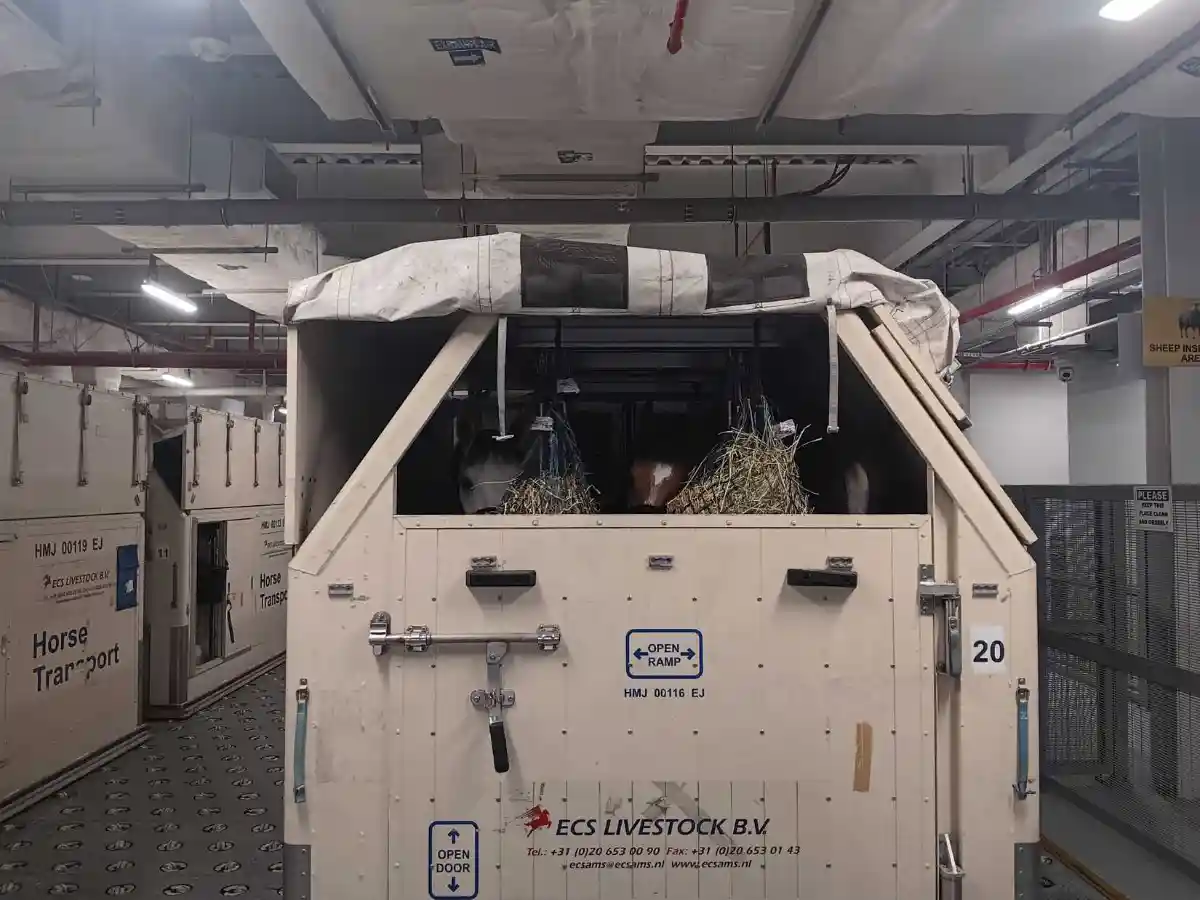
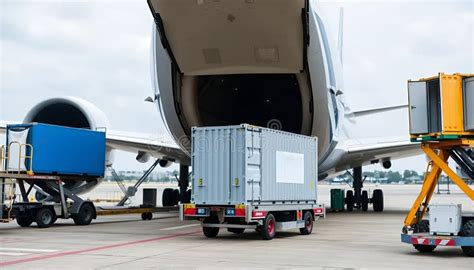
Before boarding, horses are calmly walked into the stalls on the airport apron. Large high-loader vehicles then lift the entire stall unit to cargo-deck height and slide it into the aircraft’s main deck. Once inside, the stalls are locked into the aircraft’s cargo system just like standard freight containers.
Veterinarians and Grooms in the Sky
Despite traveling in the cargo section, these horses are never left unattended. Veterinarians and experienced grooms accompany the animals throughout the flight, performing routine checks to monitor breathing, stress levels, hydration, and body temperature.
Water and feed are provided during the journey, and horses may wear protective headgear or travel wraps to prevent injury. Aircraft environmental systems regulate temperature and airflow, an important factor because standard cargo holds can become extremely cold at cruising altitude.
For elite competition horses worth hundreds of thousands—or sometimes millions—of dollars, maintaining calm conditions is essential. A stressed horse can lose weight, become dehydrated, or even injure itself.
Strategic Importance of Liège Airport
The destination chosen for the evacuation was Liège Airport (LGG) in Belgium, located near the German and Dutch borders. Over the past decade, Liège has quietly become one of the world’s most important gateways for animal transport.
The airport hosts specialized veterinary facilities, quarantine areas, and logistics teams trained specifically to manage equine cargo. From Liège, horses can easily continue their journey by road to competition venues across Europe.
Its infrastructure makes it a frequent arrival point for horses traveling to major European equestrian events.
147 Elite Horses Reach Safety in Europe
Both Qatar Airways flights completed their journeys without major issues, successfully relocating all 147 horses away from the escalating conflict zone. For the riders, trainers, and owners involved in the Doha Equestrian Tour, the operation represented both relief and disappointment.
The Longines Global Champions Tour had planned to begin its season in Doha at the renowned Al Shaqab equestrian complex. However, ongoing regional instability forced organizers to postpone the event and shift attention to the upcoming Miami Beach 2026 competition.
Security concerns were not abstract. The Al Shaqab facility lies only about one hour from Al Udeid Air Base, the largest U.S. military installation in the Middle East, which has been targeted during recent regional hostilities.
A Quiet Example of Aviation’s Hidden Capabilities
Commercial aviation often captures attention through passenger travel, glamorous destinations, or record-breaking aircraft. Yet operations like this horse evacuation highlight a different side of the industry: precision logistics under pressure.
Moving nearly 150 elite animals across continents within hours requires coordination between airlines, veterinarians, event organizers, and government authorities. Every element—from road transport timing to stall configuration and aircraft temperature—must function perfectly.
In this case, the Boeing 777F became an airborne lifeline, transforming a cargo aircraft into a temporary stable that carried world-class equine athletes safely across half the globe. Aviation occasionally performs feats that sound like science fiction. A fleet aircraft quietly lifting dozens of million-dollar horses into the night sky belongs firmly in that category.