The Airbus A300 occupies a unique place in aviation history. While the Boeing 747 introduced the world’s first widebody airliner, it was the A300 that defined what the modern twin-engine widebody would eventually become. Efficient, technologically advanced, and remarkably economical for its era, the aircraft helped transform airline economics and launched Airbus from an ambitious European consortium into Boeing’s first true global competitor.
Yet despite pioneering a design philosophy that dominates aviation today, the Airbus A300 has almost completely vanished from passenger skies. Unlike the Boeing 747, which remained in passenger service for decades and continued production until 2023, the A300 quietly disappeared from most airline fleets long before its engineering legacy faded.
Its disappearance was never a story of failure. Instead, it reflects how airline economics, changing route structures, and advances in narrowbody aircraft gradually erased the market that the A300 had originally been designed to serve.
After decades of redefining commercial aviation, the aircraft ultimately became a victim of the very technological progress it helped inspire.
The Airbus A300 Was the Aircraft That Made the Twin-Engine Widebody Practical
When widebody airliners first emerged in the late 1960s, airlines were searching for an aircraft that could deliver the lower operating costs of twin-aisle cabins without the enormous size of the Boeing 747.
The 747 was revolutionary because its dual-aisle cabin dramatically reduced seat-mile costs, but many airlines worried they simply could not fill more than 350 passengers on every flight. The market wanted something smaller while still offering the comfort and efficiency of a widebody.
Airbus recognized this opportunity.
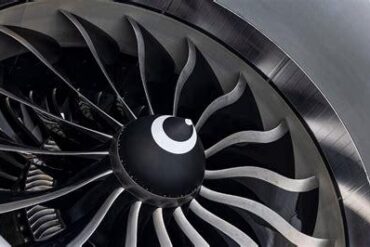
Rather than building another giant aircraft, Airbus designed the A300 around a different philosophy. It featured two aisles, a relatively compact fuselage, and—most controversially—only two engines.
At the time, this decision appeared risky. Conventional wisdom suggested that large commercial aircraft required three or four engines for safety and performance. Engine technology had only recently become powerful enough to support a twin-engine aircraft of this size, while regulations severely limited how far twinjets could operate from diversion airports during overwater flights.
Nevertheless, Airbus believed engine technology would continue improving. History proved that prediction remarkably accurate.
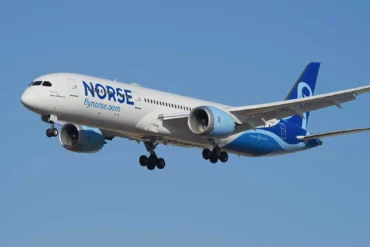
Today, virtually every new-generation widebody—from the Airbus A330 and A350 to the Boeing 787—follows the exact design philosophy first demonstrated by the A300.
Winning Airline Confidence Was Airbus’ Greatest Early Challenge
Technical innovation alone did not guarantee commercial success.
During the early 1970s, Airbus remained an unknown manufacturer competing against American aerospace giants. Airlines naturally gravitated toward established aircraft such as the McDonnell Douglas DC-10 and Lockheed L-1011 TriStar, both of which featured three engines and came from manufacturers with decades of experience.
Initial A300 sales were disappointingly slow.
The breakthrough came through one of the boldest marketing decisions in aviation history.
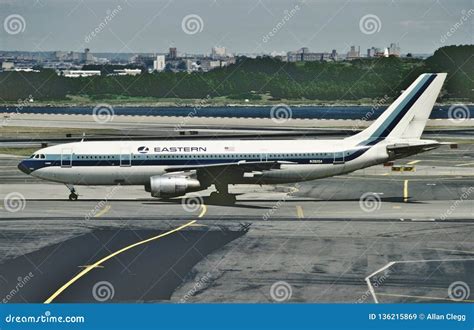
Airbus agreed to lease four A300 aircraft to Eastern Air Lines free of charge for six months. The arrangement allowed the airline to evaluate the aircraft under real operating conditions without financial risk.
The gamble paid off spectacularly.
Eastern quickly discovered that the A300 consumed roughly 30 percent less fuel than its Lockheed L-1011 fleet while carrying comparable passenger loads. At a time when rising oil prices were becoming one of aviation’s biggest challenges, those savings attracted worldwide attention.
Suddenly, airlines began viewing the A300 not as an experimental European aircraft but as an exceptionally efficient business tool.
Fuel Prices Turned the Airbus A300 Into an Industry Success
The late 1970s proved to be perfect timing for Airbus.
Global oil shocks dramatically increased fuel costs, forcing airlines to reconsider every aspect of fleet planning. Aircraft that consumed less fuel quickly became far more attractive than larger or more complex alternatives.
The A300’s twin-engine configuration suddenly transformed from an unusual design choice into one of its greatest competitive advantages.
At the same time, aviation regulators gradually relaxed operational restrictions on twin-engine aircraft. The A300 became the first twinjet permitted to operate beyond the traditional 60-minute diversion limit, opening new route opportunities that had previously been unavailable.
Airbus continued refining the aircraft as well.
Later A300 variants introduced advanced cockpits that required only two pilots instead of the traditional three-person flight deck. Improved avionics, greater range, and enhanced reliability further strengthened the aircraft’s appeal.
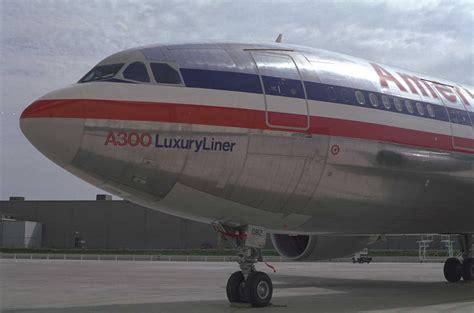
Ultimately, Airbus delivered 561 A300s, surpassing total production of both the DC-10 and the L-1011. Ironically, American Airlines—the company whose original request helped inspire the aircraft category—eventually became one of the A300’s largest customers after purchasing dozens of A300-600Rs.
The airplane that many airlines initially ignored had become one of the industry’s defining commercial successes.
The A300 Was Designed for a Market That Eventually Disappeared
Despite its achievements, the A300 had always been optimized for a very specific mission.
Its ideal role involved high-density flights lasting only a few hours between major cities.
During the 1970s, this strategy made perfect sense. Narrowbody aircraft simply lacked sufficient range for many busy domestic routes. Aircraft such as the Boeing 727 could not efficiently handle long transcontinental flights across the United States, forcing airlines to deploy larger widebodies on routes that today are almost entirely operated by single-aisle aircraft.
The A300 excelled under those conditions.
It could transport between 225 and 250 passengers while offering fast boarding, generous cargo space, and significantly lower operating costs than larger widebodies.
Unfortunately for the A300, aviation technology did not stand still.
The Boeing 757 and Airbus A320 Changed Airline Economics Forever
Everything began changing during the 1980s.
Boeing introduced the highly capable 757 in 1983, while Airbus revolutionized the narrowbody market with the fly-by-wire A320 in 1988.
These aircraft offered something airlines had never previously enjoyed.
They combined impressive range with dramatically lower operating costs than widebodies.
Instead of filling a 250-seat aircraft on domestic routes, airlines could operate smaller aircraft more frequently while matching passenger demand more precisely. Higher flight frequency also appealed to business travelers, who generally preferred multiple daily departures over fewer flights using larger aircraft.
As newer narrowbodies became increasingly capable, the need for short-range widebodies steadily declined.
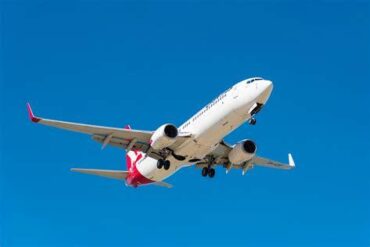
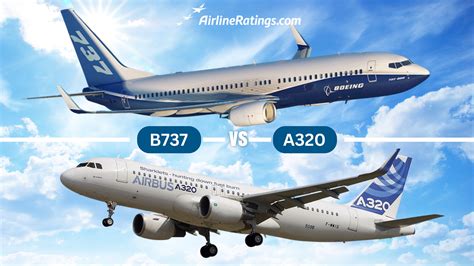
Routes once considered ideal for the A300 gradually shifted toward aircraft like the Airbus A320 family, Boeing 737 Next Generation series, and Boeing 757.
By the early 2000s, the market that had originally justified the A300’s existence had largely vanished.
Modern Narrowbodies Became Too Efficient to Ignore
From an airline’s perspective, narrowbody aircraft offer compelling financial advantages.
A single-aisle aircraft weighs less, burns less fuel, requires fewer airport resources, and generally costs significantly less to maintain than a comparable widebody.
When passenger demand falls within a narrowbody’s capacity, operating a twin-aisle aircraft often means carrying unnecessary structural weight on every flight.
The economics become difficult to justify.
Widebodies still provide enormous advantages where passenger demand or cargo volumes remain exceptionally high. They also excel on long-haul international services where larger cabins generate substantially greater revenue.
However, for medium-distance domestic operations, modern narrowbodies increasingly provide the optimal balance between operating cost and passenger capacity.
Consequently, airlines steadily retired aging A300 passenger fleets without ordering direct replacements.
Why Airbus Never Built a True A300 Successor
At first glance, replacing the A300 appears logical.
Yet manufacturers have repeatedly discovered that the market for small widebodies is surprisingly limited.
Modern aircraft families have consistently shifted toward larger designs.
The Airbus A330 is considerably bigger than the A300. Boeing’s 777 and 787 families also target higher passenger capacities because airlines generally achieve stronger profitability with additional seats on long-haul routes.
Several aircraft illustrate this trend perfectly.
The larger Boeing 767-300ER significantly outsold the smaller 767-200ER.
Within Airbus’ own lineup, the A330-300 eventually eclipsed the shorter A330-200 as improved engine performance eliminated many of the latter’s range advantages.
Even today’s smallest modern widebodies have struggled commercially. The Airbus A330-800 has attracted only a handful of orders, while the Boeing 787-8 sells far less successfully than the larger 787-9.
The challenge is simple.
Small widebodies cost almost as much to operate as larger versions but generate noticeably less revenue.
That economic reality makes them difficult to justify for most airlines.
Long-Haul Flights Still Favor Larger Widebodies
Although narrowbody aircraft have expanded into long-haul markets through aircraft such as the Airbus A321XLR, they cannot fully replace traditional widebodies.
Long-distance operations involve augmented crews, greater fuel consumption, and increased operational complexity.
Those fixed costs encourage airlines to maximize revenue by carrying more passengers and additional cargo.
An Airbus A350, for example, may transport well over one hundred more passengers than a long-range narrowbody while simultaneously offering substantially greater freight capacity.
For airlines operating expensive intercontinental routes, that additional earning potential frequently outweighs the higher operating costs.
As a result, aviation has become increasingly polarized.
Short and medium routes favor efficient narrowbodies.
Long-haul international services increasingly favor larger, highly efficient twin-engine widebodies.
The middle ground once occupied by the Airbus A300 has largely disappeared.
The Airbus A300 Found a Second Life as a Cargo Aircraft
While passenger airlines steadily retired the aircraft, cargo operators discovered that many of the A300’s strengths remained incredibly valuable.
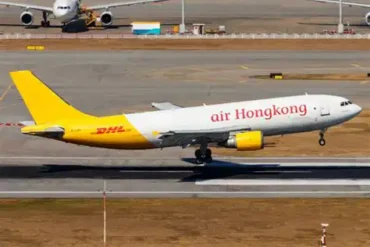
Today, the majority of active A300s fly freight rather than passengers.
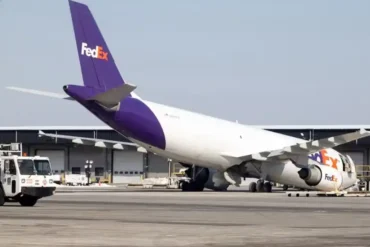
Companies such as FedEx Express and UPS Airlines continue operating large fleets because the aircraft offers an outstanding balance between payload, reliability, and operating costs.
Freighter operations differ fundamentally from passenger services.
Cargo aircraft generally fly fewer daily cycles, accumulate hours more slowly, and face less pressure to maximize fuel efficiency on every mission. Durability and payload often matter far more than cutting-edge economics.
The A300 excels in exactly those areas.
Its wide fuselage accommodates substantial freight volumes, while its relatively modest wingspan allows more efficient use of airport cargo ramps. Distribution hubs were designed around the aircraft’s dimensions, making replacement surprisingly complicated despite the availability of newer freighters.
Many operators have invested in avionics upgrades rather than retiring their fleets, extending the aircraft’s operational lifespan well into the coming decades.
The Airbus A300’s Legacy Lives On Even Without Passenger Flights
The disappearance of the Airbus A300 from passenger service does not diminish its historical importance.
Instead, it highlights how rapidly aviation evolves.
The aircraft solved one generation’s challenges so effectively that subsequent technological advances eventually eliminated the very market it had been designed to serve.
Its innovations fundamentally reshaped commercial aviation.
The A300 demonstrated that large twin-engine aircraft could operate safely, efficiently, and profitably. It helped establish Airbus as a global aerospace leader while paving the way for virtually every modern twin-engine widebody now flying across the world.
Although passengers rarely board an A300 today outside a handful of remaining operators, its influence remains visible on nearly every international flight. Every Airbus A330, A350, Boeing 787, and countless other twin-engine widebodies owe part of their design philosophy to the aircraft that proved two engines were enough.
The Airbus A300 may have vanished from passenger skies, but its legacy continues to define the modern era of commercial aviation.