The aviation industry rarely reinvents itself overnight. Instead, it evolves through calculated leaps—each one designed to unlock new efficiencies, expand operational flexibility, and subtly reshape passenger expectations. The Airbus A321XLR represents one of those pivotal leaps. While much attention has been given to its extended range and fuel efficiency, the real story lies inside the fuselage: a completely reimagined cabin architecture that redefines what passengers and airlines can expect from a single-aisle aircraft.
At first glance, upgrading a cabin may seem like a cosmetic exercise—better lighting, sleeker finishes, marginally more space. But in reality, Airbus approached the A321XLR’s cabin as a strategic necessity, not a design indulgence. The goal was clear: enable true long-haul comfort on routes traditionally dominated by widebody aircraft, without inheriting their cost burdens.
This is precisely why Airbus turned to its Airspace cabin concept—a design philosophy that blends engineering, passenger psychology, and airline economics into a single, cohesive architecture.
Redefining Narrowbody Travel with Widebody Standards
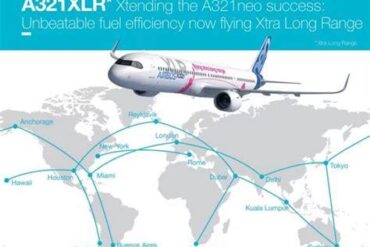
For decades, narrowbody aircraft were synonymous with short-haul travel—functional, efficient, and rarely memorable. However, the A321XLR disrupts that paradigm by stretching both range and expectations. With missions extending up to 4,700 nautical miles, passengers are no longer spending two or three hours onboard—they’re spending eight, nine, or even ten.
That shift alone demanded a fundamental redesign of the cabin environment.
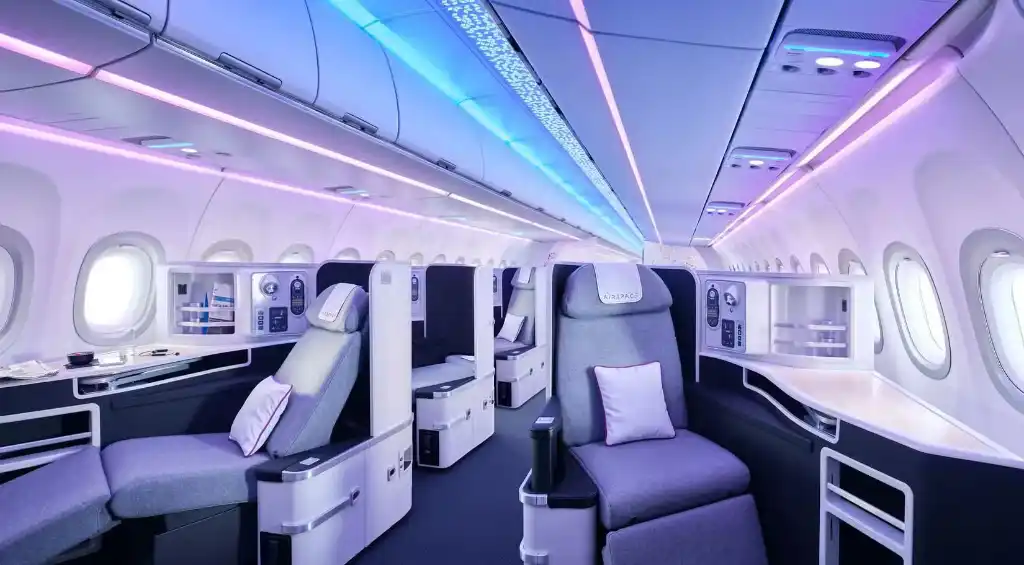
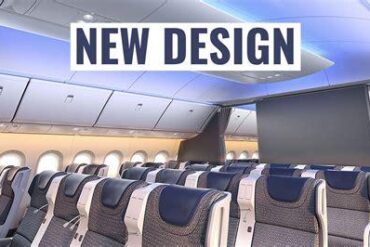
The Airspace cabin introduces a level of refinement previously reserved for aircraft like the Airbus A350 and Airbus A330neo. The emphasis is not just on aesthetics, but on human-centric engineering—a discipline that considers how passengers feel over extended periods in a confined space.
Key enhancements include wider seats, significantly larger overhead bins, and a more open visual layout. The result is subtle but powerful: passengers perceive the cabin as less cramped, even though the aircraft’s physical dimensions remain within narrowbody limits.
This is not accidental. Airbus understands that perception is as critical as physical space when it comes to comfort on long-haul flights.
The Strategic Role of Airspace Cabin Architecture
The introduction of the Airspace cabin was not merely about improving passenger experience—it was about unlocking new business models for airlines.
Traditional long-haul routes rely on widebody aircraft, which require high passenger volumes to remain profitable. The A321XLR changes that equation entirely. By pairing long range with a cost-efficient single-aisle platform, airlines can operate what are known as “long, thin routes”—city pairs that lack the demand for a large aircraft but still justify direct service.
The cabin architecture plays a decisive role in making this viable.
Without a comfortable, long-haul-capable interior, passengers would simply reject the idea of spending nearly ten hours on a narrowbody jet. Airbus recognized this early and engineered the Airspace cabin to deliver:
- Widebody-level comfort in a narrowbody footprint
- Flexible configurations for different airline strategies
- Enhanced passenger well-being to reduce fatigue
In essence, the cabin is not just part of the product—it is the enabler of the entire A321XLR business case.
Engineering Comfort: Space, Light, and Atmosphere
One of the most striking aspects of the A321XLR cabin is how it manipulates space and light to create a more relaxing environment. This is where Airbus blends design psychology with technical innovation.
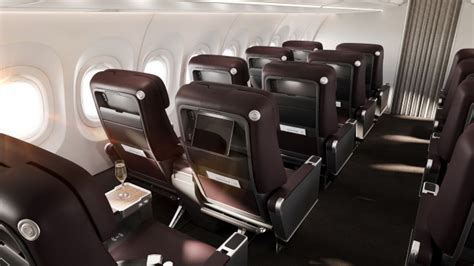
The aircraft features larger windows that allow more natural light to flood the cabin, reducing the sense of confinement. Meanwhile, customizable LED lighting systems can simulate different times of day, helping passengers adjust their circadian rhythms and mitigate jet lag.
Even the cabin altitude has been optimized. By maintaining a lower effective altitude—around 6,000 feet—the aircraft reduces passenger fatigue, headaches, and dehydration. These are small physiological improvements individually, but collectively they transform the long-haul experience.
Noise reduction is another critical factor. The A321XLR achieves a 50% reduction in noise footprint, creating a quieter cabin that feels more akin to a widebody jet than a traditional narrowbody.
Every detail serves a purpose: to make passengers forget they are on a single-aisle aircraft.
Cabin Flexibility: A Revenue-Driven Design Philosophy
Airlines do not operate aircraft for comfort alone—they operate them for profitability and adaptability. Airbus designed the A321XLR cabin architecture with this reality firmly in mind.
The interior is highly modular, allowing airlines to configure layouts that align with their business strategies. Whether it’s a high-density economy cabin or a premium-heavy configuration with lie-flat seats, the aircraft can be tailored with remarkable precision.
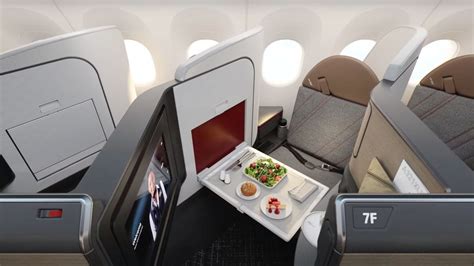
For example, a typical two-class layout might include:
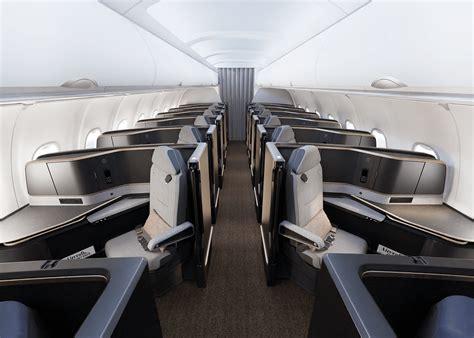
- 14 lie-flat business class seats in a 1-1 configuration
- 168 economy seats with enhanced ergonomics
The business class seats, developed by Thompson Aero Seating, offer features such as massage functions, large 4K displays, and multiple charging options. These are not incremental upgrades—they are competitive with widebody premium cabins.
In economy, seats produced by Recaro provide improved cushioning, wider dimensions, and advanced headrest adjustability. Even at the back of the aircraft, passengers experience a noticeable upgrade.
This flexibility allows airlines to optimize revenue per flight, balancing premium offerings with seat density based on route demand.
Operational Efficiency Meets Passenger Experience
The brilliance of the A321XLR lies in how it merges operational efficiency with elevated passenger experience—two objectives that often conflict.
From an airline’s perspective, the aircraft delivers:
- Lower fuel consumption compared to widebody jets
- Reduced operating costs per seat
- Faster turnaround times due to improved cabin flow
The enlarged overhead bins—up to 60% bigger—play a surprisingly important role here. Faster boarding and disembarkation reduce ground time, increasing aircraft utilization and overall profitability.
But these same features also benefit passengers. Less competition for storage space means a smoother boarding process and a less stressful start to the journey.
This dual-purpose design philosophy is what sets the A321XLR apart. Every improvement serves both economic and experiential goals simultaneously.
A Direct Challenge to Widebody Dominance
The A321XLR does not aim to replace widebody aircraft outright. Instead, it targets a specific niche where widebodies are economically inefficient.
Historically, airlines had to choose between:
- Operating a large aircraft with excess capacity
- Or not serving the route at all
The A321XLR eliminates that dilemma.
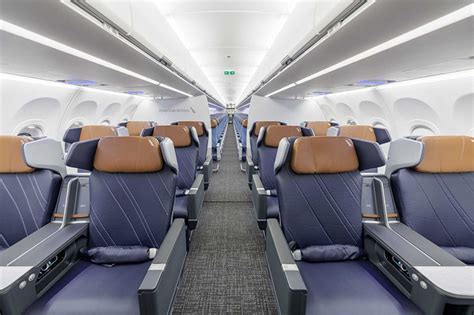
With its extended range and efficient cabin, airlines can now connect secondary cities across continents—routes that were previously unviable. Transatlantic flights from smaller European cities to North America are a prime example.
This shift has profound implications:
- More direct routes for passengers
- Reduced reliance on major hubs
- Increased competition and potentially lower fares
The cabin architecture is central to this transformation. Without it, passengers would resist the idea of long-haul narrowbody travel, and the entire concept would collapse.
The Competitive Context: Boeing’s Missing Middle
The development of the A321XLR also reflects a broader competitive landscape. Airbus moved aggressively to fill the gap left by Boeing’s postponed New Midsize Airplane (NMA) program.
By combining extended range with a next-generation cabin, Airbus effectively created a new market segment—one that sits between traditional narrowbodies and widebodies.
The A321XLR’s cabin is a critical differentiator in this space. It allows Airbus to offer not just an aircraft, but a complete long-haul solution that airlines can deploy with confidence.
Real-World Adoption and Airline Strategy
Airlines have embraced the A321XLR not just for its range, but for its versatility and passenger appeal.
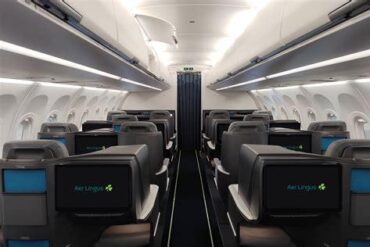
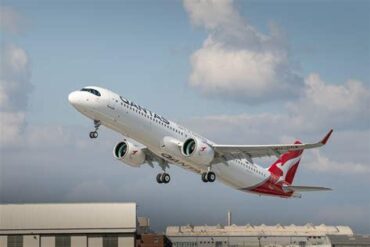
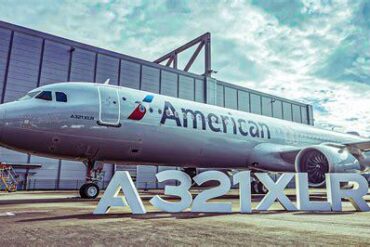
Carriers like Iberia and Aer Lingus have already demonstrated how the aircraft can open new transatlantic routes while maintaining high service standards. Meanwhile, operators such as Qantas plan to use it as a cornerstone of fleet modernization, replacing older, less efficient aircraft.
The ability to deliver a “widebody feel” in a narrowbody format is a recurring theme among these airlines. It is not marketing language—it is a direct consequence of the Airspace cabin architecture.
Passenger Psychology: The Hidden Driver Behind Design
Perhaps the most underrated reason Airbus built a new cabin architecture is passenger psychology.
Long-haul travel is as much a mental experience as a physical one. Feelings of confinement, fatigue, and discomfort can significantly impact how passengers perceive a flight.
Airbus addressed this by focusing on:
- Visual openness through lighting and design
- Physical comfort through seat ergonomics
- Emotional well-being through quieter, calmer environments
These elements combine to create a cabin that feels less like a mode of transport and more like a controlled environment designed for endurance.
The Bottom Line: A Cabin Built for the Future of Flight
The decision to equip the A321XLR with a new cabin architecture was not optional—it was fundamental to the aircraft’s mission.
Without the Airspace cabin, the A321XLR would simply be a longer-range narrowbody. With it, the aircraft becomes a transformational platform capable of reshaping global air travel.
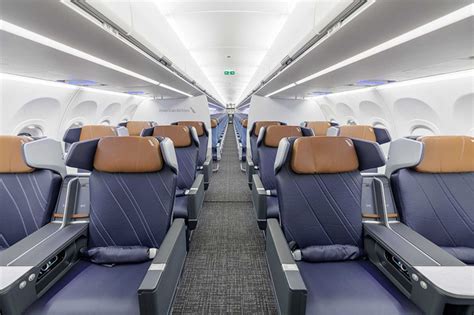
Airbus understood that range alone does not create value. Comfort, flexibility, and efficiency must evolve together. The Airspace cabin embodies that philosophy, delivering a product that satisfies both airlines and passengers in equal measure.
As airlines continue to explore new routes and redefine their networks, the A321XLR stands as a clear indicator of where the industry is heading: smaller aircraft, smarter design, and a relentless focus on passenger experience.
In that context, the new cabin architecture is not just an upgrade—it is the foundation of a new era in long-haul aviation.