The Boeing 777X is not just an aircraft. It is a strategic statement. When Boeing chose to give its largest-ever twinjet an entirely new cabin architecture, it was not chasing aesthetics or indulging in cosmetic upgrades. It was responding to shifting economics, evolving passenger psychology, and intensifying competition at the top of the long-haul market. The decision to redesign the interior of a proven airframe reflects something deeper: a recognition that the modern widebody must deliver both operational efficiency and emotional impact.
For two decades, the 777-300ER dominated ultra-long-haul travel. It was efficient, reliable, and immensely profitable. Yet by the mid-2010s, the aviation landscape had changed. Airbus had introduced the A350, a clean-sheet design boasting higher humidity, larger windows, and a quieter cabin. Boeing’s own 787 Dreamliner had reset passenger expectations with lower cabin altitude and LED lighting that simulated sunrise over the Pacific. The bar had moved. To remain competitive, Boeing had to rethink what the 777 experience meant.
Rather than designing an entirely new fuselage, Boeing fused proven structural architecture with next-generation interior technology. The result is a cabin that feels fundamentally different from earlier 777 variants—more open, more breathable, and unmistakably modern. The 777X may share lineage with its predecessors, but step inside and it feels like a new species.
The Competitive Pressure That Forced Reinvention
Aircraft cabins are not static environments; they are battlegrounds for airline differentiation. Airlines increasingly compete not only on ticket price but on perceived comfort. A quiet cabin, better humidity, wider seats—these factors directly influence customer loyalty on 14-hour journeys. Boeing understood that incremental upgrades would not suffice.
The Airbus A350’s composite fuselage allows higher humidity levels without corrosion concerns. Passengers noticed. Airlines marketed it aggressively. Meanwhile, the 787’s larger electronically dimmable windows became a signature feature. Travelers began to associate modern widebodies with brightness, openness, and reduced fatigue.
The 777-300ER, despite its strengths, was born in an era when 8,000-foot cabin altitude was standard and overhead bins were more utilitarian than sculptural. After twenty years, perception matters as much as performance. Boeing needed the 777X to project leadership again—not just in range and capacity, but in passenger experience.
Larger Windows and Raised Sightlines: Engineering Perception
One of the boldest decisions was enlarging the windows by approximately 16 percent compared to earlier 777 models and positioning them higher along the fuselage. That subtle elevation shift places the window at eye level for more passengers, even those seated in the middle rows leaning outward. It is a small geometric adjustment with outsized psychological impact.
The windows integrate electronically dimmable technology derived from the 787, eliminating the need for manual shades in some configurations. This allows airlines to choreograph cabin lighting during boarding, meal service, and rest periods. It transforms light from a passive environmental factor into a programmable feature.
Air travel is a sensory experience. Natural light reduces stress and circadian disruption. By amplifying the visual connection to the outside world, Boeing enhances spatial perception inside a pressurized aluminum tube traveling at 35,000 feet. The effect is not merely aesthetic—it changes how passengers interpret space and time.
Lower Cabin Altitude and Higher Humidity: Fighting Fatigue at 40,000 Feet
Long-haul fatigue is not imaginary. It is physiological. At a traditional 8,000-foot cabin altitude, oxygen saturation decreases slightly, contributing to dryness and tiredness. The 777X reduces cabin altitude to the equivalent of roughly 6,000 feet, matching the 787. That two-thousand-foot difference has measurable effects on passenger comfort.
Humidity levels are also increased compared to legacy 777 models. Historically, aircraft cabins maintained extremely low humidity to prevent corrosion. Advances in materials and environmental systems now allow higher moisture levels without compromising structural integrity. The result is less dry skin, fewer irritated eyes, and reduced dehydration.
When airlines market reduced jet lag, it is not pure branding. Studies indicate that lower cabin altitude and improved humidity can mitigate some physical stressors associated with long-haul flight. Boeing’s architecture acknowledges that comfort translates into repeat business.
Sculpted Sidewalls and a Flat Arched Ceiling: Redefining Space
Spatial perception inside an aircraft cabin is partly illusion. Boeing reshaped the sidewalls of the 777X to create additional shoulder room, especially in window seats. The subtle outward contouring gives passengers a few critical extra centimeters where it matters most. That marginal gain changes how confined the seat feels.
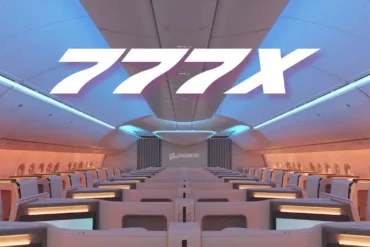
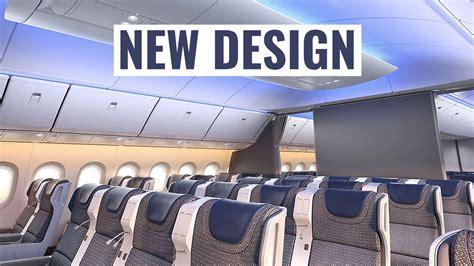
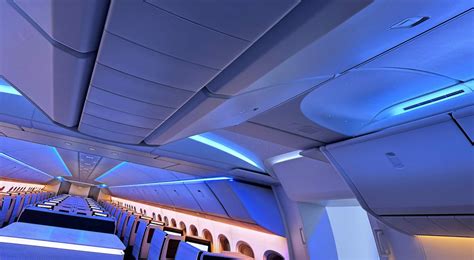
The ceiling has been redesigned into a flatter, gently arched form rather than the more curved profile of earlier 777 variants. This visual expansion increases the sense of vertical space. Paired with customizable LED lighting capable of dynamic color transitions, the environment feels more like a contemporary lounge than a narrow fuselage.
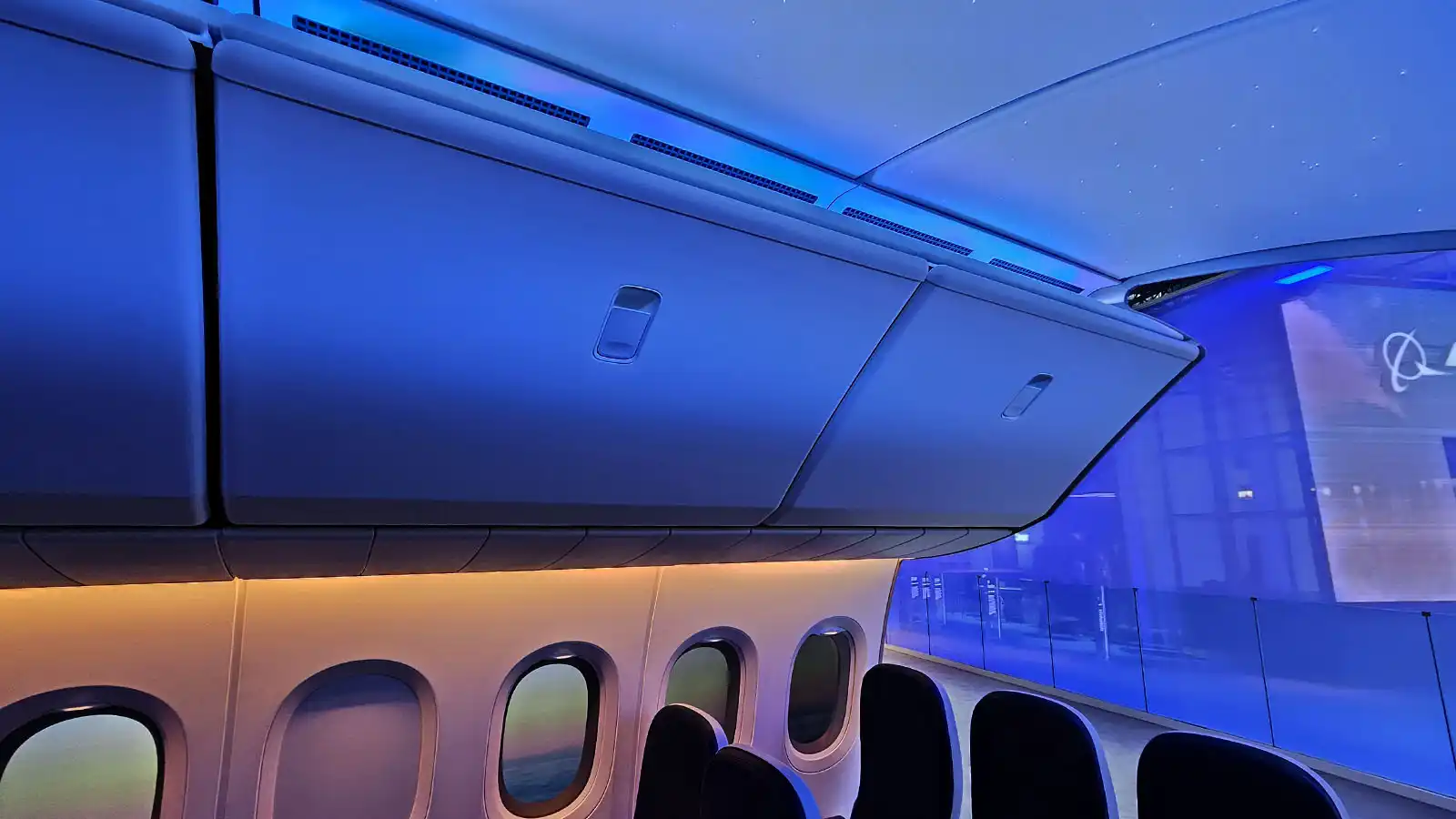
The new overhead bins adopt a concave design. Despite dramatically increasing storage capacity—roughly double that of older 777 bins—their shape makes the cabin feel more open rather than more cluttered. Engineering and psychology converge here: more storage without visual bulk.
A Modular Cabin for an Uncertain Market
Airlines operate in volatile economic cycles. Demand shifts between premium-heavy business travel and leisure-focused economy travel. The 777X introduces a modular cabin architecture that allows airlines to reconfigure layouts more efficiently than before.
Instead of requiring extensive structural modifications for major changes, the modular installation system enables faster swaps between high-density and premium-oriented layouts. Airlines can insert private business-class suites or expand premium economy sections with less downtime. This flexibility protects revenue streams and extends the aircraft’s commercial lifespan.
The modular concept reflects feedback from airlines worldwide. Boeing surveyed airports globally to ensure the aircraft—including its folding wingtip—could operate within existing infrastructure. The same philosophy guided interior design: future-proof the jet against market unpredictability.
Noise Reduction and the GE9X Advantage
Cabin architecture is inseparable from propulsion. The 777X is powered by the GE9X, one of the most advanced turbofan engines ever built. Featuring composite fan blades and ceramic-matrix-composite combustor components, it achieves double-digit fuel efficiency improvements over the GE90 engines used on earlier 777s.
Higher bypass ratios reduce noise and improve efficiency. Combined with refined nacelle design and enhanced insulation, the cabin is significantly quieter. The environmental control system doubles the number of air nozzles while reducing airflow velocity, decreasing perceived noise without sacrificing ventilation.
Silence in aviation is never absolute, but incremental reductions in decibel levels transform passenger comfort on ultra-long-haul flights. The quieter the cabin, the easier it is to rest, converse, or work without strain.
Folding Wingtips and Aerodynamic Efficiency
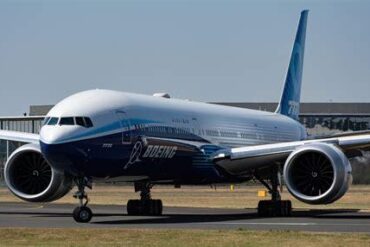
The 777X’s folding wingtip is a visible symbol of innovation. With wings extended to nearly 72 meters, the aircraft achieves exceptional aerodynamic efficiency. When on the ground, the wingtips fold upward, reducing span to fit within airport gate constraints similar to the 777-300ER.
This solution avoids the infrastructure limitations that constrained aircraft like the Airbus A380. Airlines gain the aerodynamic benefits of a long wing without costly airport modifications. Efficiency per seat improves dramatically, reducing fuel burn while increasing capacity.
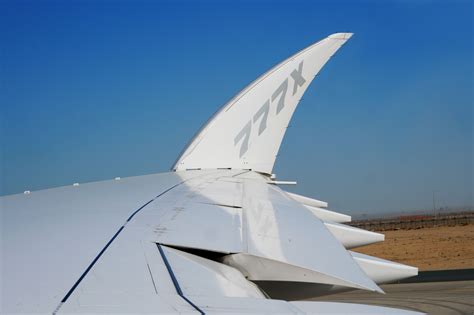
The aerodynamic gains support Boeing’s broader value proposition: larger aircraft with lower per-seat operating costs and enhanced passenger experience. Efficiency and comfort are not mutually exclusive; they reinforce each other.
Orders, Delays, and Strategic Stakes
Major carriers such as Lufthansa, Emirates, Qatar Airways, and Singapore Airlines have positioned the 777X as a future flagship. Lufthansa intends it to replace aging Boeing 747s. Emirates committed to one of the largest orders in commercial aviation history.
However, development has not been without setbacks. Originally slated for delivery around 2020, certification challenges and testing delays have pushed initial deliveries toward 2027. Regulatory scrutiny intensified after industry-wide safety reassessments, extending the timeline.
Despite delays, the order backlog remains substantial. Airlines see the 777X as a long-term investment—a bridge between current fleet demands and future sustainability targets. Its combination of capacity, fuel efficiency, and premium cabin architecture aligns with slot-constrained hubs and high-density international routes.
The 777X Cabin Architecture as a Strategic Pivot
The decision to redesign the 777X cabin was not decorative. It was existential. Boeing needed to prove that it could evolve a legendary platform without stagnation. The new architecture borrows heavily from the Dreamliner’s passenger-centric philosophy while scaling it for the world’s largest twinjet.
The cabin is wider than its primary competitor, allowing airlines to offer up to 18-inch economy seats without sacrificing density. Lighting systems are programmable for brand differentiation. Windows are larger and higher. Air is more humid. Noise is lower. Storage is smarter.
This is not merely iteration. It is recalibration.
Commercial aviation is entering an era defined by environmental accountability, economic uncertainty, and heightened passenger expectations. Aircraft must be efficient machines and compelling environments simultaneously. The 777X embodies that synthesis.
Boeing’s new cabin architecture signals a recognition that the future of long-haul travel hinges on perception as much as physics. A passenger stepping aboard must feel that they are entering the next chapter of aviation, not revisiting the last one. In the fiercely competitive widebody market, that feeling can determine billions of dollars in fleet decisions.
The 777X does not reinvent flight itself. It reinvents how flight feels. And in a world where twelve hours in the sky can define a journey, that distinction may matter more than ever.