Most airline passengers never notice the moment when an airliner changes from being primarily guided by automation to being flown directly by a pilot. From the cabin, the final approach can look almost effortless. The airplane remains aligned with the runway, follows a carefully calculated descent path, and makes tiny corrections that seem almost invisible. Behind that smooth performance, however, the cockpit crew is making a series of important decisions about automation, visibility, approach stability, and landing control.
The often-mentioned 200-foot point has a particularly important place in this process. For a conventional Category I Instrument Landing System (ILS) approach, 200 feet above the runway is associated with the decision height or decision altitude at which pilots must determine whether they have sufficient visual references to continue the landing. If the required runway environment is visible, the approach can continue. If it is not, the correct action is to execute a missed approach rather than descend toward a runway that the crew cannot safely identify.
That does not mean every commercial airplane disconnects its autopilot at exactly 200 feet. In fact, the reality is considerably more sophisticated. Some pilots disconnect earlier, while aircraft operating under approved procedures can keep their automatic flight-control systems engaged well below 200 feet and even complete an autoland. The significance of 200 feet is therefore less about an autopilot switch and more about the boundary between instrument-based decision-making and the visual continuation of a conventional landing.
Why 200 Feet Matters on an ILS Approach
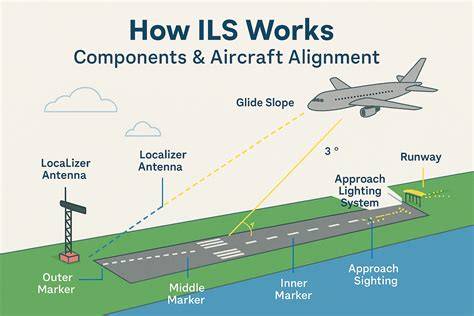
An Instrument Landing System provides two fundamental pieces of guidance. The localizer gives the aircraft lateral guidance, helping it remain aligned with the runway centerline, while the glideslope provides vertical guidance along the intended descent path. Together, these signals allow an appropriately equipped aircraft to follow an extremely precise approach even when pilots cannot clearly see the runway.
During a Category I ILS approach, the crew remains committed to the instrument procedure until reaching the published decision altitude or decision height. This is not simply an arbitrary number selected because pilots prefer to start looking outside at 200 feet. It represents the point at which the crew must have the required visual references to continue under the applicable operating rules.
If those references are not available, continuing the descent is not an acceptable alternative. The aircraft must transition into the missed approach procedure, commonly known as a go-around. That procedure is designed in advance, giving the pilots a defined flight path and set of actions for safely climbing away from the runway environment.
When the runway environment is visible, however, the landing can continue. Depending on the aircraft type, airline procedures, weather conditions, and the pilot’s plan for the approach, the pilot flying may disconnect the autopilot and manually fly the remaining portion of the landing.
This distinction is important because 200 feet is not a universal autopilot-disconnect altitude. It is better understood as a decision boundary associated with a standard Category I approach. Category II operations can have a decision height of 100 feet, while Category III operations can permit approaches with extremely low visibility and, depending on the authorization, no conventional decision height.
The Pilot Is Working Even When the Autopilot Is Flying
One of the biggest misconceptions about modern airline cockpits is that an engaged autopilot means the pilots are simply watching the airplane fly itself. In reality, an instrument approach can demand intense monitoring and precise crew coordination.
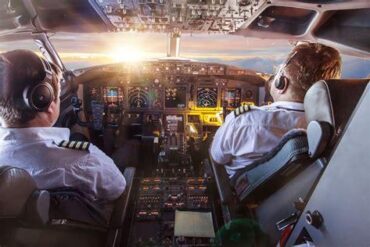
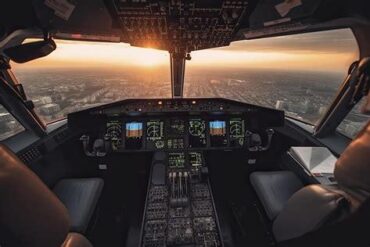
While the automation controls the aircraft’s flight path, the pilots continually verify that it is doing exactly what it should. They monitor localizer and glideslope guidance, airspeed, altitude, vertical speed, aircraft configuration, flight-control modes, and approach stability. They also confirm that the airplane is following the published procedure and that the available automation remains appropriate for the conditions.
The pilots must also understand what the aircraft’s automation is currently doing. Modern flight decks contain multiple layers of automation, and the difference between an armed mode, an active mode, and an automatically captured mode can be critical. A pilot cannot safely supervise automation without knowing which system is controlling which part of the aircraft.
This is why the phrase “the autopilot is flying” can be misleading. The autopilot may be making the physical control inputs, but the pilots remain responsible for determining whether those inputs are appropriate.
If the aircraft begins drifting from the expected approach path, the crew has to recognize the deviation quickly. Depending on the circumstances, the response could involve correcting the aircraft manually, changing the automation mode, disconnecting the autopilot, or abandoning the approach entirely.
The workload does not disappear when automation is engaged. It changes form. Instead of continuously moving the controls to maintain the flight path, pilots supervise a sophisticated system and remain ready to take control whenever necessary.
Why Pilots May Disconnect the Autopilot Before 200 Feet
When weather is good and the runway is clearly visible, manually flying the final part of the approach can be entirely normal. The exact point at which an airline pilot disconnects the autopilot depends on the aircraft, company procedures, approach type, pilot preference within those procedures, and the conditions at the time.
A pilot may disconnect above 200 feet after becoming comfortable with the visual approach. In other circumstances, the autopilot can remain engaged longer. The important consideration is not hitting a magical altitude but ensuring that the aircraft remains stable and that the crew has sufficient time and attention to complete the landing safely.
Once the pilot takes manual control, the airplane is not suddenly being handed from a machine to a person who has been doing nothing. The crew has already monitored the approach from much higher altitude. The pilot flying knows the aircraft’s configuration, speed, descent path, wind conditions, and runway alignment.
The transition can therefore be remarkably subtle. A passenger might notice nothing more than a few small control inputs during the final descent. Inside the cockpit, however, the change represents a deliberate shift in flight-control responsibility.
Manual flying also allows pilots to respond directly to the visual environment. Once the runway is visible, they can make the small pitch, roll, and yaw corrections needed to compensate for crosswind, runway alignment, and changing visual cues.
Autoland Is More Than Simply Leaving the Autopilot On
It is tempting to assume that any airliner capable of flying an ILS could simply continue automatically until touchdown. That assumption overlooks the considerable difference between automatic approach guidance and a certified autoland capability.
An autoland must remain reliable much closer to the ground. There is little altitude available to recover from a failure, and the airplane must transition through several demanding phases of flight, including flare and touchdown. Depending on the aircraft and system, automatic directional control may also continue during the initial rollout.
For this reason, Category II and Category III operations involve additional aircraft equipment, airport infrastructure, operator authorization, crew procedures, and maintenance requirements. It is not enough for the aircraft manufacturer to install an autopilot capable of tracking an ILS.
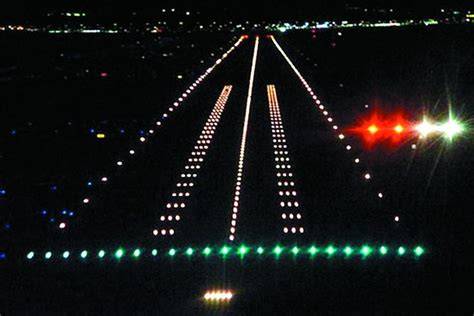
The runway and airport systems are part of the overall safety architecture. Precision approach equipment must be maintained, runway lighting must support the operation, protected areas around navigation equipment must be respected, and runway visual range information may be required.
The aircraft itself also needs appropriate redundancy and monitoring capability. Autoland systems are designed around the principle that important failures must be detected and managed rather than simply ignored. Depending on the aircraft architecture, a failure can cause the system to disconnect or change its available capabilities rather than continue blindly.
This is one reason an autoland should not be thought of as a luxury feature that merely makes landing easier. Its most important purpose is to allow an appropriately equipped aircraft to continue a landing when human visual capability becomes the limiting factor.
What Happens When an Airliner Actually Performs an Autoland?
During an authorized autoland, the aircraft can continue automatically below the 200-foot level. The system maintains the required approach path while the pilots closely monitor its performance and confirm that all necessary indications remain correct.
The precise sequence differs between aircraft families, but the general concept is similar. The flight-control system captures and tracks the ILS guidance, maintains the required approach profile, and then transitions into the landing sequence as the airplane approaches the runway.
Near touchdown, the aircraft must reduce its descent rate and adopt the appropriate landing attitude. This maneuver, commonly referred to as the flare, is particularly important because the airplane cannot simply maintain its approach attitude all the way onto the runway.
After touchdown, an appropriately equipped system may continue providing automatic directional control during rollout. The airplane must remain aligned with the runway while its speed decreases, and the crew remains ready to intervene if the automatic system no longer performs as expected.
The important point is that the 200-foot decision height does not stop an autoland. Under an approved lower-category operation, the airplane can continue automatically through that altitude because the operating rules, aircraft equipment, airport systems, and crew qualifications support that type of approach.
Category I, Category II and Category III Landing Operations
The relationship between visibility and automation becomes clearer when the ILS categories are considered together. Category I operations generally use a 200-foot decision height, making that altitude familiar to pilots and aviation enthusiasts.
Category II operations reduce the decision height to approximately 100 feet under the applicable conditions. That gives the crew considerably less opportunity to acquire the runway visually before continuing the landing.
Category III operations go further. Depending on the specific category and authorization, the aircraft can operate with very low runway visual range and, in some cases, without a conventional decision height. At that point, relying on a pilot’s ability to identify the runway early enough to manually complete the landing becomes impractical.
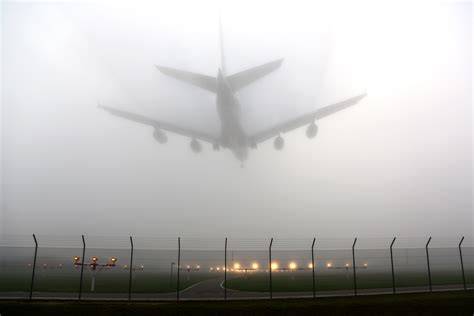
This is where autoland technology becomes particularly valuable. Automation is not necessarily replacing the pilot; it is extending the aircraft’s operational capability beyond the limits of human vision.
That distinction explains why an airline may routinely hand-fly an approach in good weather but use autoland during dense fog. The airplane has not suddenly become more capable because the weather deteriorated. Rather, the available level of automation has become more useful because the visual environment has become less usable.
Why Manual Landings Still Matter in Modern Airliners
If automation can land an airplane precisely, why not use it for every landing? There are several practical reasons.
In favorable weather, a manual landing can be operationally straightforward. The pilot has a clear runway environment and can directly respond to the aircraft’s position, wind, and visual alignment. Using a highly automated landing system when conditions do not require it may add complexity without providing a meaningful safety advantage.
Autoland systems can also have limitations. Crosswind restrictions, runway conditions, equipment status, aircraft configuration, and operational requirements can affect whether an automatic landing is appropriate. The fact that an aircraft possesses autoland capability does not mean every runway and every weather condition qualifies for its use.
There is also an important human-factors dimension. Monitoring an automatic landing requires pilots to remain alert and prepared to intervene. Automation does not remove responsibility; it changes the nature of the task. In some favorable situations, directly flying the final portion of the approach can provide a clear and familiar division of responsibilities between the pilots.
Manual landing is therefore not an outdated technique surviving in spite of modern technology. It remains a valuable capability precisely because pilots need to be able to take direct control when the situation calls for it.
What Passengers Should Understand About the 200-Foot Point
For passengers, the most useful takeaway is that an airplane reaching 200 feet does not mean the autopilot must suddenly switch off. The number is connected primarily to the decision requirements of a conventional Category I instrument approach.
A pilot may already have disconnected the autopilot. Alternatively, the autopilot may remain engaged while the aircraft continues toward touchdown under an approved procedure. The airplane could even be conducting an autoland in weather where the runway is barely visible.
What passengers experience as a smooth and uneventful landing is therefore the result of several layers working together: aircraft systems, navigation infrastructure, operating procedures, crew coordination, weather assessment, and pilot judgment.
The quietness of the process is part of what makes commercial aviation so impressive. There is no dramatic handover at 200 feet. There is a carefully managed transition between different forms of control, selected according to the conditions and the capabilities available.
The Future of Airline Landing Automation
The story of 200 feet ultimately reveals something larger about the relationship between pilots and automation. Modern aviation is not moving toward a simple choice between a human pilot and a computer. Instead, it is developing increasingly sophisticated ways for crews to select the appropriate level of automation for each situation.
In clear weather, a pilot may prefer to manually fly the final portion of an approach because the runway is easily visible and direct control is practical. In extremely poor visibility, the same crew may rely on redundant automatic systems to guide the airplane through the final stages of landing.
That flexibility is one of the central strengths of modern airline operations. Automation can handle precision, consistency, and demanding low-visibility tasks, while pilots provide judgment, supervision, adaptability, and the ability to intervene.
The 200-foot point is therefore not a technological cliff where the machine stops and the human suddenly takes over. It is a useful reference point in a much larger system of aviation procedures. For a conventional Category I approach, it represents the moment when the crew must have the required visual references to continue. For an approved autoland, the airplane can safely continue under automatic control far below it.
Ultimately, the safest cockpit is not one that always uses maximum automation or one that always insists on manual control. It is one in which pilots understand the automation, continuously monitor it, recognize its limitations, and take control when direct human input is the better choice. At 200 feet, that principle becomes especially visible—but it has been guiding the approach long before the runway comes into sight.