The Lockheed U-2 Dragon Lady operates in an environment where the difference between ordinary aviation and near-space flight becomes remarkably small. Cruising at roughly 70,000 feet, the aircraft reaches an altitude where the atmosphere is too thin to support an unprotected human being. Yet the U-2 pilot does not simply climb into the cockpit, switch on the oxygen system, and fly away. Long before the aircraft leaves the runway, the pilot begins one of the most important parts of the mission: breathing 100% oxygen for about an hour.
This unusual ritual exists because the greatest threat is not simply a lack of oxygen. It is also the behavior of nitrogen dissolved in the human body when atmospheric pressure falls dramatically. The process resembles, in some important respects, the physiological problem faced by scuba divers who ascend too rapidly. A U-2 pilot must therefore begin preparing the body for the pressure environment before reaching extreme altitude.
The Dragon Lady’s cockpit is pressurized, but its effective cabin altitude remains extraordinarily high compared with a commercial airliner. At operational altitude, the pressure inside the cockpit can correspond to roughly 29,000 feet. That is already an environment in which human physiology requires careful protection. The pilot must spend many hours operating at this cabin altitude while simultaneously flying an aircraft whose aerodynamic margins are exceptionally narrow.
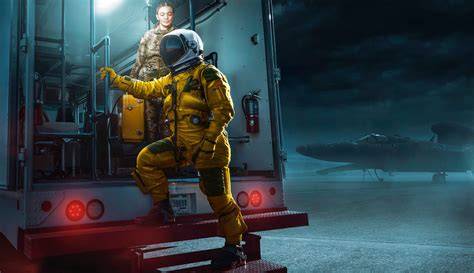
Why U-2 Pilots Pre-Breathe Pure Oxygen
At sea level, ordinary air contains approximately 78% nitrogen and 21% oxygen, along with small quantities of other gases. Under normal atmospheric pressure, nitrogen is harmless because it remains dissolved in the body’s tissues without creating dangerous bubbles. The situation changes when pressure falls substantially.
As a person spends time breathing compressed air, nitrogen can dissolve into the blood and tissues. If the surrounding pressure subsequently decreases too quickly, that dissolved nitrogen can come out of solution and form bubbles. This is the basic mechanism behind decompression sickness, commonly known as “the bends.”
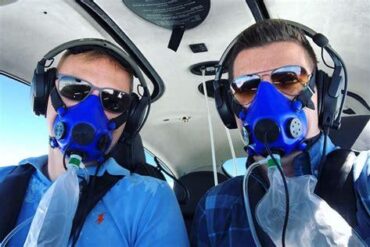
For a U-2 pilot, the solution begins before takeoff. The pilot breathes pure oxygen for approximately 60 minutes in a controlled environment. This procedure is called pre-breathing, and its purpose is to reduce the amount of nitrogen in the body before the aircraft climbs into the thin upper atmosphere.
Breathing 100% oxygen replaces the nitrogen-containing air that would otherwise enter the lungs. Over time, nitrogen is progressively washed out of the bloodstream and tissues. The longer the pilot breathes pure oxygen before exposure to the reduced pressure environment, the more effectively the body can be prepared for the mission.
This is why the hour before a U-2 sortie is not idle waiting time. It is a critical part of the pilot’s physiological preparation. The mission effectively begins before the aircraft begins moving.
The 29,000-Foot Cabin Is Already Extreme
The U-2 can operate near 70,000 feet, but the pilot does not experience the same pressure as the outside atmosphere. The aircraft’s environmental control system maintains a pressurized cockpit. Even so, the effective cabin altitude remains around 29,000 feet, depending on the aircraft’s operating conditions.
For comparison, a typical passenger aircraft maintains a much lower cabin altitude because commercial passengers are not expected to tolerate the physiological stresses imposed by the U-2 mission. The Dragon Lady accepts a far higher cabin altitude because maintaining a lower one would impose additional engineering requirements and potentially operational penalties on an aircraft designed around extreme altitude performance.
At approximately 29,000 feet, the atmosphere is dramatically thinner than at sea level. The reduced pressure affects how gases behave inside the human body. This makes careful oxygen management and decompression procedures essential.
The pilot also remains in the cockpit for many hours. A U-2 mission can last eight to twelve hours, with some missions extending beyond that range. The combination of high cabin altitude, long endurance, workload, and physical confinement makes preparation especially important.
The Armstrong Line Makes Pressure Loss Catastrophic
The physiological danger becomes even more severe at extreme altitude. Above approximately 62,000 feet, commonly associated with the Armstrong limit, atmospheric pressure becomes low enough that water can boil at normal human body temperature under unprotected conditions.
This does not mean that a protected U-2 pilot is literally sitting in a cockpit where bodily fluids are boiling. The point is that an unprotected human cannot survive normally at such pressure. A sudden loss of cabin pressure at extreme altitude could create an immediately life-threatening environment.
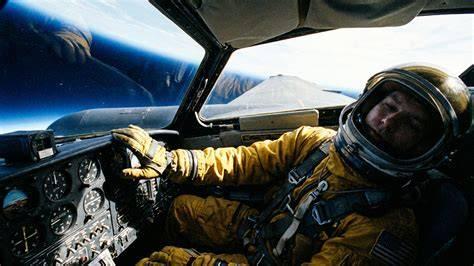
That is why the U-2 pilot’s equipment is far more than a conventional flight suit. The pilot wears a full-pressure suit that provides another layer of protection when the aircraft operates close to the limits of human atmospheric tolerance.
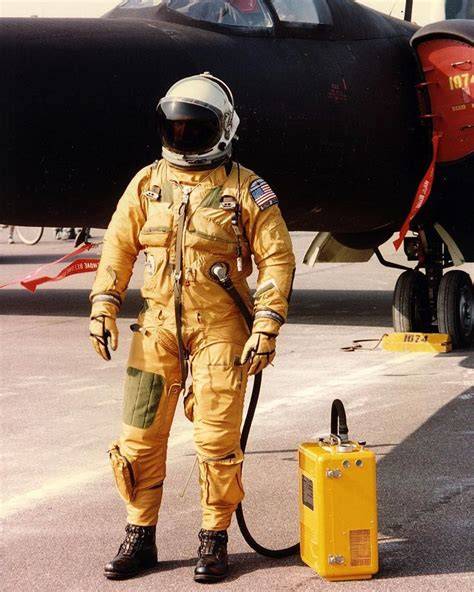
The suit effectively becomes an individual life-support system. It provides pressure around the body and works with the aircraft’s oxygen system to keep the pilot alive if cockpit pressure is lost. The equipment is therefore both operational clothing and emergency survival technology.
The well-known David Clark SS1034 full-pressure suit is associated with U-2 operations. The complete ensemble is cumbersome compared with ordinary flight equipment, but at 70,000 feet, convenience is secondary to maintaining a survivable physiological environment.
The Oxygen Supply Never Simply Stops at Takeoff
Pre-breathing would be far less useful if the pilot immediately returned to ordinary air during the transition from the preparation area to the aircraft. U-2 operations therefore maintain oxygen breathing throughout the critical preparation and departure sequence.
A portable oxygen supply can support the pilot while moving from the pre-breathing area toward the aircraft and while the suit is being connected to the aircraft’s life-support system. The objective is continuity. The pilot’s exposure to nitrogen-rich ambient air is minimized during the period immediately before the climb.
Once connected to the aircraft, the pilot continues breathing oxygen through the flight system. This is an extraordinary difference from commercial aviation, where supplemental oxygen is an emergency resource rather than the pilot’s normal breathing medium throughout an entire mission.
For the U-2 crew, oxygen is therefore not simply an altitude accessory. It is a fundamental component of the aircraft’s human-support architecture.
Decompression Sickness Remains a Serious U-2 Hazard
The importance of these procedures is demonstrated by the U-2’s operational history. Air Force medical personnel have spent decades studying the physiological effects associated with Dragon Lady missions.
A retrospective Air Force study covering 1994 through 2010 documented 73 confirmed cases of decompression sickness among U-2 pilots. That history demonstrates why high-altitude operations require far more than simply placing a pilot inside a pressurized cockpit.
Even with careful preparation, the combination of reduced cabin pressure and prolonged exposure creates physiological risks. The Air Force has consequently worked to improve both procedures and aircraft systems rather than treating decompression risk as an unavoidable feature of the mission.
One major effort was the Cockpit Altitude Reduction Effort, or CARE, which began in 2013. The program sought to reduce the U-2’s effective cabin altitude and therefore decrease the physiological burden placed on pilots.
This illustrates an important principle of U-2 operations: the aircraft may have been designed in the 1950s, but its human-support systems have continued to evolve. The Dragon Lady’s longevity is partly the result of continuously improving the relationship between the airframe and the person inside it.
The Pilot Faces Another Problem After Reaching 70,000 Feet
Surviving the atmosphere is only the beginning. Once the U-2 reaches operational altitude, the pilot must contend with one of aviation’s most demanding aerodynamic environments.
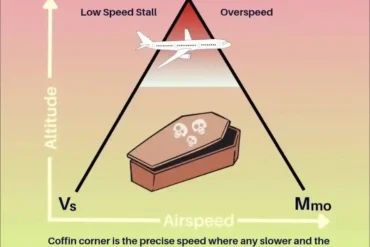
At roughly 70,000 feet, the air is extremely thin. The aircraft’s long wings generate lift efficiently in that environment, but the margin between stall speed and maximum operating speed becomes remarkably small. This condition is often described as the coffin corner.
The problem is straightforward but unforgiving. If the aircraft slows too much, the wings can approach an aerodynamic stall. If it accelerates too much, the aircraft can approach its structural or Mach limitations. At extreme altitude, those two boundaries move dangerously close together.
The resulting flight envelope can leave the pilot with only a narrow speed margin. A difference of just a few knots can become operationally significant.
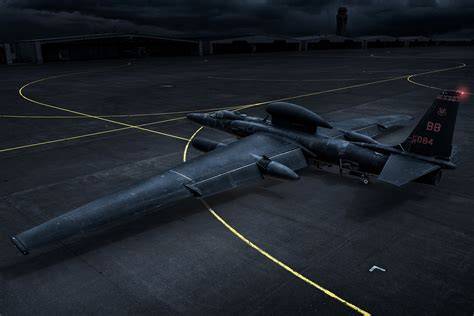
The pilot therefore spends hours managing speed, altitude, engine performance, and aircraft attitude with exceptional precision. Automation can assist with portions of the workload, but the human pilot remains responsible for maintaining the aircraft within its demanding envelope.
This is one reason U-2 flying requires specialized training. The pilot is not merely sitting in a high-altitude observation platform. The Dragon Lady must be actively managed in an atmospheric region where conventional assumptions about aircraft performance no longer apply.
Why the U-2 Can Stay Above a Target for Hours
The physiological preparation makes sense when we consider what the U-2 is designed to accomplish. The aircraft’s value comes from its ability to remain at very high altitude for extended periods while carrying sophisticated intelligence, surveillance, and reconnaissance equipment.
A satellite follows an orbital path. That path determines when it can observe a particular location and how long it can remain over that location. A high-altitude aircraft has a different kind of flexibility.
The U-2 can remain in the vicinity of an area of interest and continue collecting information as conditions change. Instead of observing a target during a brief orbital pass, the aircraft can potentially monitor activity over an extended period.
That difference can matter enormously in intelligence operations. A military convoy does not necessarily move when a satellite passes overhead. A mobile missile system may relocate between satellite observations. Communications activity can appear and disappear within minutes.
A U-2 can remain present while those events unfold.
A Human Pilot Still Adds Flexibility
The U-2’s continued relevance is not based solely on altitude. Its modular payload architecture allows the aircraft to accommodate different sensors and mission equipment.
The latest U-2S configuration incorporates a modular nose, a large fuselage equipment area, and detachable wing-mounted pods. This allows ground crews to configure the aircraft for different missions rather than treating its sensor package as permanently fixed.
That flexibility is especially valuable for signals intelligence and electronic warfare missions. An aircraft can be assigned to investigate changing activity, collect intelligence, and relay information without waiting for an entirely new space-based asset to be launched or redesigned.
A satellite can provide extraordinary strategic capabilities, but its hardware is largely fixed once it reaches orbit. A U-2 can return to the ground, receive maintenance, change mission equipment, and fly again.
This adaptability is one of the less obvious reasons the Dragon Lady has survived for so long.
Why the U-2 Still Matters After Seven Decades
The Lockheed U-2 first entered service in the mid-1950s, yet its basic mission remains relevant. The aircraft has survived successive generations of reconnaissance technology, including satellites and unmanned aircraft, because it occupies a distinctive position between the atmosphere and space.
Its endurance, altitude, sensor flexibility, and ability to respond to changing requirements give commanders an intelligence platform that can be physically repositioned and reconfigured.
The U-2’s human pilot is also part of that flexibility. A pilot can make judgments in real time, respond to unexpected developments, and continue operating when communications or automated systems encounter problems.
That advantage comes at a substantial physiological cost.
The One-Hour Oxygen Ritual Explains the Dragon Lady
The next time a U-2 is seen climbing toward 70,000 feet, the most remarkable part of the mission may not be the aircraft’s altitude. It may be what happened during the hour before takeoff.
The pilot has already begun adapting to an environment that resembles the boundary between conventional aviation and spaceflight. Sitting in a recliner, breathing pure oxygen, the pilot is systematically reducing nitrogen in the body before entering an aircraft that will spend hours operating in an atmosphere where ordinary human survival is impossible.
The one-hour pre-breathing procedure is therefore not ceremonial and certainly not excessive. It is a carefully developed defense against decompression sickness and the consequences of extreme altitude. The full-pressure suit, continuous oxygen supply, pressurized cockpit, medical monitoring, and specialized procedures all form parts of the same system.
The U-2 remains one of the clearest examples of how far aviation engineering can push the boundary of human endurance. Its wings, engines, sensors, and avionics may attract the attention, but the pilot’s preparation reveals the real challenge. At 70,000 feet, keeping the aircraft flying is only half the mission. Keeping the human being inside it alive is the other half.