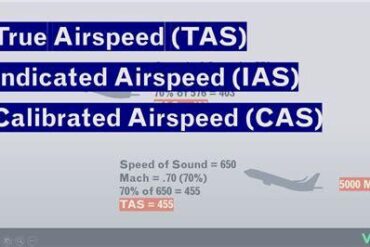
In aviation, two speeds stand out: indicated airspeed (IAS) and true airspeed (TAS). However, you might also hear about calibrated airspeed (CAS) and equivalent airspeed (EAS). To help remember how these speeds relate, think of the acronym “ICE T.” Each letter represents a type of airspeed: Indicated, Calibrated, Equivalent, and True.
Let’s break down these terms. Indicated Airspeed (IAS) is simply the speed shown on your airspeed indicator. Next, we have Calibrated Airspeed (CAS), which is IAS adjusted for any errors in installation. Then there’s Equivalent Airspeed (EAS), where CAS is further corrected for compressibility. Finally, True Airspeed (TAS) is EAS adjusted for temperature and pressure altitude.
Understanding these conversions can enhance your flying experience. Knowing the differences helps pilots make informed decisions during their flights. So, keep the “ICE T” acronym in mind as you navigate through the world of airspeed.