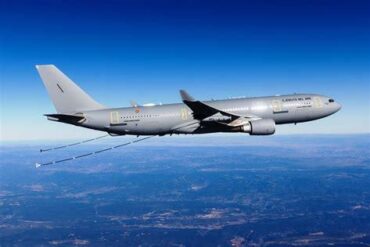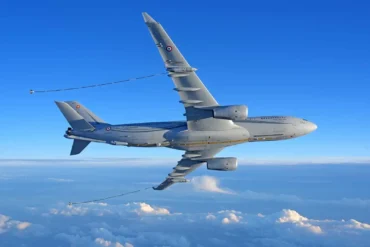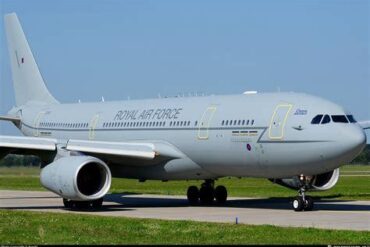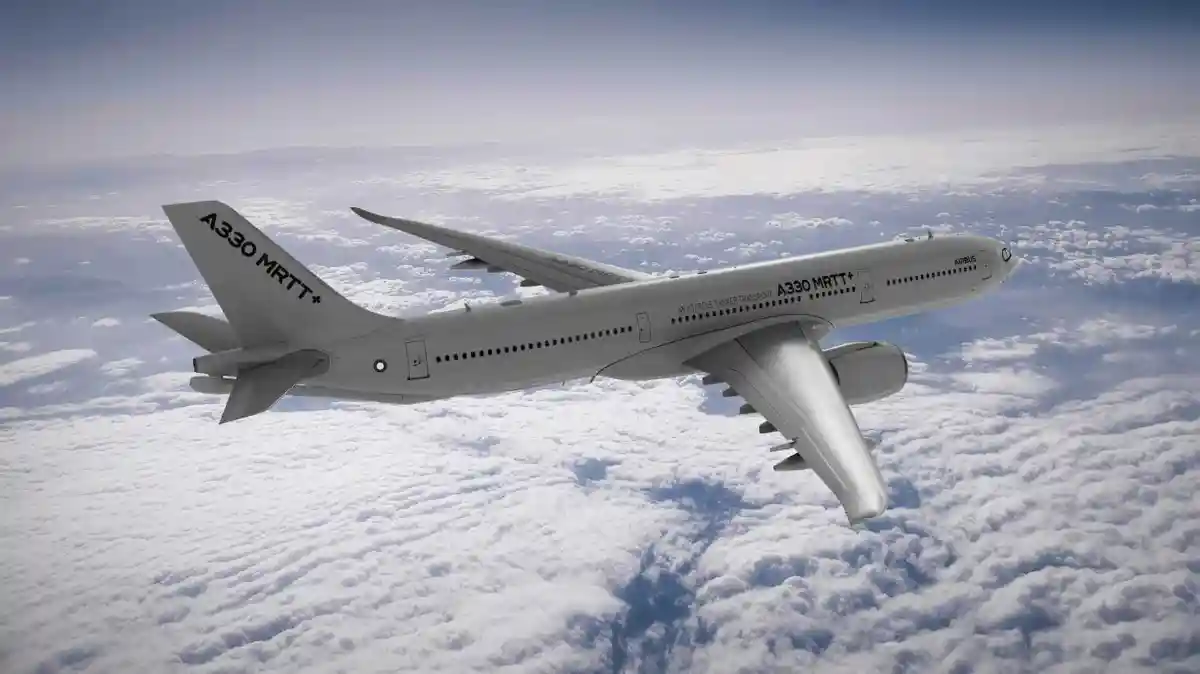
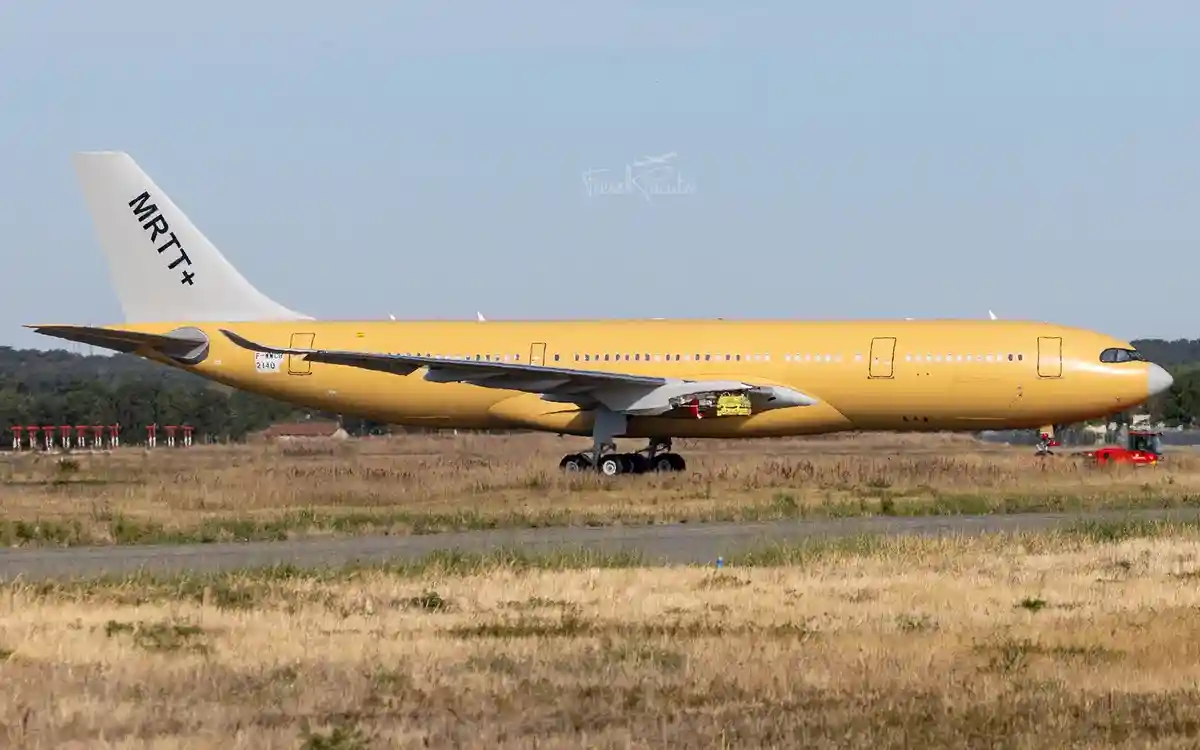
The first Airbus A330 MRTT+ has emerged outside the final assembly line in Toulouse, marking a major milestone for Airbus as it prepares to deliver the next-generation tanker to the Royal Thai Air Force (RTAF). The aircraft is the first example of the newly developed MRTT+ variant and represents an important expansion of Airbus’ already successful presence in the international aerial refueling market.
The aircraft was photographed after leaving the assembly line but has not yet received its Rolls-Royce Trent 7000 engines. Although it still has substantial work ahead, its appearance provides the first clear indication that Airbus’ latest tanker program is moving from development into production. The Thai aircraft is scheduled for delivery in 2029, following the RTAF’s order for a single A330 MRTT+ in September 2025.
The A330 MRTT+ is derived from the A330-800neo, combining the commercial aircraft’s updated aerodynamic and propulsion technology with the proven military architecture of the A330 MRTT. Airbus launched the variant at the Farnborough International Airshow in 2024, positioning it as an evolution of one of the world’s most widely adopted tanker and transport platforms. The new aircraft retains roughly 95% commonality with the existing A330 MRTT, allowing Airbus to build on an established design rather than develop an entirely new military airframe.
Airbus A330 MRTT+ Will Undergo Military Conversion in Spain
The Toulouse assembly milestone is only the beginning of the aircraft’s journey. Once the Trent 7000 engines are installed, the airframe will travel to Airbus Defence and Space in Getafe, Spain, where it will undergo its military conversion. This stage will transform the largely commercial A330neo into a fully equipped multi-role tanker transport aircraft.
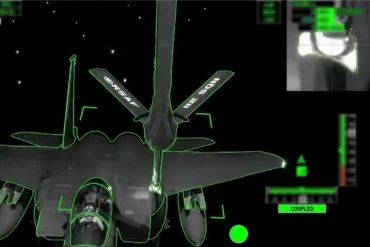
The conversion will include Airbus’ Aerial Refueling Boom System, alongside hose-and-drogue refueling equipment. These systems allow the aircraft to refuel compatible military aircraft while also retaining its ability to perform long-range strategic transport missions. The Thai aircraft will additionally receive an aeromedical evacuation configuration and VVIP cabin, giving the RTAF considerably more flexibility than a tanker designed solely around aerial refueling.
The MRTT+ also introduces meaningful aerodynamic and performance improvements. Its Trent 7000 engines, revised wings and redesigned wingtips are expected to reduce fuel consumption by approximately 8%, while maximum takeoff weight rises to around 242 tonnes. These improvements matter particularly in the tanker role, where fuel efficiency, payload and endurance directly influence how much fuel can be delivered to receiver aircraft and how long the tanker can remain available.
A330 MRTT+ Raises Pressure on Boeing KC-46A Pegasus
The emergence of the MRTT+ is strategically significant because it arrives while Airbus and Boeing compete aggressively for the global tanker market. Airbus has already established the A330 MRTT as a leading international refueling platform, with more than 85 aircraft ordered by 11 customers. Operators include Australia, Canada, France, Saudi Arabia, South Korea and Spain.
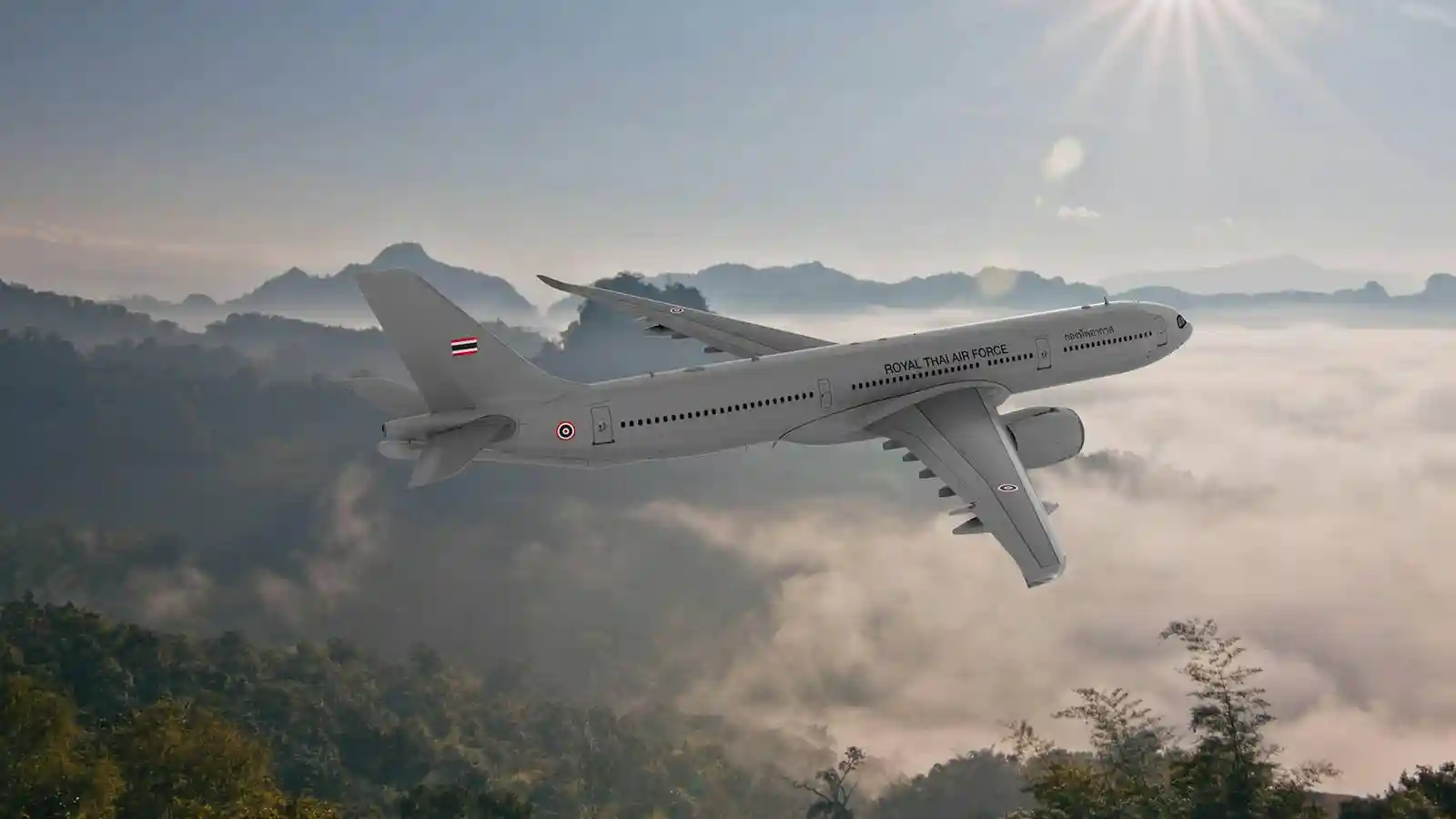
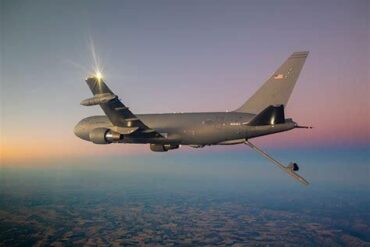
The new MRTT+ could strengthen that position further. Its A330neo foundation provides substantially greater range and fuel capacity than Boeing’s KC-46A Pegasus, which is derived from the smaller Boeing 767. The reference material places the Airbus aircraft’s range advantage at approximately 41%, an important distinction for air forces seeking tankers capable of supporting distant operations without frequent repositioning or additional tanker support.
For Thailand, the decision also extends beyond aircraft performance. Airbus has signed a memorandum of understanding with Thai Aviation Industries covering local maintenance and in-service support for the MRTT+. The arrangement supports Thailand’s Make In Thailand Policy, helping develop domestic technical expertise while improving long-term operational independence.
The first A330 MRTT+ therefore represents more than a new aircraft for the RTAF. As it moves from Toulouse to Getafe and eventually into Thai service, it demonstrates how Airbus is using the A330neo platform to push an already successful tanker concept further. For Boeing, the appearance of the first production aircraft is another reminder that the international tanker competition is becoming increasingly difficult to ignore.