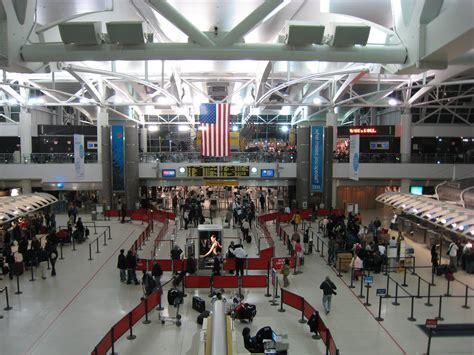
The United States dominates global aviation in a way no other country can quite match. While international hubs like Dubai and London often capture headlines, the real engine of air travel lies within the vast domestic network of the US. Passenger numbers tell the story best—millions moving daily across sprawling terminals, connecting cities, cultures, and economies.
Measuring airport size can be approached from many angles—runways, land area, destinations—but passenger volume remains the clearest indicator of real-world impact. It reflects not just infrastructure, but demand, connectivity, and economic significance.
What’s fascinating is that although US airports consistently rank among the busiest globally, their strength lies overwhelmingly in domestic travel. This unique dynamic shapes how these airports operate, expand, and compete on the world stage.
Below are the six largest airports in the United States by passenger volume—each one a colossal hub of movement, logistics, and global connectivity.
6. John F. Kennedy International Airport: America’s Global Gateway
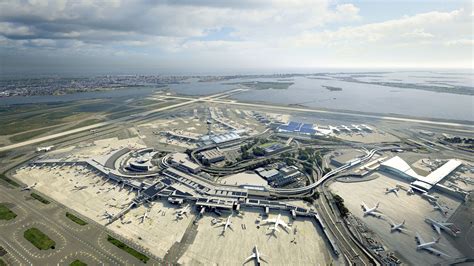
New York’s John F. Kennedy International Airport stands as one of the most recognizable aviation hubs in the world. Handling over 62.6 million passengers annually, JFK is not just busy—it’s strategically vital.
Positioned as the primary international gateway to the United States, JFK connects travelers to every inhabited continent. Its five terminals operate like a global crossroads, where cultures, languages, and itineraries intersect continuously.
JFK’s strength lies in its international dominance. Routes to London Heathrow, Paris Charles de Gaulle, and Rome Fiumicino consistently rank among its busiest, with the London corridor alone moving millions of passengers annually. This transatlantic route is often described as one of the most lucrative in aviation history.
Domestically, the airport maintains strong links to cities like Los Angeles and San Francisco, reinforcing its role as a bridge between coasts.
Airline presence is equally significant. American Airlines and Delta Air Lines maintain major operations, while JetBlue uses JFK as a core base. Interestingly, United Airlines has historically focused on Newark—but its anticipated return to JFK signals a shift in competitive dynamics.
JFK isn’t just an airport—it’s a symbol of global access, where the US meets the world at scale.
5. Los Angeles International Airport: The Pacific Gateway

Los Angeles International Airport, better known as LAX, handles approximately 73.7 million passengers, making it one of the busiest and most complex airports in North America.
What sets LAX apart is its hybrid identity. Unlike traditional hub airports, only a small percentage of passengers connect through LAX. The vast majority either begin or end their journeys here, reflecting Los Angeles’ role as a global destination.
This creates a unique operational environment—less about transfers, more about origin-and-destination traffic at scale.
LAX is also one of the few airports serving as a hub for all three major US legacy carriers: American Airlines, Delta Air Lines, and United Airlines. Add to that strong operations from Southwest and Alaska Airlines, and the result is a highly competitive ecosystem.
Internationally, LAX thrives as the gateway to the Pacific. High-demand routes to Tokyo Haneda, Seoul Incheon, Taipei, and London Heathrow consistently exceed one million passengers annually. These routes are not just busy—they are economically critical, linking the US to major global markets.
Despite a slight dip in passenger numbers, LAX remains a powerhouse driven by tourism, entertainment, and international business.
4. Denver International Airport: America’s Expansive Aviation Giant

Denver International Airport is a marvel of scale and efficiency, processing over 82.4 million passengers annually. But numbers alone don’t capture its significance.
Covering an astonishing 137.8 square kilometers, Denver is one of the largest airports on Earth. Its sheer size allows for continuous expansion, making it a long-term strategic asset in US aviation.
Its location is equally important. Positioned near the geographic center of the country, Denver acts as a natural connecting hub, linking east and west with remarkable efficiency.
United Airlines dominates operations here, holding nearly half the market share. Southwest and Frontier also maintain major bases, creating a diverse mix of full-service and low-cost connectivity.
The airport serves over 230 destinations, with nearly 200 domestic routes—making it the largest domestic hub in the United States. Key connections include Phoenix, Chicago, and Las Vegas, while international links extend to Cancun, Vancouver, and major European hubs like Frankfurt and London.
Denver’s ambition is clear: surpass 100 million passengers annually in the coming decades. With its infrastructure and location, that goal feels not just possible—but inevitable.
3. Chicago O’Hare International Airport: The Midwest Megahub
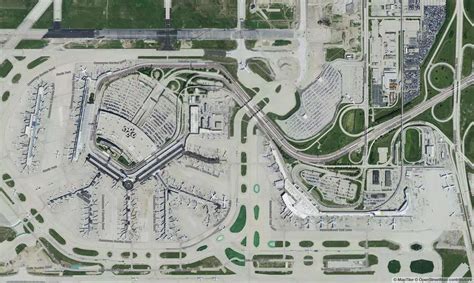
Chicago O’Hare International Airport is a titan of global aviation, handling nearly 85 million passengers each year. Its influence stretches far beyond the Midwest.
Originally opened in 1944, O’Hare has evolved into one of the most connected airports in the world. With nearly 300 destinations, it serves as a critical node in both domestic and international travel networks.
The airport operates with remarkable intensity—over 850,000 flight movements annually, making it one of the busiest in terms of aircraft operations.
United Airlines and American Airlines dominate here, controlling the majority of traffic. Their combined presence transforms O’Hare into a dual-hub powerhouse, where competition and capacity coexist at massive scale.
O’Hare’s connectivity is its defining feature. It consistently ranks among the top airports globally for network reach, linking travelers to virtually every major city in North America and beyond.
Key domestic routes include New York LaGuardia, Los Angeles, and Denver—each a high-frequency corridor supporting both business and leisure travel.
O’Hare doesn’t just move passengers—it moves the economy, acting as a central artery in the US transportation system.
2. Dallas/Fort Worth International Airport: The Airline Empire Hub
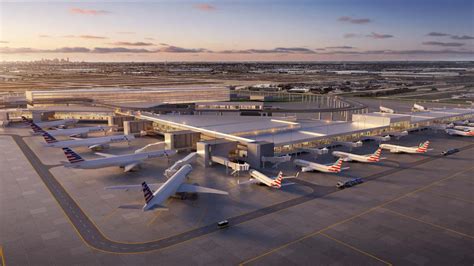
Dallas/Fort Worth International Airport is a masterclass in scale, efficiency, and airline dominance. Serving over 85.6 million passengers, it ranks among the largest airports in the world—not just in the US.
Spanning nearly 70 square kilometers, DFW is one of the largest airports by land area. Its design allows for smooth operations even at extreme volumes, minimizing congestion while maximizing throughput.
What truly defines DFW is its relationship with American Airlines. The airport is the airline’s largest hub, accounting for more than 75% of total traffic. This concentration creates one of the most powerful airline hubs globally.
The scale is staggering—thousands of daily flights, seamless connections, and unmatched domestic reach.
Internationally, DFW has strong ties to Mexico, its largest foreign market, alongside key routes to Europe and beyond. Domestically, Los Angeles stands out as its busiest route, highlighting the importance of cross-country travel.
DFW also leads in sustainability. It holds the distinction of being the largest carbon-neutral airport in the world, setting a benchmark for environmental responsibility in aviation.
This is not just an airport—it’s a strategic aviation empire, built around scale, dominance, and efficiency.
1. Hartsfield–Jackson Atlanta International Airport: The World’s Busiest Airport
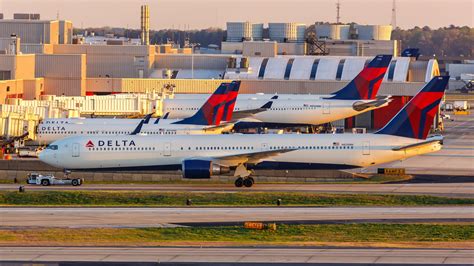
At the top stands Hartsfield–Jackson Atlanta International Airport, handling a staggering 106.3 million passengers annually. For decades, it has held the title of the world’s busiest airport—and for good reason.
Atlanta’s dominance is rooted in pure efficiency and strategic positioning. Located within a two-hour flight of most major US cities, it serves as the ultimate connecting hub.
Delta Air Lines is the driving force behind this dominance. With nearly 80% market share, Delta operates its largest hub here, running over 1,000 daily flights. This creates a tightly integrated network where connections are fast, frequent, and highly optimized.
Domestic routes like Orlando, New York LaGuardia, and Fort Lauderdale rank among the busiest, reflecting the airport’s role in both business and leisure travel.
Internationally, Atlanta maintains strong links to Europe and Latin America. Routes to Amsterdam and Paris—key hubs for Delta’s partners—highlight its global reach.
What makes Atlanta extraordinary is not just its size, but its operational precision. Despite handling more passengers than any other airport, it consistently delivers smooth transfers and minimal delays.
Atlanta isn’t just the busiest—it’s the benchmark for modern aviation efficiency.
Why US Airports Dominate Passenger Volume
The dominance of US airports in passenger rankings reveals a deeper truth about global aviation. Unlike regions heavily reliant on international travel, the United States thrives on high-frequency domestic connectivity.
Massive population centers, strong economic activity, and a culture of air travel combine to create unparalleled demand. Airports are not just transit points—they are critical infrastructure driving national mobility.
At the same time, global competition is intensifying. Airports like Dubai International are rapidly expanding, challenging US hubs in international traffic. Yet the American advantage remains clear: scale, network depth, and operational maturity.
The Future of America’s Busiest Airports
Looking ahead, these airports are not standing still. Expansion projects, sustainability initiatives, and technological upgrades are reshaping how they operate.
Biometric screening, automated baggage systems, and smarter air traffic management are becoming standard. Meanwhile, sustainability efforts—from carbon neutrality to renewable energy—are redefining what growth looks like.
Passenger numbers will continue to climb, driven by economic recovery and rising demand. Airports like Denver are already aiming for 100 million passengers annually, signaling the next phase of aviation expansion.
In this evolving landscape, one thing remains certain: these six airports will continue to lead, adapt, and define the future of air travel.
They are more than transportation hubs—they are the beating heart of global connectivity.