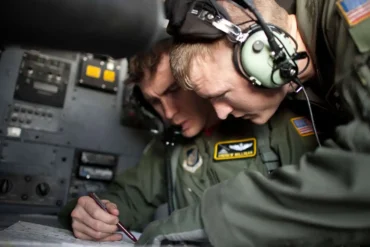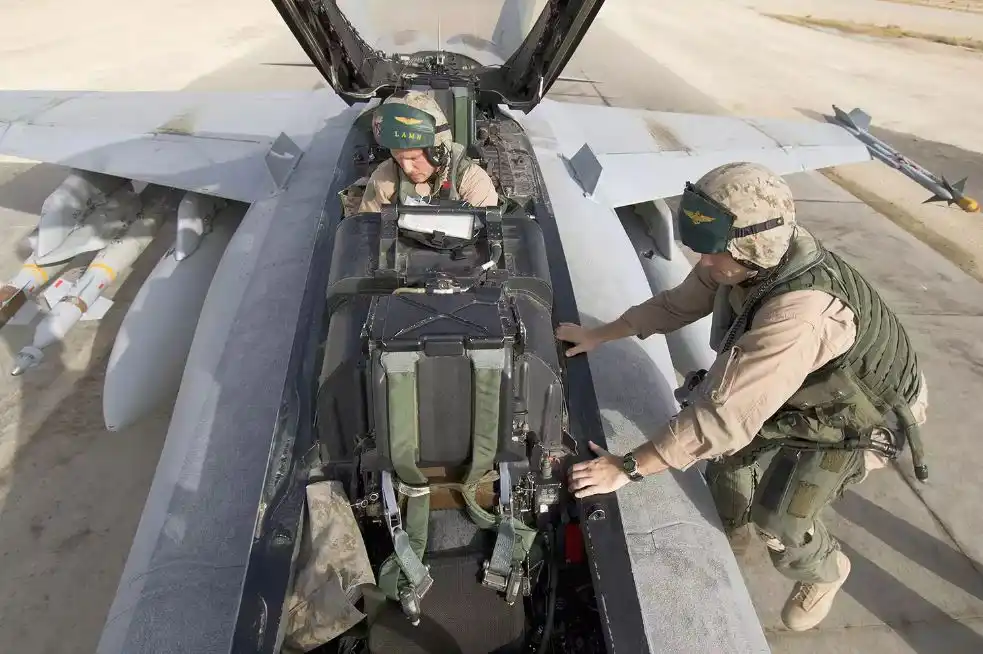
A Naval Flight Officer (NFO) is a highly trained aviation specialist in the United States Navy, responsible for operating some of the world’s most advanced tactical and communications systems. Unlike pilots who physically control the aircraft, NFOs manage mission-critical systems such as radar, navigation, electronic warfare, and weapons deployment. Their expertise is indispensable in ensuring mission success in high-stakes, dynamic environments.
Core Responsibilities of a Naval Flight Officer
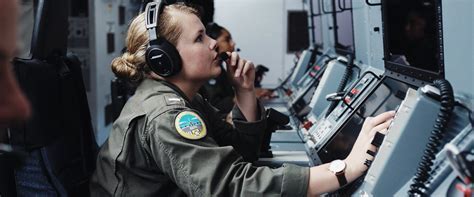
NFOs are pivotal in executing complex mission operations, including submarine tracking, air combat coordination, and electronic warfare. These roles require sharp decision-making skills and technical proficiency. Their duties include:
- Tracking and neutralizing enemy submarines – Operating sonobuoys and magnetic anomaly detection (MAD) systems to locate hostile submarines beneath the ocean surface.
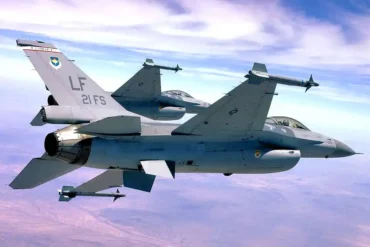
- Coordinating aerial combat missions – Assisting in airborne target acquisition, missile guidance, and tactical communication to outmaneuver adversaries.
- Conducting electronic warfare – Employing electronic countermeasures (ECM) to jam enemy radar systems and protect naval assets.
- Providing early warning support – Using advanced radar systems to detect potential threats and relay critical intelligence to command centers.
NFOs often operate in extreme conditions, such as flying 200 feet above stormy seas to pinpoint enemy positions. Their ability to make split-second decisions under pressure is vital to naval operations.
Specialized Training for Naval Flight Officers
Becoming an NFO requires extensive training across multiple disciplines, ensuring proficiency in both theoretical knowledge and hands-on experience. The training program includes:
Aerodynamics and Aircraft Systems
NFOs must grasp the fundamentals of aerodynamics, propulsion systems, and meteorology to understand how environmental factors affect aircraft performance.
Navigation and Flight Planning
Precision navigation is crucial, particularly for long-range surveillance and strategic bombing missions. NFOs train in advanced flight planning techniques, ensuring operational efficiency.
Safety and Tactical Systems
NFOs master emergency protocols, including ejection procedures, survival training, and countermeasure deployment. Additionally, they specialize in tactical systems such as radar operation, weapons control, and electronic warfare tools.
This intensive training ensures that NFOs can seamlessly integrate with their flight crews and effectively operate mission-critical equipment.
Aircraft Specializations for NFOs
NFOs operate across multiple aircraft platforms, each designed for specific mission objectives. Their expertise varies depending on their assigned platform:
Strike Aircraft
- EA-6B Prowler – Primarily used for electronic countermeasures, jamming enemy radar and disrupting communications.
Strike Fighter
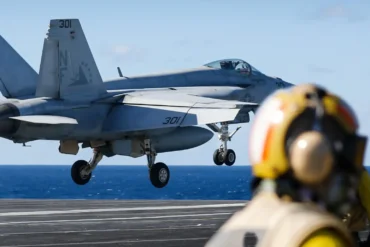
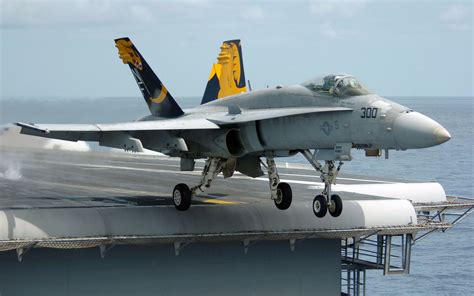
- F/A-18 Hornet & Super Hornet – These multi-role fighter jets execute precision strikes, air superiority missions, and close air support operations.
Airborne Early Warning Aircraft
- E-2C Hawkeye – This carrier-based radar aircraft provides battlefield surveillance and guides friendly forces with strategic intelligence.
Antisubmarine Warfare Aircraft
- P-3C Orion – Equipped with sonobuoys and torpedoes, the P-3C is instrumental in detecting and neutralizing enemy submarines.
NFOs assigned to these platforms become subject matter experts in their respective mission profiles, allowing them to execute precision strikes, defend naval forces, and conduct strategic reconnaissance.
Service Commitment and Career Path
Earning the prestigious Naval Flight Officer wings is a milestone that comes with a seven-year active-duty service commitment. This period reflects the U.S. Navy’s investment in training and skill development, ensuring NFOs are prepared for the challenges ahead.
Opportunities for Advancement
After gaining experience, NFOs can progress into senior leadership roles, including:
- Tactical coordinators (TACCOs) – Leading airborne mission execution.
- Mission commanders – Directing large-scale naval operations.
- Naval aviation instructors – Training future generations of NFOs.
Additionally, experienced NFOs may transition into specialized fields such as intelligence analysis, strategic planning, and unmanned aerial system (UAS) operations.
Joining the Naval Flight Officer Program
For those aspiring to become NFOs, several pathways exist, including:
ROTC Programs
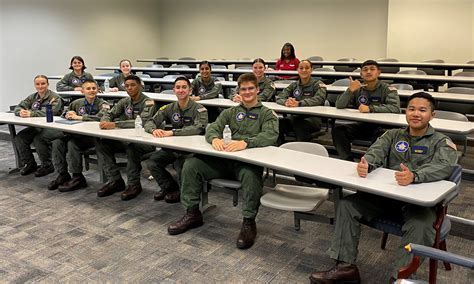
The Reserve Officers’ Training Corps (ROTC) provides a structured route for college students. Programs like the Boston University ROTC offer:
- Scholarship assistance to cover tuition costs.
- Leadership development training in preparation for officer commissioning.
Officer Candidate School (OCS)
For college graduates, OCS provides an intensive 12-week training course, equipping candidates with the knowledge and discipline required for naval aviation.
Conclusion
Becoming a Naval Flight Officer is a prestigious and challenging career path that demands exceptional technical skills, adaptability, and leadership. NFOs play a crucial role in naval aviation, utilizing advanced technologies to protect national security and execute high-stakes missions. Those who choose this path join an elite group dedicated to defending the United States Navy’s dominance in the skies and seas.
Frequently Asked Questions
1. What is the difference between a Naval Flight Officer and a pilot?
A Naval Flight Officer (NFO) specializes in mission systems such as navigation, radar, and weapons control, whereas a pilot physically controls the aircraft. Both roles are crucial in naval aviation, but NFOs focus on strategic operations and electronic warfare.
2. How long does it take to become a Naval Flight Officer?
The training process can take between 18 to 24 months, depending on the aircraft platform and specialization. After completing training, NFOs commit to seven years of active duty service.
3. What qualifications are required to become an NFO?
Candidates must have a bachelor’s degree, strong academic performance in math and science, and pass medical and physical fitness assessments. Additionally, they must complete officer training programs such as ROTC or OCS.
By choosing the Naval Flight Officer path, individuals embark on a career that blends aerospace technology, tactical strategy, and national defense, ensuring that the U.S. Navy remains at the forefront of global military operations.