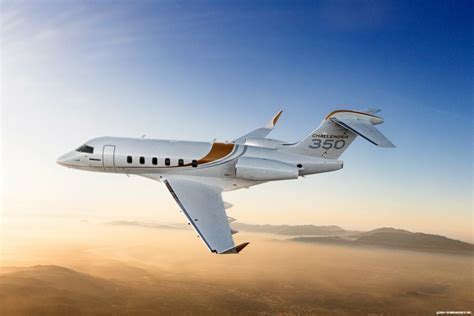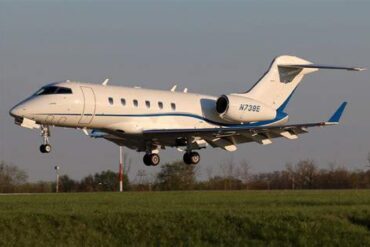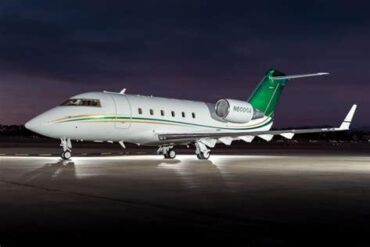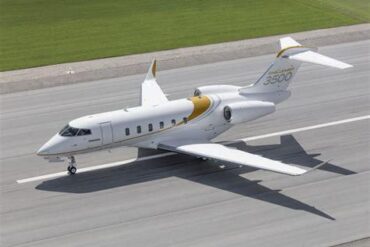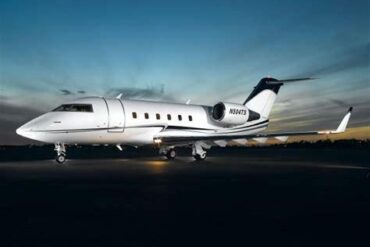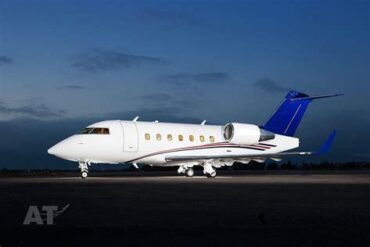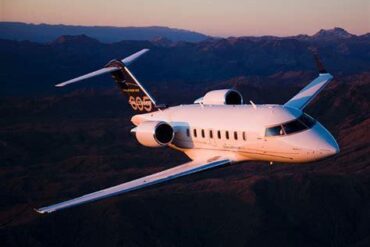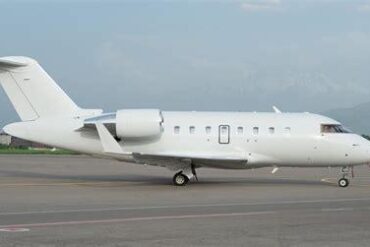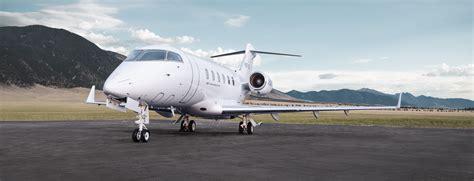
The Bombardier Challenger 300 has carved an unshakable legacy in the super mid-size business jet market. As a clean-sheet design developed by Bombardier Aerospace, it was crafted with one clear mission: to dominate a segment craving transcontinental range, high-speed performance, and superior cabin luxury without the operating costs of large jets. From its ambitious launch at the 1999 Paris Air Show to its continued evolution into the Challenger 350 and Challenger 3500, this aircraft family has proven to be a cornerstone in modern private aviation.
A Purpose-Built Business Jet with a Clear Objective
Originally launched as the Bombardier Continental, the Challenger 300 was never a derivative of the Challenger 600 series. Instead, it emerged from market analysis that identified a gap between the Learjet 60 and Challenger 604. Bombardier aimed to command at least a third of what was then a forecasted 1,000-unit market for super mid-size jets by 2012.
Unlike rebranded or stretched variants, the Challenger 300 was a true clean-sheet design. With a range of 3,100 nautical miles (5,741 km), it could connect most U.S. cities non-stop while cruising comfortably at Mach 0.80 (459 knots). It could climb to FL410 in just 18 minutes, even at maximum takeoff weight, while burning only 1,003 lb of fuel—a feat that was impressive for the class.
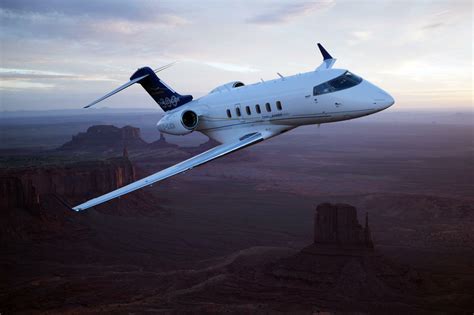
To achieve this performance, Bombardier assembled a network of best-in-class suppliers: Rockwell Collins delivered the Pro Line 21 avionics suite; AlliedSignal (now Honeywell) supplied the powerful AS907 turbofans; Mitsubishi Heavy Industries produced the advanced single-piece wing; and Taiwan’s AIDC was responsible for the aft fuselage and empennage.
From Prototype to Certification: A Race to Market
The first Challenger 300 prototype flew on 14 August 2001, and by March 2000, Bombardier had already secured 54 early orders—a strong indicator of market confidence. However, engine certification delays pushed service entry from late 2002 to early 2004. Certification was a staggered process: Transport Canada approved it on 31 May 2003, followed by FAA and EASA approvals shortly thereafter.
It entered service on 8 January 2004 with Flexjet, who would become its largest operator. At launch, the Challenger 300 was priced around $17.4 million, undercutting many competitors while offering superior range and cabin comfort.
Design Excellence: Form Meets Function
The semi-monocoque aluminum fuselage, paired with composite winglets and supercritical wings with a 27° sweep, makes for both aesthetic and aerodynamic efficiency. Winglets extend the total wingspan to 63 ft 10 in, reducing lift-induced drag by 17%.
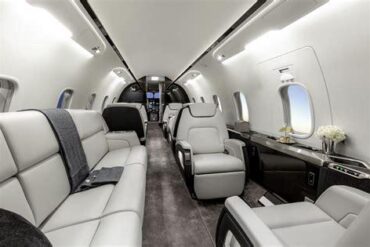
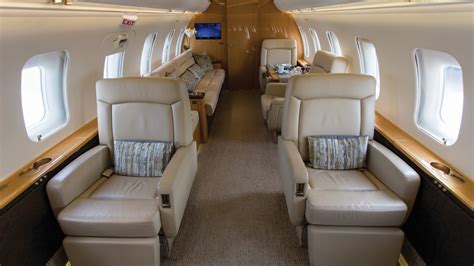
Internally, the Challenger 300’s cabin was designed for eight passengers, though up to 16 occupants could be accommodated in high-density configurations. Standard features included berthable seats, fully functional lavatories, and modern entertainment and connectivity systems.
The Rockwell Collins Pro Line 21 cockpit featured four large LCDs, dual FMS with LPV/RNP, TCAS II, EGPWS, MultiScan weather radar, and dual VHF/HF radios. Flight controls were a blend of modern and traditional: manually actuated ailerons, hydraulically powered elevators and rudder, and fly-by-wire spoilers serving both as spoilerons and ground spoilers.
The Challenger 350: A Worthy Successor
On 2 March 2013, Bombardier revealed the Challenger 350, a thoroughly improved variant with Honeywell HTF7350 engines generating 7,323 lbf of thrust. The new engines, with hot-section improvements and FADEC, provided more thrust and better fuel economy. The aircraft gained 20% larger windows, a reimagined cabin interior, and less acute canted winglets that extended its wingspan to 69 feet.
The Challenger 350’s range was extended to 3,200 NM (5,926 km), and it carried eight passengers at Mach 0.80, burning just 1,535 lb of fuel per hour. Enhanced cabin ergonomics included electrical outlets, USB ports, Lufthansa Technik IFE system, and wireless connectivity. Buyers could also opt for a three-place divan or a belted lav seat, features usually found in larger jets.
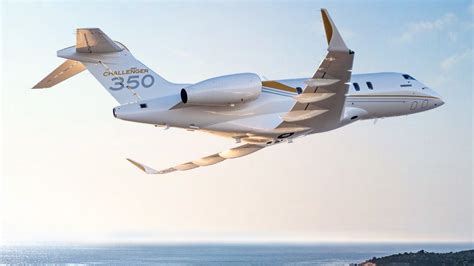
The launch customer was NetJets, which placed a massive order for 75 firm aircraft with options for 125 more. Certification arrived quickly in 2014, and by July 2019, Bombardier had delivered its 300th Challenger 350, claiming a 58% market share in the super mid-size segment.
Challenger 3500: The Next Evolution
On 14 September 2021, Bombardier raised the bar once more with the announcement of the Challenger 3500. Priced at $26.7 million (rising to $27.2M by 2023), it retained the 350’s performance while introducing auto-throttles, redesigned seats, and an enhanced cabin experience aligned with Bombardier’s flagship Global series.
This iteration marked Bombardier’s commitment to continuous improvement, rather than radical overhaul—an approach that keeps development costs low while delivering real value to buyers.
Operational Success and Fleet Distribution
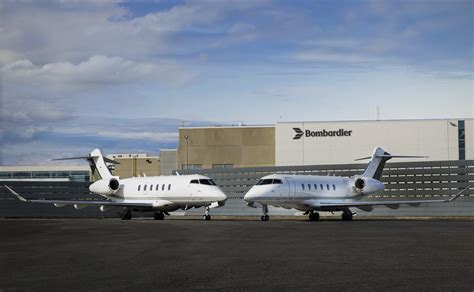
Since entering service, the Challenger 300 family has achieved a remarkable dispatch reliability rate of 99.79%. By 2015, over 550 aircraft were operating worldwide. North America accounted for the bulk (402), but Western Europe (75), Latin America (37), and other regions including India, Africa, and Asia-Pacific also featured prominently.
Major operators include Flexjet, XOJET, VistaJet, and NetJets, each leveraging the Challenger’s reliability and cost-efficiency for their fractional and charter operations. Flexjet alone operated over 30 Challenger 300s, while NetJets had 26 Challenger 350s delivered by 2015.
Bombardier wasn’t shy about price adjustments to maintain competitiveness. In 2017, the manufacturer reduced pricing by $7 million to counter the challenge posed by the Embraer Legacy 500.
Market Dynamics and Safety Record
By the early 2020s, second-hand Challenger 300s traded between $7 million and $20 million, depending on hours, configuration, and service history. The aircraft held up well in value, with five-year-old airframes retaining 64% of original price—a strong performance for any business jet.
However, the family hasn’t been without controversy. In 2022, the FAA issued an AD requiring additional stabilizer checks due to multiple control anomalies. A 2023 fatal incident involving a violent pitch caused by automated system failure further emphasized the importance of crew vigilance and system redundancy.
More recently, on 18 December 2024, a Challenger 300 (registration LV-GOK) crashed near San Fernando Airport, Argentina. The aircraft, arriving from Punta del Este, Uruguay, struck a residence and burst into flames, killing both crew members.

Technical Comparison: Challenger 300 vs. Challenger 350
- Passengers (typical): 8–9
- Crew: 2
- Max Range: 3,100 NM (300) / 3,200 NM (350)
- Wingspan: 63 ft 10 in (300) / 69 ft (350)
- MTOW: 38,850 lb (300) / 40,600 lb (350)
- Engines: 2× Honeywell HTF7000 (300) / HTF7350 (350)
- Thrust: 6,826 lbf (300) / 7,323 lbf (350)
- Cruise Speed: Mach 0.80 (850 km/h)
- Takeoff Distance: 4,810 ft (300) / 4,835 ft (350)
Conclusion: A Legacy Still Ascending
The Bombardier Challenger 300 series has matured into one of the most dependable and widely respected platforms in private aviation. By offering true coast-to-coast range, low operational costs, and a cabin that rivals larger jets, it transformed expectations for what a super mid-size jet could deliver. From the original 300 to the refined 3500, Bombardier has managed to preserve continuity while introducing meaningful innovation—ensuring the Challenger remains the aircraft of choice for operators worldwide.