
Travelers seeking to circumnavigate the globe often come across the alluring concept of a Round-the-World (RTW) ticket—a single, structured itinerary that promises global reach at a packaged price. But in today’s hyper-connected, budget-conscious travel environment, does this once-golden ticket still make sense? The answer lies in examining how RTW tickets have evolved, their limitations, hidden values, and the nuanced calculus of flexibility, pricing, and personal travel style.
The Rise and Fall of the RTW Ticket
The RTW ticket has a storied history. In the golden era of air travel, it offered an elegant solution for globetrotters: buy one fare, pick a direction, and circle the planet with multiple stops at a fraction of the cost of individual legs. Student and youth agencies like STA Travel and Travel Cuts once issued these tickets for mere hundreds of dollars, granting globe-hopping freedom that today’s travelers can only dream of.

However, airline deregulation, the rise of low-cost carriers, and changes in pricing structures have transformed the landscape. Today’s RTW tickets, such as those offered by Star Alliance or OneWorld, are less flexible, often expensive, and come with dense rules. Most operate under strict routing conditions: travel in one direction (east or west), avoid backtracking, finish within 12 months, and adhere to a single alliance.
Understanding Modern RTW Limitations
The modern RTW product is deeply structured. While this may appeal to some, it chafes against the sensibilities of today’s independent, flexible traveler. Airlines require locked-in travel dates for every leg, often months in advance. Even small changes can incur hefty fees or be entirely prohibited depending on fare class. Moreover, not all carriers allow RTW booking in their lowest fare buckets, and award availability for RTW tickets—especially in premium cabins—is severely limited.
The restrictions don’t stop there:
- No backtracking means overland travel (e.g., Portugal to Italy via train) may not be feasible within the RTW framework.
- Alliance-specific routing limits access to destinations not served by member airlines.
- Geographic crossing rules (such as only one crossing between continents like Europe and Asia) create logistical headaches.
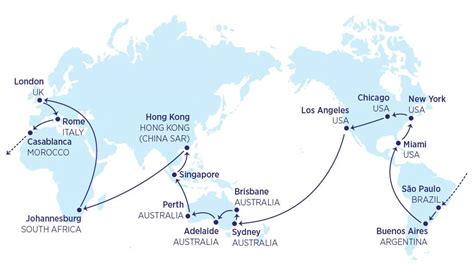
Are There Still Use Cases Where RTW Makes Sense?
Surprisingly, yes—but within specific conditions. When booked strategically, RTW tickets—especially via award redemptions—can offer extraordinary value in premium cabins.
For example, All Nippon Airways (ANA) allows U.S.-based travelers to book an RTW award in business class for as little as 105,000–125,000 Amex Membership Rewards points plus taxes and fees. Travelers have reported flying up to 15 legs in mostly business class for under $1,500 in surcharges. One user’s itinerary included:
- Newark → Lisbon
- Nairobi → Istanbul → Bangkok
- Singapore → Hong Kong → Taipei
- Narita → Honolulu
Despite the painstaking research and need to find availability in specific fare classes, the per-mile value of points was astonishing. Such trips offer an unparalleled opportunity for premium travel on a budget.

The Hidden Costs of Convenience
Even when booked with points, RTW tickets often disguise complexity as convenience. Booking through ANA or Lufthansa’s RTW platforms means understanding how mileage caps, fare classes, and regional stopover rules interplay. While carriers like Lufthansa allow online planning and phone confirmation, many travelers find themselves frustrated by the opaque and inconsistent interfaces.
Additionally, one must factor in geopolitical disruptions, carrier cancellations, and even airline insolvencies, which can turn a rigid itinerary into a logistical nightmare. While Star Alliance RTW fares may appear cheaper when comparing direct business class tickets, they still limit spontaneous detours, changes of heart, or immersive stays prompted by local discovery.
DIY RTW: The Flexible Alternative
For those prioritizing spontaneity over structure, DIY RTW planning is often the better path. With tools like Google Flights, AirTreks, and ITA Matrix, travelers can stitch together one-way or multi-stop trips using a combination of full-service and low-cost carriers.
This approach rewards those willing to be strategic:
- Starting itineraries from cheaper hubs (like Cairo or Tokyo) can drastically reduce total fares.
- Booking return tickets to international gateways and branching off with regional one-ways often yields better flexibility and price efficiency.
- Points and miles can be reserved for high-value long-haul redemptions while using cash for regional hops.
Such a structure also enables the integration of overland transport—trains in Europe, buses across Southeast Asia, ferries in the Mediterranean—allowing for immersive travel between destinations without counting against airline-imposed segment limits.
Comparing Real RTW Scenarios
Consider two travelers:
Traveler A booked a Star Alliance RTW business class itinerary through Lufthansa, visiting major cities like London, Istanbul, Singapore, Bali, and Tokyo. They paid roughly $15,000—saving over $8,000 compared to booking each leg separately.
Traveler B used 125,000 Amex points to book ANA’s RTW award, flying a similar route with some economy segments and paid about $1,400 in fees.
Meanwhile, Traveler C booked individual one-way tickets, avoided alliance constraints, and incorporated trains, budget flights, and overland border crossings—spending just under $7,000 over 10 months while retaining the freedom to adapt at each stop.
Each approach served a purpose, but flexibility and personal preference were the ultimate arbiters of value—not the sticker price alone.
When RTW Is Absolutely Not Worth It
For many modern adventurers, RTW tickets fail to meet the dynamic needs of long-term travel:
- Families traveling with children find the rigidity of RTW timing incompatible with real-life unpredictability.
- Digital nomads or retirees often want to stay longer in one place—RTW’s calendar constraints defeat that purpose.
- Backpackers and budget travelers find better deals in regional transport networks and last-minute fares.
- Event-driven travelers, like those chasing festivals or nature phenomena, can’t afford locked-in dates months in advance.
Moreover, reliance on a single airline alliance means missing out on regional airlines that might offer more convenient or culturally rich options. In destinations like Indonesia or India, local airlines provide vastly superior connectivity and price compared to global carriers.

Final Verdict: Is RTW Still Worth It?
The value of an RTW ticket depends not only on the price or number of stops, but on how a traveler defines their journey. For those craving efficiency, structure, and luxury, a well-planned RTW fare—especially using points—can offer unbeatable value.
However, the more popular modern archetype—the slow traveler, remote worker, cultural explorer, or minimalist nomad—is better served by assembling a flexible patchwork of regional routes, maximizing real-world experiences over flight path optimization.
Key Takeaways:
- RTW tickets are no longer universally economical; their value is situational and often limited to award bookings in premium classes.
- Flexibility is the major trade-off: great for planners, bad for improvisers.
- DIY RTW planning requires more effort but often delivers richer, cheaper, and more adaptable experiences.
- Award-based RTW options, such as ANA’s, offer the best value per dollar or point when well-researched.
For travelers today, the better question might not be “Is it worth buying a round-the-world ticket?” but rather, “What kind of round-the-world traveler am I?”