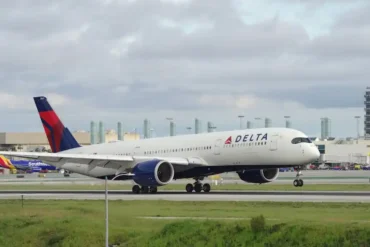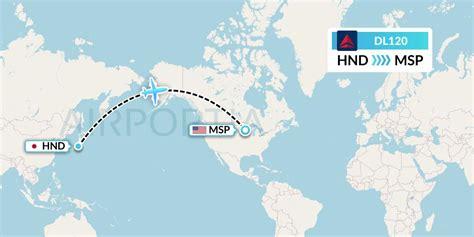
On June 29, 2025, a routine transpacific flight from Tokyo Haneda Airport (HND) to Minneapolis–Saint Paul International Airport (MSP) turned into a logistical challenge for Delta Air Lines, as Flight DL120 was abruptly canceled due to a newly discovered hydraulic malfunction combined with complex weight restriction complications.
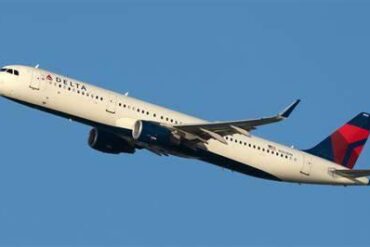
The affected aircraft, an 8.1-year-old Airbus A350-900, bearing registration N501DN, was already positioned on the taxiway and prepared for departure when the technical setback unfolded. The aircraft had completed passenger boarding and had begun taxiing toward the runway. During pre-takeoff checks, the flight crew detected a critical hydraulic system malfunction, forcing them to immediately abort the takeoff sequence.
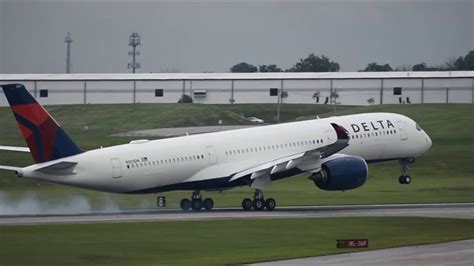
The flight crew swiftly directed the aircraft to a designated hardstand position, where Delta’s technical maintenance team boarded to assess and rectify the fault. Initial reports indicated that mechanics were able to resolve the primary hydraulic issue on-site. However, during these checks, another significant concern emerged: the aircraft, fully loaded with passengers, cargo, and fuel for the long-haul flight to Minneapolis, was unable to comply with stringent weight restrictions necessary for a safe departure.
The situation became increasingly complex as Delta’s operations teams deliberated potential solutions. Options considered included offloading cargo or reassigning passengers to reduce overall weight. Nevertheless, after extensive consultation with Delta’s headquarters in the United States and technical advisors, the airline opted to cancel the flight entirely, citing safety as the overriding priority.
The cancellation was a considerable disappointment for passengers who had already boarded and prepared for the transpacific journey. Recognizing the inconvenience, Delta Air Lines implemented an extensive recovery and compensation protocol designed to minimize disruption and maintain customer satisfaction.
Delta’s Passenger Support and Compensation Measures
Immediately following deplaning, Delta’s ground staff mobilized to assist stranded travelers. Affected passengers received clear instructions on alternative travel arrangements, with many rebooked on subsequent Delta-operated flights departing from Tokyo Haneda to Los Angeles (LAX). From Los Angeles, connections were organized to Minneapolis, Boston Logan International Airport (BOS), and other onward destinations.
Delta ensured the prompt rerouting of checked baggage, reducing concerns over lost or delayed luggage. The airline also extended hotel accommodations, meal vouchers, and transport assistance to travelers facing extended layovers. Each passenger received hotel vouchers valued up to JPY 30,000, with an additional JPY 5,000 allowance for meals and local transport. Passengers could either utilize Delta’s partnered accommodations or independently select hotels of their choice.
In an effort to address the inconvenience swiftly and without bureaucratic delays, Delta issued automatic compensation of $800 in e-credit to each affected traveler. This e-credit, redeemable toward future Delta flights, required no formal request or application process. Additionally, select passengers, particularly those with Delta SkyMiles Medallion elite status, received further goodwill gestures, including complimentary Delta One cabin upgrades for segments of their rebooked itineraries.
The Aircraft’s Troubles Extend Beyond Haneda
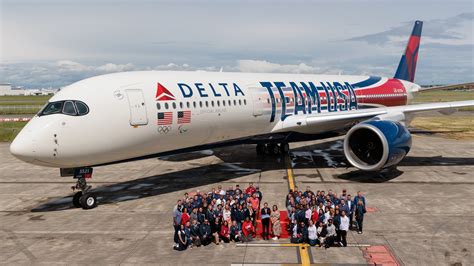
The same aircraft, N501DN, has faced operational disruptions beyond the Tokyo incident. Records reveal that the Airbus A350-900 was also slated for a Los Angeles to Paris service in the preceding days, which was similarly canceled. Following the June 29 event, Delta organized Ferry Flight DL9960, repositioning the aircraft from Tokyo Haneda to Los Angeles on June 30 without passengers aboard.
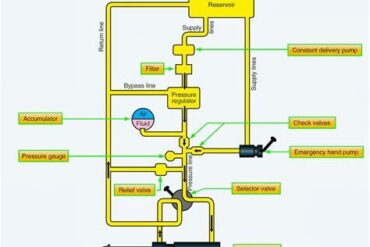
While the precise technical details of the hydraulic malfunction have not been fully disclosed, experts note that hydraulic systems are critical to various flight control surfaces and landing gear operations. Such malfunctions, even when resolved, often trigger secondary safety protocols, including weight and balance reevaluations to ensure flight integrity, especially for long-haul operations crossing the Pacific Ocean.
Recent Aviation Incidents Highlight Ongoing Technical Challenges
Delta’s Tokyo incident came just days after a similar high-profile event involving United Airlines. On June 24, 2025, United Airlines Flight UA12, operated by a Boeing 767-300, was forced to abort takeoff at high speed from Zurich Airport (ZRH) en route to Chicago O’Hare International Airport (ORD).
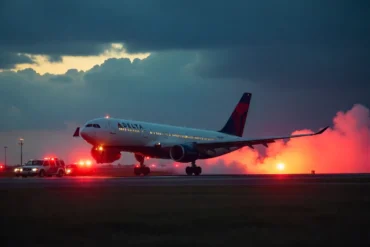
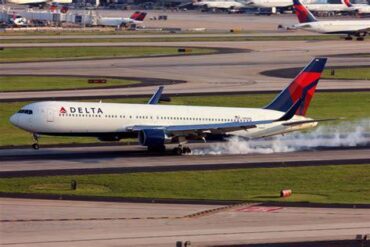
During acceleration on Runway 16, at approximately 145 knots, the flight crew executed a rejected takeoff due to a yet-unspecified technical anomaly. The aircraft safely decelerated past the intersection with Runway 28, though multiple main landing gear tires deflated during the process. Emergency services responded promptly, and all 142 passengers disembarked via mobile stairs, with no reported injuries.
The United incident underscores the technical intricacies of modern aviation, where sophisticated systems, while reliable, can experience critical faults requiring immediate action. Although that event resulted in a grounded aircraft, Zurich Airport operations resumed with minimal disruption, contrasting with the broader travel impact seen in Delta’s case.
Operational Complexity and the Weight Factor
Aircraft operating ultra-long-haul routes, such as DL120’s Tokyo to Minneapolis segment, face meticulous planning requirements concerning weight and balance calculations. Fuel load, passenger count, baggage, and cargo are carefully assessed to ensure regulatory compliance and optimal aircraft performance.
In Delta’s situation, the hydraulic issue likely necessitated mechanical interventions or system overrides that altered the aircraft’s weight metrics. The resulting imbalance pushed the aircraft beyond acceptable thresholds for takeoff, particularly under the constraints of Haneda’s runway configurations and prevailing weather conditions.
Airline sources indicate that mitigating such weight-related challenges often involves delicate decisions, including the potential offloading of passengers or cargo. However, with limited viable options and safety paramount, Delta’s ultimate decision to cancel DL120 reflects industry best practices prioritizing operational integrity over schedule adherence.
Delta’s Response Reflects Broader Industry Trends
The comprehensive recovery strategy implemented by Delta exemplifies a growing trend among major international carriers to enhance passenger care during disruptions. In an era where customer loyalty hinges on responsive, transparent service, airlines are investing in:
- Real-time communication platforms to update passengers swiftly
- Automated compensation systems to expedite goodwill gestures
- Enhanced ground support teams to assist during delays and cancellations
- Flexible rebooking arrangements minimizing traveler inconvenience
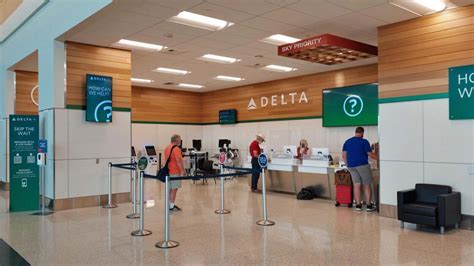
Delta’s provision of hotel accommodations, meal allowances, transportation, and automatic e-credit compensation aligns with this industry shift toward proactive passenger support.
Conclusion: A Case Study in Crisis Management
The cancellation of Delta Air Lines Flight DL120 on June 29, 2025, serves as a stark reminder of the unpredictable nature of global aviation. Technical malfunctions, particularly involving critical systems like hydraulics, demand immediate and uncompromising attention to safety protocols.
While passengers understandably faced frustration and delays, Delta’s structured, transparent, and generous response helped mitigate the situation’s impact. The airline’s commitment to rebooking travelers efficiently, providing necessary accommodations, and offering meaningful compensation reflects evolving expectations in airline crisis management.
As aircraft become increasingly complex, the potential for technical disruptions persists. However, the aviation industry’s focus on technological advancements, robust maintenance protocols, and customer-first recovery processes offers reassurance to travelers worldwide. Delta’s handling of the DL120 incident demonstrates how swift action, coupled with clear communication and tangible support, can uphold passenger trust—even amid operational adversity.