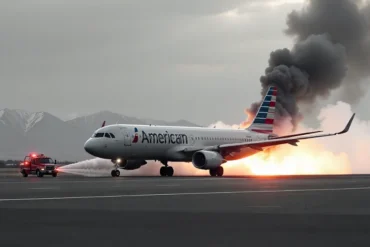
On Saturday, July 27, 2025, a serious incident unfolded at Denver International Airport when an American Airlines flight bound for Miami caught fire during its attempted takeoff. The flight, designated as AA-3023, involved a Boeing 737 MAX 8 carrying 173 passengers and crew members. The alarming event occurred around 2:45 p.m. local time, mere moments into the aircraft’s initial takeoff roll. Preliminary reports from the Federal Aviation Administration (FAA) suggest that the fire originated from a malfunction in the aircraft’s landing gear, prompting the pilot to abort the takeoff and initiate an emergency evacuation.
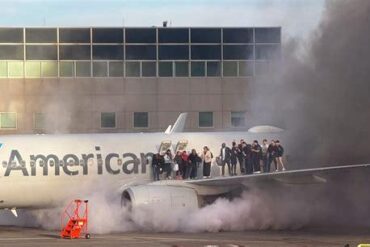
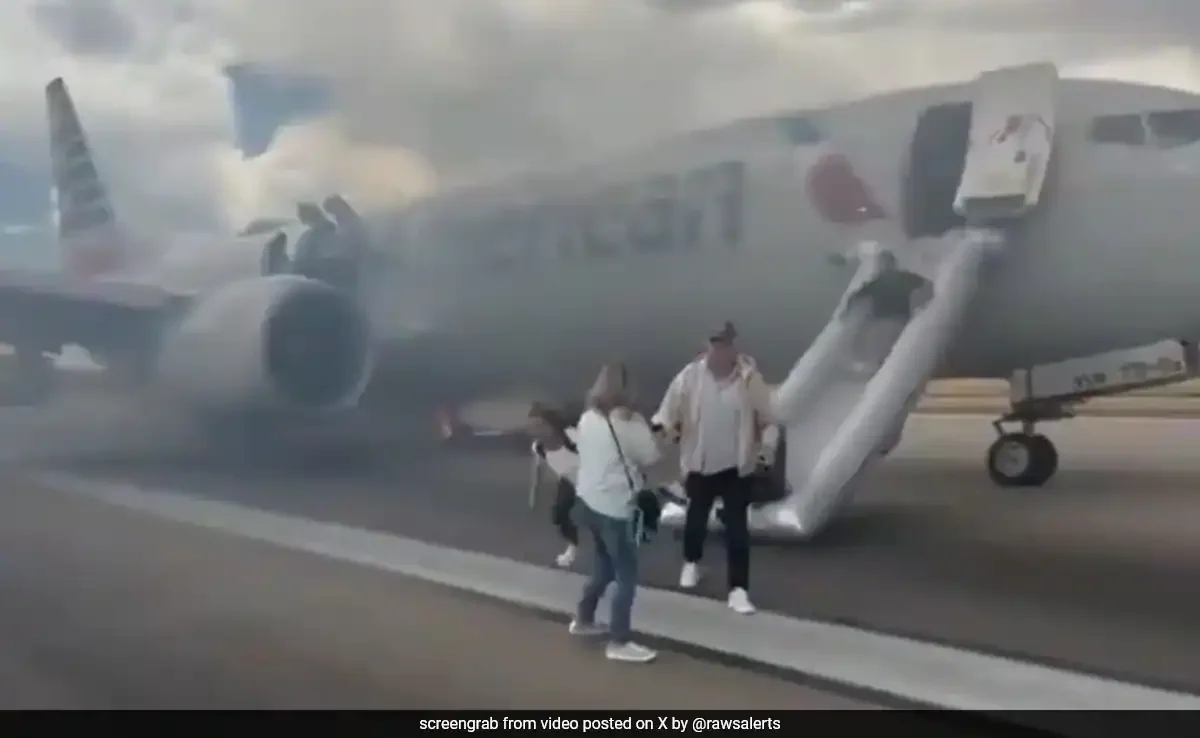
As flames erupted from under the plane, the flight crew acted swiftly, performing an emergency evacuation. All passengers were evacuated onto inflated emergency slides as thick smoke and flames became visible. The Denver Fire Department and the airport’s own Aircraft Rescue and Firefighting (ARFF) team responded promptly, managing to extinguish the fire by 5:10 p.m. Fortunately, only minor injuries were reported; five individuals received medical treatment on-site, with one passenger transported to a hospital due to injuries sustained during the evacuation process.
Following the incident, American Airlines issued an official statement linking the fire to a mechanical issue related to one of the aircraft’s landing gear tires. Preliminary maintenance evaluations indicated a failure in the tire assembly, which likely triggered the visible smoke and flames during the takeoff attempt. As a precaution, the involved Boeing 737 MAX 8 has been removed from active service and is undergoing a thorough technical assessment by the airline’s maintenance team in conjunction with federal regulators. Under FAA airworthiness standards specified in 14 CFR Part 39, the aircraft will not be returned to service until it passes a comprehensive safety inspection and receives formal clearance from both the airline’s engineering team and FAA-certified inspectors.
After the successful evacuation, all passengers were transported back to the terminal via airport shuttle buses, where they were rebooked on alternate flights or provided accommodations. American Airlines reiterated its commitment to passenger and crew safety, praising the crew for their quick and professional response during the crisis.
In light of the incident, the FAA has initiated a formal investigation as outlined in FAA Order 8020.11, which governs aircraft incident and accident investigations. The FAA aims to examine all relevant data related to the flight, including maintenance records, tire specifications, landing gear performance, and crew observations. This comprehensive review will involve collaboration with the FAA’s Aircraft Certification Service (AIR) and Flight Standards Service (AFS) to ascertain the root cause of the mechanical failure. Depending on the findings, the investigation may lead to Airworthiness Directives (ADs) or revised maintenance alerts addressing systemic issues identified during the review.
This incident marks the second fire-related occurrence involving an American Airlines Boeing 737 at Denver International Airport within just five months. A similar event transpired in March 2025, when another American Airlines flight bound for Dallas experienced a fire on the tarmac, also attributed to ground-level mechanical failures. While no fatalities have resulted from either incident, the repeated occurrences have ignited public and industry concerns regarding aircraft maintenance practices and safety inspection protocols, particularly for older aircraft models within the Boeing 737 series operating on high-traffic routes.
Aviation safety experts are advocating for more stringent maintenance audits and pre-departure checks, especially for aircraft functioning in high-altitude environments like Denver, where equipment stress can be exacerbated. Passengers who were aboard the ill-fated flight expressed their gratitude towards the flight crew, commending their rapid response and calm demeanor amid the chaos. Video footage captured from the runway revealed passengers evacuating down slides as flames licked at the aircraft’s exterior, highlighting the urgency of the situation.
The FAA and the National Transportation Safety Board (NTSB) are set to continue their investigations to determine whether additional safety regulations or guidance should be implemented for similar aircraft types. As the aviation industry moves forward, the outcomes of these inquiries may have significant implications for safety standards and operational protocols, ensuring that such harrowing incidents become increasingly rare.