South African regional carrier Airlink has launched an extensive passenger tracing and aircraft sanitisation operation after revelations that travellers linked to a hantavirus outbreak aboard the expedition cruise ship MV Hondius likely boarded a commercial flight from the remote island of St Helena to Johannesburg. The incident has triggered concern among aviation authorities and public health officials across multiple countries as investigators work to determine the scale of potential exposure.
The outbreak, connected to passengers aboard the polar expedition vessel operated by Oceanwide Expeditions, has drawn international attention after at least one traveller died shortly after arriving in South Africa. The situation escalated rapidly once health authorities confirmed hantavirus as the cause of death, prompting airlines, governments, and medical agencies to activate tracing protocols.
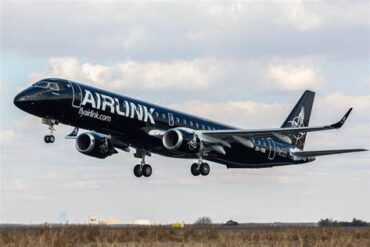
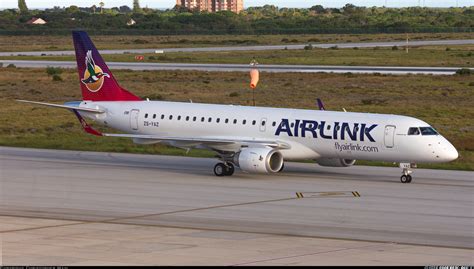
The affected flight, Airlink Flight 4Z 132, departed St Helena Airport on 25 April 2026 carrying 82 passengers and six crew members aboard an Embraer ERJ-190AR registered as ZS-YAD. The aircraft completed the four-hour journey to Johannesburg without any indication at the time that infected passengers may have been onboard.
The event has become one of the most closely watched aviation-related public health incidents involving the remote South Atlantic island in recent years, highlighting the challenges of disease management in isolated territories connected to global travel networks through limited transport links.
Hantavirus Outbreak on MV Hondius Sparks International Health Concerns
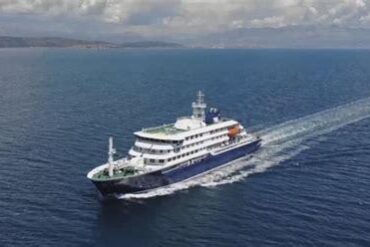
The crisis began aboard the MV Hondius, an expedition cruise vessel that had been operating voyages in remote regions before arriving near St Helena. Oceanwide Expeditions later confirmed that 30 passengers disembarked on the island, including one individual who had already died on 11 April.
Because St Helena has extremely limited transportation infrastructure, passengers leaving the island had only two realistic options: a slow ten-day voyage aboard the cargo vessel MV Helena or the weekly Airlink service to Johannesburg. Aviation immediately became the most probable route for potentially exposed travellers.
Health officials later discovered that one of the passengers who travelled onward through Johannesburg was a 69-year-old Dutch woman who attempted to continue her journey to the Netherlands on a KLM flight. Airline staff reportedly refused her boarding because of her deteriorating condition. She died in hospital on 26 April, one day after arriving in South Africa.
That fatality intensified fears that infected travellers may have unknowingly moved through several international transit points before authorities became aware of the outbreak.
Airlink Responds With Voluntary Passenger Outreach
Airlink stated that it was only officially informed about the situation on 3 May after South African health authorities confirmed that a passenger from the St Helena service had died from hantavirus-related complications. By then, more than a week had passed since the flight landed in Johannesburg.
The airline immediately handed over the full passenger manifest along with detailed seating assignments to health investigators. Although responsibility for official contact tracing rested with South Africa’s Department of Health, Airlink independently decided to contact everyone onboard the aircraft.
According to airline representatives, management chose not to rely solely on government outreach systems. Every passenger was informed about the situation and provided with official telephone numbers and email addresses connected to the Department of Health’s response operation.
The airline’s unusually proactive stance reflected growing concern within the aviation industry about how quickly infectious diseases can spread through interconnected travel systems, particularly when symptoms do not appear immediately after exposure.
Crew Members Isolated as Aircraft Undergoes Intensive Sanitisation
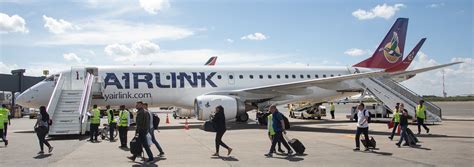
Airlink also placed the crew members from the affected flight under precautionary home isolation despite no formal order requiring quarantine. The crew included two pilots, two cabin crew members, and two onboard technicians.
The decision demonstrated the uncertainty surrounding hantavirus exposure protocols within commercial aviation. Unlike highly studied respiratory diseases, hantavirus cases linked to air travel remain exceptionally rare, leaving airlines with limited operational guidance.
Medical experts note that hantavirus infections typically emerge after exposure to contaminated rodent urine, droppings, or saliva. Human-to-human transmission is considered uncommon for most hantavirus strains, but authorities are still taking aggressive precautionary measures because of the seriousness of the disease.
Airlink has additionally implemented enhanced sanitisation procedures across its fleet. The carrier confirmed that every aircraft now receives a full deep-cleaning treatment at the end of daily operations, supplementing standard between-flight cleaning routines already in place.
The intensified cleaning regime includes cabin disinfection, high-contact surface sterilisation, cockpit sanitation, and expanded maintenance cleaning procedures intended to reassure passengers and crew amid rising public concern.
Why the St Helena Connection Complicated the Response
St Helena’s geographic isolation significantly complicated both medical response efforts and passenger tracing activities. Located deep in the South Atlantic Ocean, the British Overseas Territory relies heavily on infrequent transport services to maintain connections with the outside world.
Unlike major international hubs with multiple daily departures, the island’s limited transport schedule meant investigators could narrow possible exposure routes relatively quickly. However, it also meant that any infected passengers were concentrated onto a single commercial service carrying travellers onward into larger international networks.
The World Health Organization’s Disease Outbreak News notice regarding the cluster was not published until 4 May, several days after passengers had already dispersed internationally. By that stage, some travellers may have continued to Europe and other destinations.
Public health authorities in South Africa, the United Kingdom, and the Netherlands have since coordinated tracing operations while monitoring potentially exposed individuals for symptoms associated with hantavirus infection.
Hantavirus Symptoms and Medical Risks
Health authorities are urging anyone connected to the affected travel chain to monitor themselves carefully for symptoms over the coming weeks. Hantavirus infections can initially resemble severe influenza before escalating into life-threatening respiratory complications.
Early symptoms commonly include fever, headaches, muscle pain, fatigue, dizziness, and chills. As the illness progresses, patients may experience nausea, vomiting, abdominal pain, and diarrhoea. Severe cases can rapidly deteriorate into respiratory distress, dangerously low blood pressure, and organ complications affecting the heart and lungs.
One of the most concerning aspects of hantavirus is its unpredictable incubation period. Symptoms generally emerge between two and four weeks after exposure, although some patients develop illness much sooner while others may remain symptom-free for longer periods.
That uncertainty has made the Airlink case especially challenging for investigators attempting to determine exactly when exposure occurred aboard the MV Hondius and how many individuals could potentially have been affected during subsequent air travel.
The incident has also reignited broader discussions inside the aviation sector about disease preparedness, onboard sanitation standards, and how airlines should respond when emerging health threats intersect with international passenger networks.