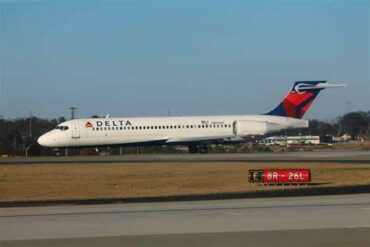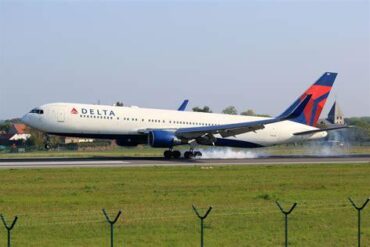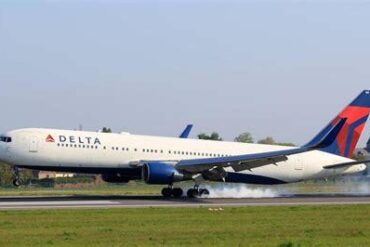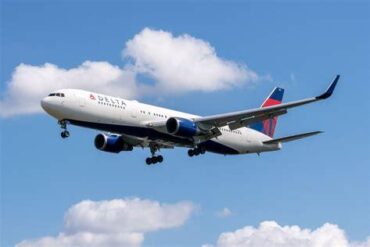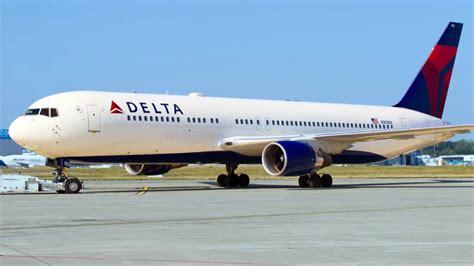
For decades, the Boeing 767 has been one of the most important widebody aircraft in Delta Air Lines’ fleet. The twinjet has carried passengers across the Atlantic, down to South America, between major U.S. cities, and across the country on high-demand routes. But after years of service, even a remarkably durable aircraft eventually reaches the point where economics and technology make retirement unavoidable. For Delta, that transition is now well underway, raising an increasingly important question: what aircraft will replace the airline’s aging Boeing 767 fleet?
Delta currently operates 57 Boeing 767s, consisting of 36 767-300ERs and 21 767-400ERs. The 767-300ER fleet is approaching an average age of three decades, while the 767-400ERs are also more than 25 years old. Their longevity is impressive, particularly given the demanding utilization typical of a major international airline, but the economics of operating older widebodies are becoming harder to justify as newer aircraft deliver substantially better fuel efficiency, reliability, passenger comfort, and maintenance characteristics.
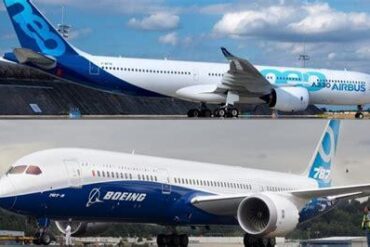
The answer is not necessarily a single aircraft. Delta has built a broad widebody strategy around several modern platforms, particularly Airbus aircraft. The Airbus A330neo appears especially well positioned to assume much of the work currently performed by the 767, while the larger A350 and newly ordered Boeing 787-10 could take over other missions as the fleet evolves. That distinction is important because Delta is not simply replacing old airplanes with new ones. It is redesigning how its widebody fleet fits together.
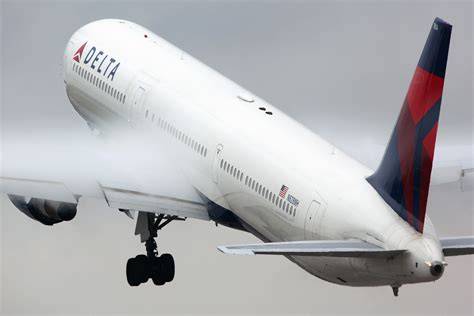
Why Delta Air Lines Is Retiring Its Boeing 767 Fleet
The Boeing 767 arrived at Delta during a very different era of commercial aviation. The airline began operating the 767-300ER in 1988, using the aircraft for international flying while also benefiting from its flexibility on domestic routes. The type offered a compelling combination of range, capacity, and efficiency at a time when airlines were looking for economical twin-engine alternatives to larger three- and four-engine aircraft.
Delta later became the launch customer for the Boeing 767-400ER, which entered the airline’s fleet in the late 1990s. The stretched aircraft was particularly useful because it could operate international routes while also providing enough capacity for busy domestic markets. Over the years, Delta deployed its 767s across an enormous range of destinations, from European cities and South American gateways to Florida vacation markets and major domestic hubs.
But the qualities that made the 767 revolutionary in the 1980s and 1990s are no longer enough to make it competitive with today’s aircraft. Modern widebodies benefit from advanced aerodynamics, new-generation engines, improved systems, lighter structures, and dramatically more sophisticated cabins. The result is a substantial reduction in fuel consumption and operating costs.
Delta’s 767-300ERs are expected to be phased out by 2030, while the 767-400ERs should remain in service somewhat longer. The airline therefore has time to manage the transition, but the direction is increasingly clear. The aging aircraft will eventually disappear, and their missions will be distributed among newer widebodies.
The Airbus A330neo Is the Most Natural Boeing 767 Successor
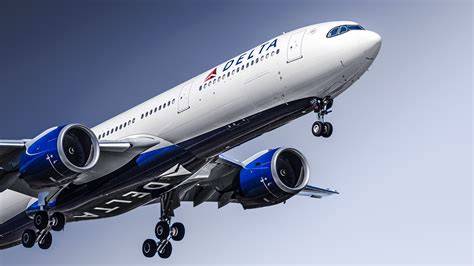
Among the potential replacements, the Airbus A330-900neo arguably makes the most sense for a significant portion of Delta’s 767 flying. It occupies a useful position within the airline’s fleet, offering substantially greater capability than the 767 without approaching the size and capacity of the largest A350 variants.
The A330-900 is approximately 208 feet 11 inches long, with a wingspan of about 210 feet. Its typical three-class configuration accommodates roughly 287 to 303 passengers, while its maximum range reaches approximately 7,350 nautical miles. Those characteristics give Delta considerable flexibility for long domestic sectors, transatlantic flights, and selected longer international missions.
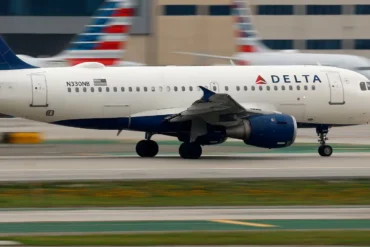
More importantly, Delta already knows how to operate the A330 family. The airline has a substantial A330 fleet comprising older A330-200 and A330-300 aircraft as well as the newer A330-900neo. That existing experience reduces the complexity associated with introducing an entirely unfamiliar widebody family.
The A330neo also offers an important advantage in terms of fleet commonality. Delta can build on existing pilot, maintenance, operational, and airport-support experience instead of creating a completely new infrastructure around every replacement aircraft. For an airline managing a large and complex fleet, those considerations can be nearly as important as the aircraft’s headline specifications.
A330neo Economics Give Delta a Major Advantage
The biggest argument for the A330neo is not simply its size. It is the aircraft’s operating economics.
Airbus designed the A330neo around the principle of extracting significantly more efficiency from an established widebody platform. The A330-900 combines improved aerodynamics with new Rolls-Royce Trent 7000 engines, updated systems, and extensive technological improvements. Airbus has stated that the A330neo can deliver fuel-burn improvements of around 25% compared with previous-generation aircraft in relevant comparisons.
For Delta, fuel efficiency matters enormously. Widebody aircraft consume large quantities of fuel, and even relatively modest percentage improvements can translate into substantial savings when an aircraft operates thousands of hours every year.
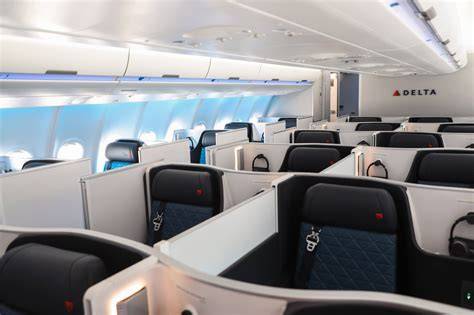
The A330neo also provides a more contemporary passenger experience. Delta can equip the aircraft with its latest cabin products, including premium seating and Delta One Suites, alongside modern inflight entertainment and improved connectivity. That matters because replacing the 767 is not only an engineering decision. It is also a product decision.
Passengers who move from an aging 767 to an A330neo will encounter a substantially newer cabin environment, wider fuselage dimensions, updated lighting, modern entertainment systems, and improved premium-class accommodations. For Delta, that creates an opportunity to turn fleet renewal into a visible improvement in the customer experience.
Delta Already Has Proof That the A330 Can Replace the 767
There is another reason the A330neo looks particularly convincing: Delta has already used A330 aircraft on missions that overlap with the 767’s traditional role.
The airline operates more A330s than 767s, and the A330-300 has already taken over routes once associated with the smaller Boeing widebody. That provides a useful indication of how Delta sees the aircraft within its broader network.
The A330 family gives Delta a middle ground. The airline does not need to use an A350 every time it wants to replace an aging 767. Doing so could create unnecessary excess capacity on routes where demand does not justify a substantially larger aircraft. The A330neo can instead provide a more measured increase in capacity while delivering the efficiency advantages of a new-generation widebody.
This is particularly valuable for routes where demand is strong but not consistently large enough to support an A350. Delta can use the A330neo to preserve frequency while upgrading aircraft quality and reducing operating costs.
The Airbus A350 Will Also Play a Role
Although the A330neo appears to be the closest conceptual replacement for the 767, the Airbus A350 cannot be ignored.
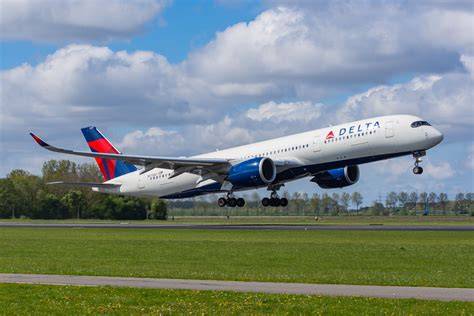
Delta has increasingly relied on the A350 for some of its longest and most demanding routes. Its larger capacity and exceptional range make it especially well suited to high-density international markets where the airline can fill more seats and exploit the aircraft’s long-range capabilities.
That makes the A350 less of a direct 767 replacement and more of a network-level replacement. When Delta retires older aircraft, it does not necessarily assign each route to a direct successor. Instead, it can move an A350 onto a high-demand route, shift an A330 onto another route, and use an A330neo to replace the aircraft that moved.
This cascading fleet strategy gives Delta considerably more flexibility than a simple one-for-one replacement program.
Delta has also made clear that the Boeing 777X does not fit its current fleet strategy, further reinforcing the importance of Airbus widebodies in the airline’s future long-haul plans. The A350 therefore has an important role to play above the A330neo, while the A330neo can occupy the middle of Delta’s widebody capacity structure.
What About the Boeing 787 Dreamliner?
The Boeing 787 presents the most interesting alternative because Delta has now placed an order for the type. That changes the fleet equation and means the 787 cannot simply be dismissed as a theoretical competitor.
The Boeing 787 Dreamliner offers excellent long-range efficiency and has become one of the world’s most successful modern widebody families. Its composite structure, advanced engines, high-efficiency aerodynamics, and passenger-friendly cabin make it a strong candidate for international flying.
However, the existence of a 787 order does not automatically mean that the aircraft will directly replace every 767. Delta can operate multiple widebody families with distinct missions. The 787 could serve routes where its range, capacity, and economics are particularly attractive, while the A330neo handles other missions.
The distinction becomes even more important with the 787-10, which is optimized more toward capacity and efficiency than extreme range. Delta could use the aircraft on high-volume routes where the airline wants a modern widebody but does not require the longest possible range.
Consequently, the 787 may ultimately become part of the answer without being the answer.
Delta’s Widebody Fleet Is Moving Toward a New Generation
The replacement of the 767 represents a much broader transformation at Delta. The airline is gradually moving away from older-generation aircraft and toward a fleet built around A330neos, A350s, and Boeing 787s.
That transition brings several benefits. New-generation aircraft generally offer lower fuel consumption, reduced maintenance requirements, improved reliability, quieter engines, and better passenger environments. For an airline operating thousands of flights every day, those improvements compound quickly.
Delta also possesses an unusually strong maintenance organization. Its extensive maintenance capabilities, particularly around its Atlanta hub, have allowed the airline to keep older aircraft productive long after many competitors would have retired them. That philosophy explains why aircraft such as the Boeing 717 and 767 have remained important parts of Delta’s fleet for so long.
But maintenance expertise has limits. Keeping an old aircraft flying can be economically sensible when replacement aircraft are unavailable or significantly more expensive. Once modern aircraft provide major efficiency gains while offering better reliability and passenger amenities, the calculation changes.
What the 767 Retirement Means for Delta Passengers
For passengers, the disappearance of the 767 will be one of the most visible changes in Delta’s international fleet.
The 767 has a distinctive place in the airline’s history, but its cabin is increasingly dated compared with Delta’s newest aircraft. Replacing it with modern widebodies gives Delta an opportunity to provide more consistent premium products, improved entertainment, faster connectivity, and more contemporary seating throughout its international network.
The change will also give Delta greater flexibility when matching aircraft to demand. Instead of relying heavily on one aging platform, the airline can select between the A330neo, A350, and 787 depending on route length, passenger demand, cargo requirements, and competitive conditions.
That is particularly valuable as Delta continues to expand and adjust its international network. A modern fleet allows the airline to open routes with greater confidence because aircraft can be deployed more efficiently across different markets.
The A330neo Looks Like the Leading 767 Replacement
The final outcome may involve several aircraft, but the Airbus A330neo remains the strongest candidate to replace much of Delta Air Lines’ Boeing 767 fleet.
Its size is appropriate, its range is substantial, its operating economics are considerably better than those of older widebodies, and Delta already has extensive experience with the A330 family. Just as importantly, the aircraft fits naturally into the airline’s existing Airbus-centered widebody strategy.
The A350 can absorb the highest-capacity and longest-range missions, while the 787 can introduce another highly efficient platform for selected international routes. The A330neo, meanwhile, can occupy the crucial middle ground where much of the 767’s work has traditionally been performed.
That makes the transition less about finding a single aircraft to replace an iconic jet and more about creating a modern, flexible widebody ecosystem. The Boeing 767 helped define Delta’s international network for generations. Its eventual retirement will close an important chapter, but the aircraft replacing it could give the airline a more efficient and adaptable platform for the decades ahead.
For Delta, the most logical future is therefore not simply one airplane replacing another. It is a carefully balanced combination of Airbus A330neos, A350s, and Boeing 787s, with each aircraft assigned to the missions where it performs best. Among them, however, the A330neo has perhaps the clearest path to becoming the true successor to the aging Delta Air Lines Boeing 767.