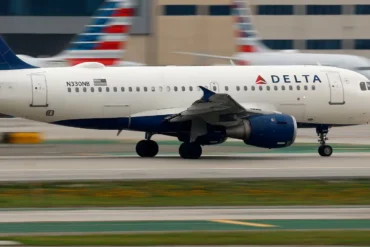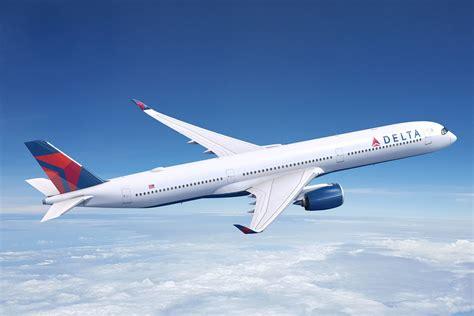
Delta Air Lines stands at the center of a modern widebody revolution, operating the world’s largest Airbus A330neo fleet and redefining long-haul efficiency across five continents. Its strategic use of the A330-900neo aligns perfectly with a global route network built on dispersed hubs and demand-balanced long-haul missions. The following deep-dive explores Delta’s fleet strength, cabin design, route strategy, and long-term positioning as the champion of the A330neo era.
Delta’s decision to invest heavily in the Airbus A330-900neo reflects more than a fleet refresh; it signals a long-term commitment to fuel-efficient, mid-sized widebody aircraft capable of reaching strategic destinations without the overhead associated with larger jets. The twin-engine A330neo, fully modernized with new wings, new engines, and aerodynamic enhancements, represents a generational leap over the A330ceo. For Delta, this aircraft has become a backbone for global connectivity from hubs such as Atlanta, New York-JFK, and Seattle.
Delta currently operates 39 Airbus A330-900neos, with the majority active and only a small number rotated for maintenance. The fleet’s average age sits at 5.4 years—young, fuel-efficient, and highly competitive on both passenger experience and cost performance.
Unlike other carriers that split orders between variants, Delta opted exclusively for the -900neo, which offers higher seating capacity and commercial flexibility. The shorter A330-800neo, although boasting a longer advertised range, failed to capture similar market attention; only a handful have ever been ordered globally. Delta intentionally leaned into the variant favored across the industry, ensuring better compatibility with suppliers, training resources, and future parts availability.
A Deep Look Inside Delta’s A330neo Cabin Experience
The interior of Delta’s A330-900neo is engineered for a premium transcontinental and transoceanic experience. The configuration balances cabin density with comfort, avoiding the extremes of ultra-tight layouts that some carriers pursue for cost reasons.
Delta One, the flagship business class, consists of 29 Thompson Aero Vantage seats, each arranged in a 1-2-1 configuration ensuring direct aisle access. With 22-inch seat width, expansive privacy shells, and an 18.5-inch touchscreen, these suites meet the expectations of high-yield business travelers moving between continents.
Premium Select includes 28 Collins MiQ seats in a 2-3-2 alignment, delivering 38-inch pitch, generous recline, upgraded catering, and a 13.3-inch display. Many passengers consider it a sweet spot between the indulgence of Delta One and the affordability of economy.
Economy and Comfort+ form the backbone of the cabin with 224 Collins Pinnacle seats. Comfort+ provides enhanced recline and 34-inch pitch, while standard economy offers 32-inch pitch and a 4-inch recline. Seat width across both remains a competitive 18 inches, wider than many Boeing 787 economy cabins.
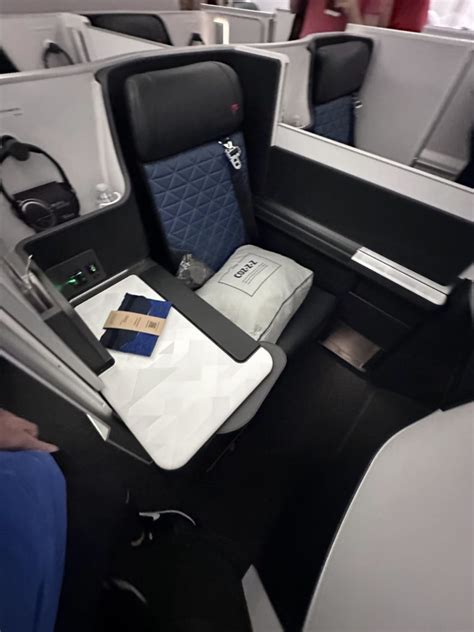
With Wi-Fi, large entertainment screens, and power outlets throughout, the A330neo delivers a consistent onboard experience across all classes. The aircraft seats 281 passengers, far below the theoretical maximum of 465, allowing Delta to preserve comfort while maintaining commercial efficiency.
How the A330neo Fits Into Delta’s Long-Haul Strategy
Delta operates a distinctive hub system compared with megahub carriers in Europe or the Middle East. Instead of concentrating traffic flows into singular gateways like London Heathrow, Dubai, or Frankfurt, Delta distributes long-haul traffic across multiple U.S. hubs. The result is a network of moderately trafficked international routes that perfectly align with a mid-sized widebody such as the A330neo.
This aircraft gives Delta the flexibility to serve destinations that cannot support the larger Airbus A350 or Boeing 777 without sacrificing range, fuel efficiency, or passenger comfort. For cities such as Barcelona, Tel Aviv, Accra, Shanghai, and Amsterdam, the A330neo provides the ideal capacity to maintain daily connectivity.
The Most Frequent Delta A330neo Routes
Across its November schedule, Delta assigns the A330-900neo to more than 30 global routes, many operating daily. The most heavily utilized route is New York-JFK to Rome Fiumicino, which Delta operates twice daily using A330neos. Each direction sees roughly 16,800 seats per month, reflecting strong business, tourism, and VFR (visiting friends and relatives) traffic between the United States and Italy.
Atlanta to Rome ranks second in frequency with 46 A330neo flights scheduled for November. With a distance of 5,035 miles, it highlights how the aircraft seamlessly links Delta’s southern megahub to Europe.
Other frequently served cities include Amsterdam, London-Heathrow, Tel Aviv, Shanghai, Paris-Charles de Gaulle, and Barcelona. These routes reinforce the A330neo’s role as a global workhorse connecting North America to Europe, the Middle East, Africa, and Asia.
Delta’s Longest A330neo Routes: Intercontinental Reach
While most routes hover around the mid-long-haul category, several exceed 5,000 miles, demonstrating the A330-900neo’s endurance. The longest of these is Seattle-Tacoma to Shanghai Pudong, an average of 5,722 miles across the North Pacific. This mission pushes the aircraft close to its design sweet spot: long, but not ultra-long, distances requiring high fuel efficiency.
From the opposite end of the United States, the JFK–Tel Aviv sector reaches 5,677 miles, underscoring the essential role the A330neo plays in Delta’s trans-Atlantic and Middle Eastern connectivity. There is also the JFK–Buenos Aires route (5,281 miles) and the key link from JFK to Accra, which crosses 5,111 miles.
Each of the top five longest A330neo routes links the United States to a different continent, forming a mosaic of intercontinental service that few airlines match with a single aircraft family.
Even shorter missions such as Atlanta–Las Vegas appear in the schedule, demonstrating the aircraft’s flexibility to fly domestic sectors when repositioning or balancing fleet utilization.
Fleet Rivalries and Future A330neo Growth
While Delta remains the largest A330neo operator today, its title faces potential challenges. Carriers such as Malaysia Airlines and VietJet have both ordered 40 A330neos, though Vietnam’s VietJet has not yet taken delivery. Leasing firms like CIT Group and Avolon also hold sizable orders, while Cathay Pacific, IAG, Cebu Pacific, AirAsia, Flynas, and other operators contribute to a resurgence in demand for this aircraft series.
Airbus has experienced a notable climb in A330neo orders since 2023, with 82 new orders in 2025 alone, indicating renewed confidence in the type. Delta may add more in the future, but its long-haul fleet strategy is increasingly intertwined with the Airbus A350-900 and A350-1000, which are phasing in as Boeing 767 replacements.
An All-Airbus Widebody Future for Delta
Among the Big Three U.S. carriers, Delta stands alone as the airline shaping an all-Airbus widebody fleet. While United and American continue to rely heavily on Boeing for long-haul operations, Delta leans decisively toward Airbus.
This shift contrasts particularly with American Airlines, which has pivoted strongly toward the 787 Dreamliner and Boeing 777 families. Delta, by contrast, has not only avoided ordering the Dreamliner but even canceled legacy 787 orders inherited from Northwest Airlines during the 2008 merger.
Currently, Delta maintains Boeing 767-300ERs and 767-400ERs, both aging and in line for retirement. The transition strategy centers on Airbus A330-900neos, A350-900s, and upcoming A350-1000s, the first of which are scheduled for delivery in 2026.
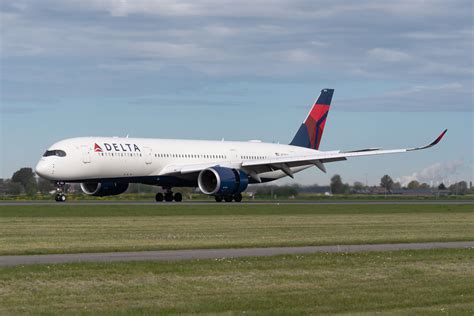
Rumors have circulated about potential future Boeing 787-10 orders, but as of late 2025 no official announcement has materialized. If Delta maintains its Airbus-heavy philosophy, the A330neo will remain a cornerstone of its transoceanic strategy for years to come.
Why the A330neo Works So Well for Delta’s Route Model
The A330-900neo isn’t just a good aircraft; it is the right aircraft for Delta’s dispersed operational map. With multiple U.S. hubs—Atlanta, JFK, Seattle, Boston, Minneapolis, Detroit, Los Angeles—the airline avoids funneling all global traffic through a single megahub. Mid-sized widebodies thrive in such an environment, delivering lower unit costs than larger aircraft while still covering long-range missions.
The A330neo’s strengths match Delta’s needs:
- Ability to serve thinner long-haul markets daily rather than a few times per week.
- Lower fuel burn and modern systems that cut operating costs.
- High dispatch reliability.
- Passenger-friendly cabin width and seat comfort advantages over some modern widebodies.
These elements position Delta to maintain daily frequencies in competitive markets, drive loyalty, and keep load factors high without overcommitting capacity.
What Lies Ahead for Delta and Its A330neo Dynasty
Delta’s reign as the global leader in Airbus A330neo operations reflects deliberate planning, thoughtful fleet strategy, and an understanding of the mid-sized long-haul niche. The A330-900neo gives Delta the flexibility to expand existing services, open new global routes, and retire aging aircraft without sacrificing service quality or operational efficiency.
Looking forward, the dynamic between the A330neo and A350 within Delta’s fleet will shape how the airline positions itself against global competitors. As long as the U.S. market continues to reward versatile, fuel-efficient long-haul aircraft, Delta’s A330neo fleet will remain a crucial pillar in its transcontinental and transoceanic expansion.
In a global aviation landscape filled with rapid technological shifts and fierce competition, Delta’s mastery of the A330neo stands as a blueprint for fleet modernization—balancing cost, capability, and passenger experience with uncommon precision.